

Key takeaways
Domain have released their forecasts for the 2027 financial year, highlighting a more fragmented and constrained market as higher interest rates and policy changes weigh on borrowing capacity and buyer demand.
Across the combined capital cities, house prices are forecast to remain broadly stable, with downside risk in Melbourne and Sydney.
In contrast, Brisbane, Adelaide, and Perth are expected to remain in positive territory.
Units are expected to outperform houses across most markets.
After several years of strong price growth across much of Australia, Domain's latest FY27 Housing Market Forecast suggests the property market is entering a very different phase.
The report highlights that Australia's housing market has entered a more complex phase.
Three rate hikes in the first half of 2026 have changed the landscape, and the Federal Budget's changes, removing negative gearing from established properties and adjusting the CGT discount, introduced a structural shift on top of the cyclical one.
Together, these forces are bearing down on household budgets, consumer confidence, and the capacity to borrow.
Domain Chief Residential Economist, Dr Nicola Powell suggests that the result will not be a uniform slowdown, but they will be divergent between cities with different affordability profiles, investor exposure, and supply dynamics, and between houses and units within those cities.
Sydney, Melbourne, and Canberra property values are forecast to fall, while Adelaide and Perth will continue to grow, though well below the extraordinary rates of recent years
“The housing market is no longer moving in lockstep. Higher interest rates are weighing heavily on Sydney and Melbourne, while more affordable segments and mid-tier cities are continuing to hold up,” Dr Powell said.
Borrowing capacity is estimated to have declined by 7-8% following recent rate increases, constraining purchasing power and reshaping demand.

Capital cities forecast
Sydney is forecast to record the largest declines, with house prices projected to fall between $52,000 and $122,000 over FY27.
Table 1. House forecast in per cent and dollar terms to June 2027
| City | Lower range | Upper range | ||||
| % change | $ change | Median price | % change | $ change | Median price | |
| Sydney | -7% | -$122k | $1.62m | -3% | -$52k | $1.69m |
| Melbourne | -8% | -$84k | $966k | -4% | -$42k | $1.01m |
| Brisbane | 3% | $37k | $1.29m | 7% | $87k | $1.34m |
| Adelaide | 4% | $45k | $1.18m | 8% | $90k | $1.22m |
| Perth | 5% | $61k | $1.28m | 9% | $110k | $1.33m |
| Canberra | -4% | -$43k | $1.03m | 0% | $0 | $1.08m |
| Combined capitals | -2.5% | -$32k | $1.26m | 1.5% | $19k | $1.31m |
Source: Domain
Meanwhile, Melbourne is also expected to see notable weakness, with prices likely to drop by as much as $84,000, potentially pushing the median house price below $1 million for the first time since 2021, according to the Domain report.
Canberra is set to soften more moderately, with house price declines of up to $43,000.
In contrast, Brisbane, Adelaide and Perth are expected to remain in positive territory, supported by population growth and persistent housing shortages, although price growth is likely to moderate to a more sustainable pace.
Of course, these are just broad-brush numbers, and different market segments and price points will perform differently, with some properties still growing strongly while others fall in value. That's how averages work, isn't it?
That's the great thing about property: you can always outperform the averages.
What about units?
According to Domain, units are expected to outperform houses across most markets, reflecting a continued shift toward affordability-driven demand.
Price declines for units are forecast to remain contained, with falls of up to $25,000 in Sydney, $18,000 in Melbourne, and $19,000 in Canberra.
Table 2. Unit forecast in per cent and dollar terms to June 2027
- Also read:Migration Is Falling: What Happens to Australian Property Prices Now? | Property Insiders

- Also read:This week’s Australian Property Market Update – Latest Data, State by State September 22nd 2026

- Also read:Latest Property Price Forecasts. Australian Property Market Outlook 2026-2027: Navigating a Market Correction

- Also read:National Weekly Auction Report – September 19th 2026 | Clearance Rates Ease as Auctions Surge

- Also read:Adelaide housing market update | September 2026

| City | Lower range | Upper range | ||||
| % change | $ change | Median price | % change | $ change | Median price | |
| Sydney | -3% | -$25k | $821k | 1% | $8k | $855k |
| Melbourne | -3% | -$18k | $587k | 1% | $6k | $611k |
| Brisbane | 5% | $41k | $861k | 9% | $74k | $893k |
| Adelaide | 4% | $26k | $686k | 8% | $53k | $712k |
| Perth | 7% | $50k | $768k | 11% | $79k | $797k |
| Canberra | -4% | -$19k | $456k | 0% | $0 | $475k |
| Combined capitals | -0.7% | -$5k | $735k | 3.3% | $24k | $765k |
Source: Domain
At the national level, unit prices are expected to hold firmer than house prices.
According to Dr Powell, first-home buyers, in particular, are increasingly entering the market via units, while some buyers are delaying purchasing decisions altogether.
Outlook
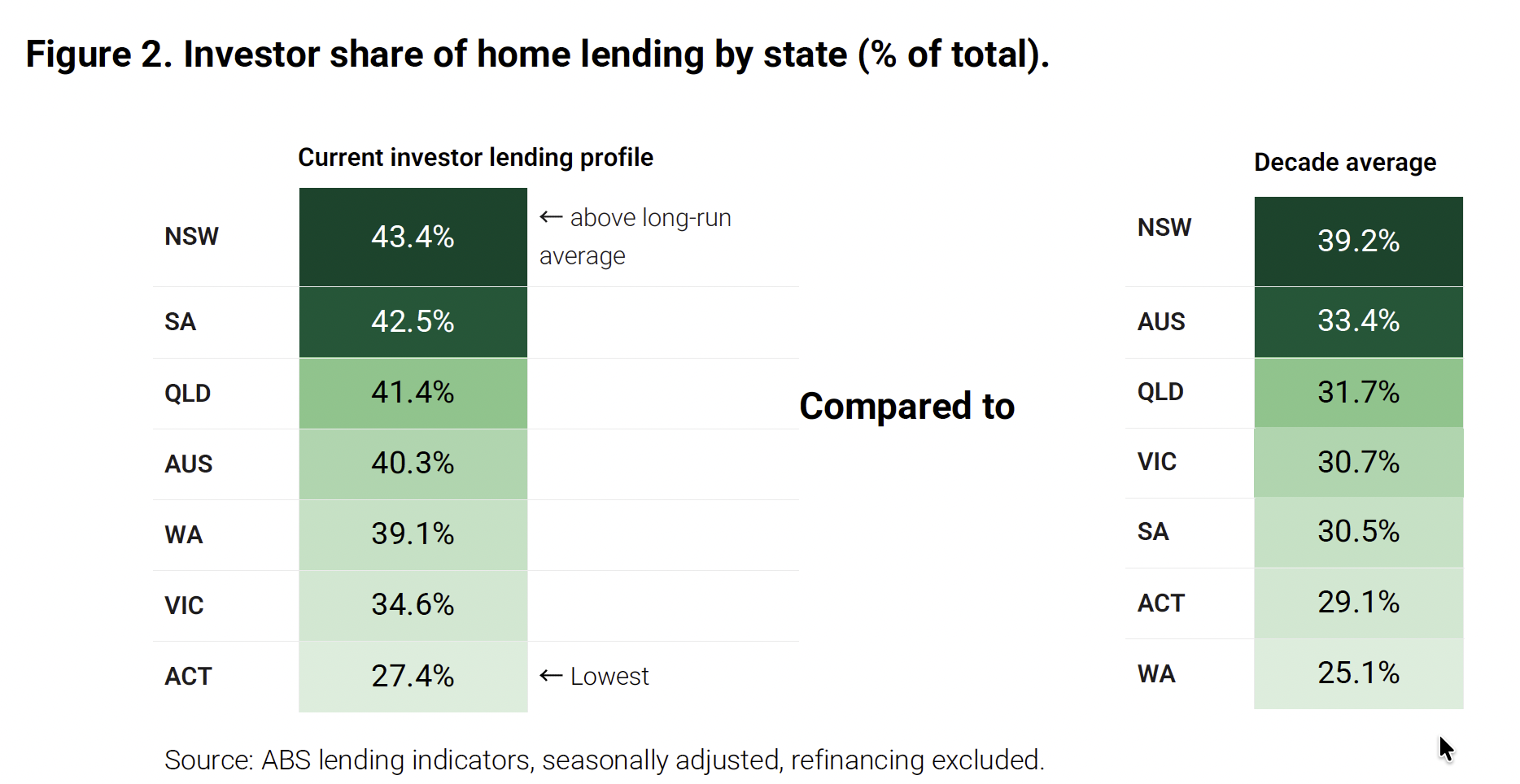
Domain's report highlights that investor behaviour is also expected to shift.
Proposed policy changes, including limiting negative gearing to new builds, may redirect investor demand toward newly constructed properties and away from established housing stock.
At the same time, improved rental yields could attract more yield-focused investors in the second half of FY27.
Despite continued population growth and ongoing housing shortages underpinning demand, elevated borrowing costs are expected to keep price growth subdued, with some markets likely to record declines and extend time on market, particularly at higher price points.
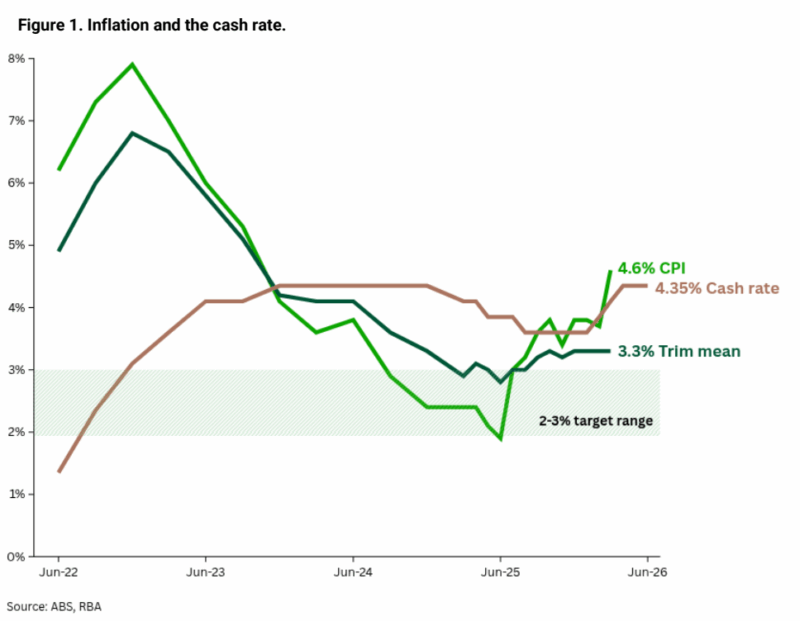
“The outlook remains closely tied to the path of interest rates,” Dr Powell said.
She further notes:
“We expect the RBA to hold rates through the remainder of 2026, with the first rate cut likely in mid-2027, although the risk of a further hike remains if inflation proves more persistent. That will be a key turning point for the housing market.
Until then, affordability constraints will continue to shape both price growth and buyer behaviour.
Affordability has firmly reasserted itself as the key driver of market activity. Buyers are adjusting expectations, shifting toward more accessible price points and, increasingly, toward units.”
Overall, FY27 is expected to mark a clear turning point, with a material slowdown underway, as affordability, rather than momentum, dictates how and where Australians buy.
Final note
While Domain's forecast points to a period of softer conditions and greater market fragmentation, experienced investors understand that property markets don't move uniformly.
Even in a slower-growth environment, there will be locations, property types and market segments that continue to outperform.
As has always been the case, successful investing will depend less on trying to predict short-term market movements and more on understanding long-term demographic trends, local supply and demand dynamics, and the quality of the assets you own.
For strategic investors, a more selective market often creates opportunities that are simply not available when prices are rising across the board.