
Key takeaways
If a picture paints a thousand words, then this collection of charts should do a pretty good job of painting the landscape as it affects our economy and our property markets.
Of course, Australia's economy doesn't operate in isolation, so it's important to keep track of how the economies of our major trading partners are performing.
Despite concerns around the world about recessions, Australia's economy is still growing and creating jobs but inflation has been rising, causing the Reserve Bank to raise interest rates in February and March and they're likely to go up again in May.
Despite high interest rates and inflation have eaten away at the average household budget, in general Aussies have significantly more equity in their homes than they had four years ago.
Australia's residential property market is valued at $12.5 trillion, yet only $2.5 trillion worth of debt is against this large asset base. In fact 50% of homeowners don't have a mortgage against their homes.
Currently, Australia has a significant shortfall of housing, and the cost of residential construction has risen substantially in the last few years. This means that most developments on the drawing board are not currently financially viable to get out of the ground.
Consumer confidence remains at low levels and is likely to remain shaky due to all the geo political problems in the world.
The unemployment rate is still low at 4.3%, meaning Australians can feel secure about their financial futures.
The labour force participation rate is an estimate of an economy's active workforce. The participation rate has increased over the last few years, and there are currently over 326,700 jobs advertised, but nobody to fill them.
If a picture paints a thousand words, then this collection of charts should do a pretty good job of painting the landscape as it affects our economy and our property markets.
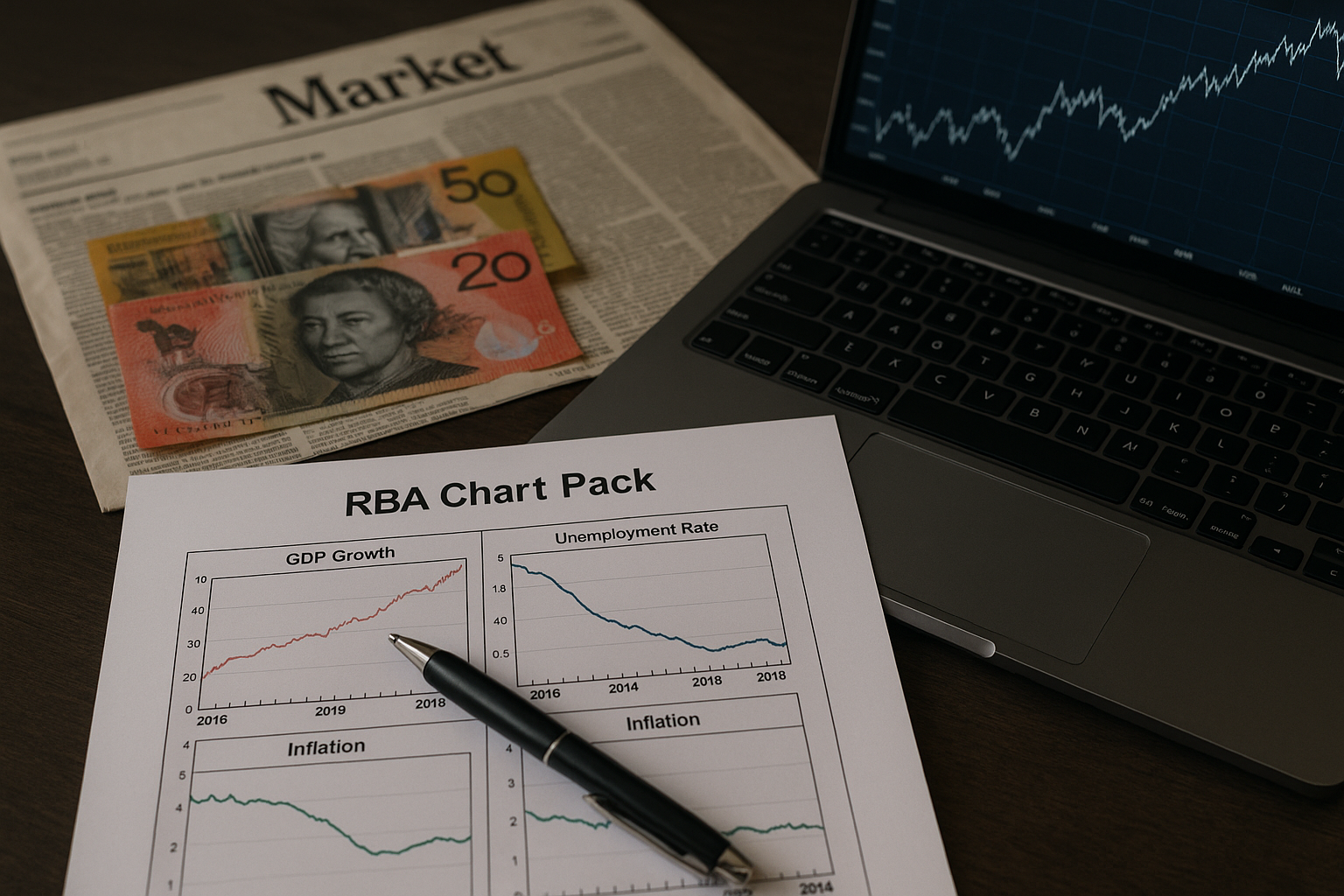
Each month the RBA summarises macroeconomic and financial market trends in Australia by providing a detailed chart pack.
World Economy
Australia's economy doesn't operate in isolation, so it's critical to keep track of how the economies of our major trading partners are performing.
Global economic conditions have shifted significantly since the start of March.
The US-Israel war on Iran, which began with strikes on 28 February, has become the most consequential new geopolitical shock in years. Oil prices surged above $100 per barrel, the highest since 2022, with Brent crude spiking to nearly $120 before settling around $103.
The fallout is especially acute in Asia, where around 80% of oil imports pass through the Strait of Hormuz, directly threatening the economies of Australia's major trading partners.
On trade policy, the picture has also shifted. A US Supreme Court ruling found that the Trump administration's sweeping tariffs exceeded its legal authority, forcing a recalibration of US trade strategy.
New investigations into allegedly unfair trading practices were launched against China, Vietnam, Taiwan, Mexico, Japan, the EU, and dozens of other economies. This keeps trade uncertainty firmly on the agenda.
The OECD projects global growth slowing from 3.2% in 2025 to 2.9% in 2026, with US growth easing to 1.7% and China's declining to 4.4%. These forecasts were set before the Iran conflict escalated, so a downward revision in the OECD's late March update seems likely.
China's recovery remains patchy, weighed down by its ongoing property crisis and demographic headwinds — as well as the added pressure of US tariffs.
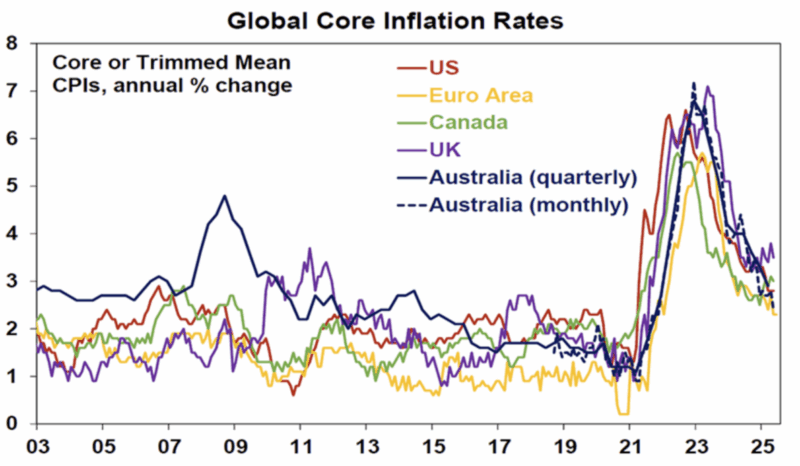
Source: AMP
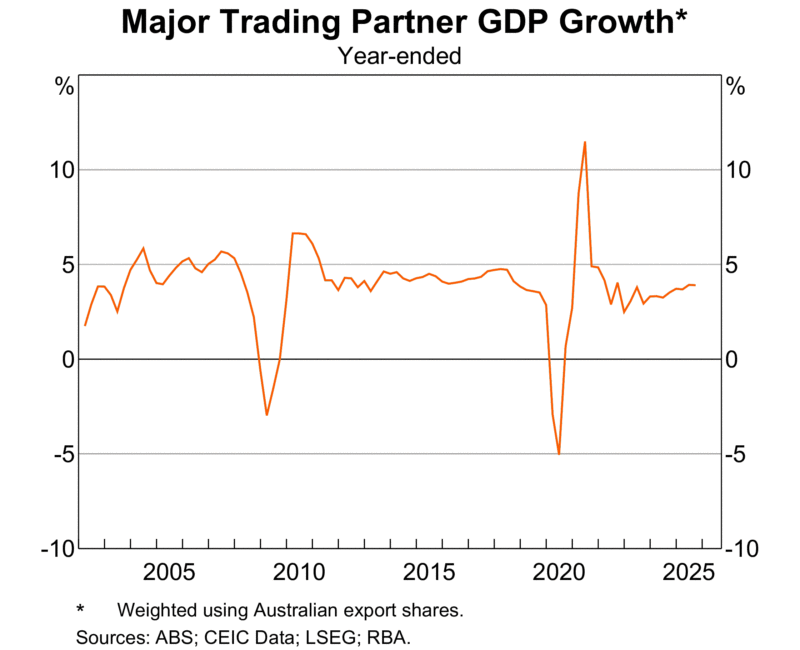
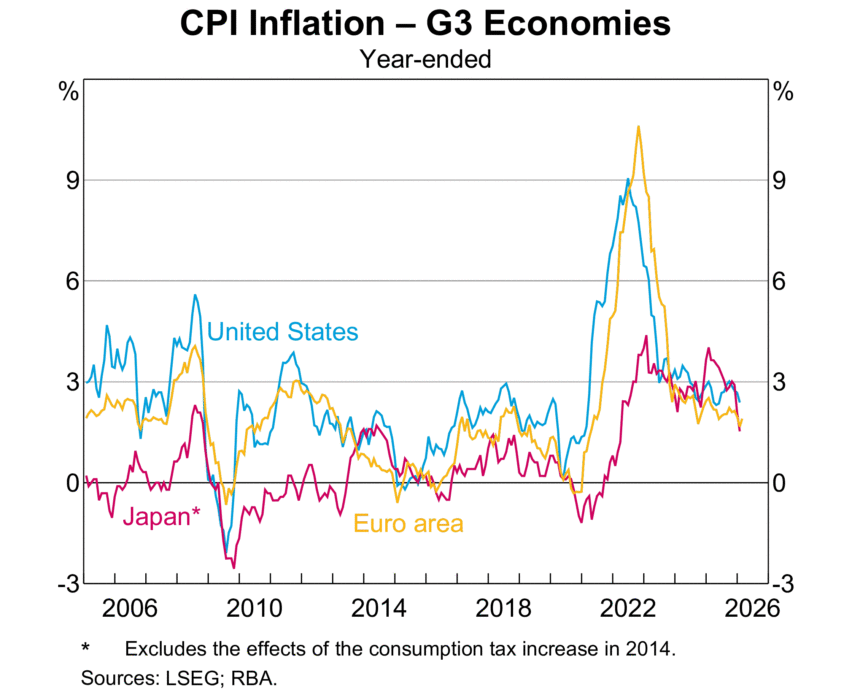
- Global headline inflation is expected to decline to 3.5 per cent in 2026, converging back to target earlier in advanced economies than in emerging market and developing economies.
Australia's Economy
The latest data paints a somewhat more complex picture than a few months ago - stronger growth, but with renewed inflation pressures that are keeping the RBA in tightening mode.
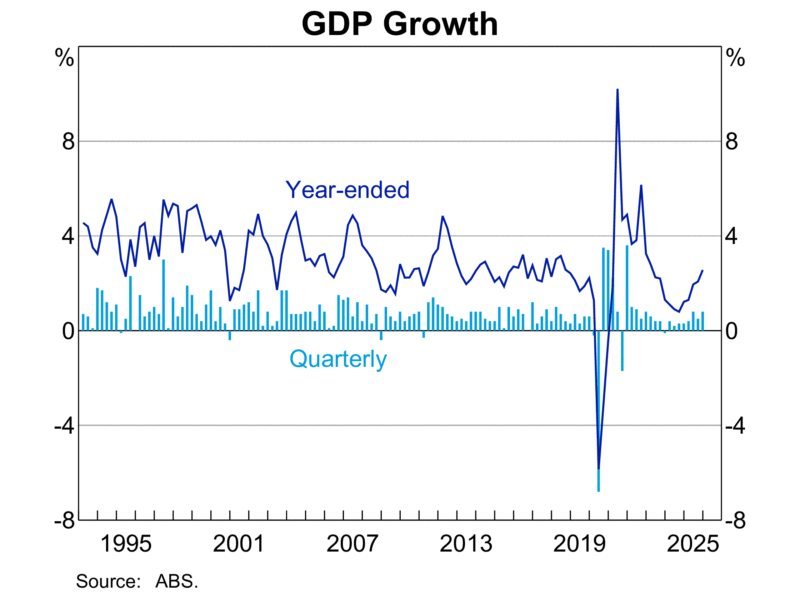
Australia's economy grew 0.8% in the December quarter, with annual growth accelerating to 2.6% — the strongest pace in more than a year. That's a meaningful upgrade from the September quarter's modest 0.4%, and suggests the economy has more momentum than many expected.
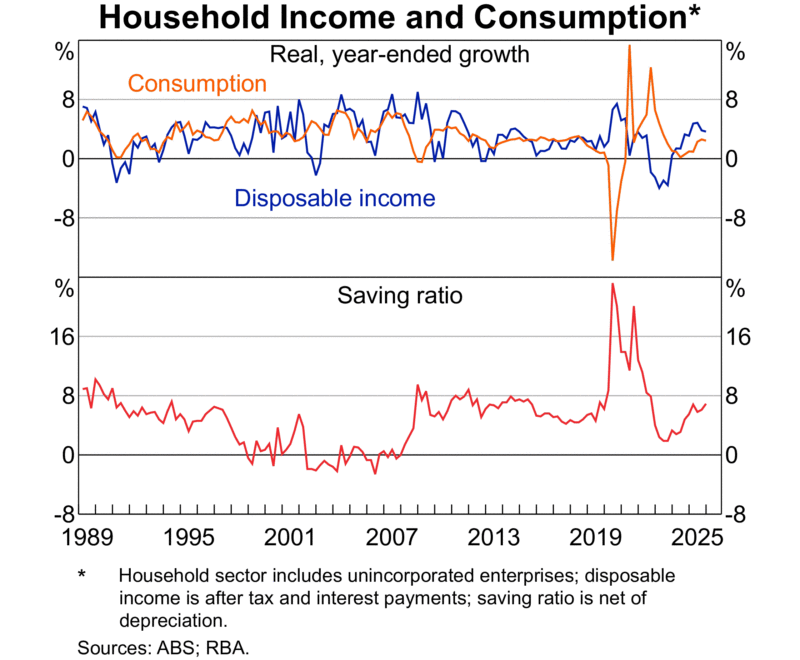
On the positive side, real disposable income rose 0.9% in the December quarter, pushing the household saving rate to 6.9% - the highest since late 2022 - giving households a slightly better buffer against cost-of-living pressures.
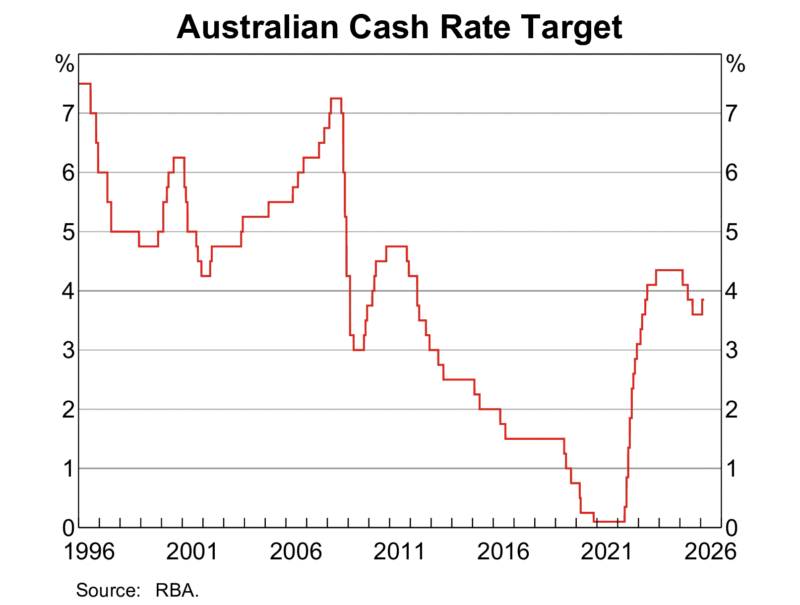
But stronger growth has come with a catch. At its meeting on 19 March 2026, the RBA lifted the cash rate by a further 25 basis points to 4.10%, the second consecutive increase.
The RBA now expects inflation to peak in mid-2026, with underlying inflation reaching 3.7% and headline inflation hitting 4.2%, before gradually returning toward the midpoint of the 2–3% target band by mid-2028. That's a higher and later peak than previously forecast.
Adding to the concern, the RBA noted that developments in the Middle East are likely to add to both global and domestic inflation - a risk that wasn't in the February forecasts. With oil prices surging and inflation already sticky, the May board meeting remains very much live as a potential third consecutive rate rise.
In trend terms, in February 2026:
- Also read:Melbourne property market forecast for 2026 | Is it a good time to invest in Melbourne?
- Also read:Latest Property Price Forecasts Revealed. Australian Property Market Outlook 2026: Where To Now After The Rate Rise.

- Also read:Brisbane Property Market Forecast [2026] – What’s Ahead & Where to Invest
- Also read:Sydney property market forecast for 2026. Is it a good time to invest in Sydney?
- Also read:This week’s Australian Property Market Update – Latest Data, State by State March 24th 2026

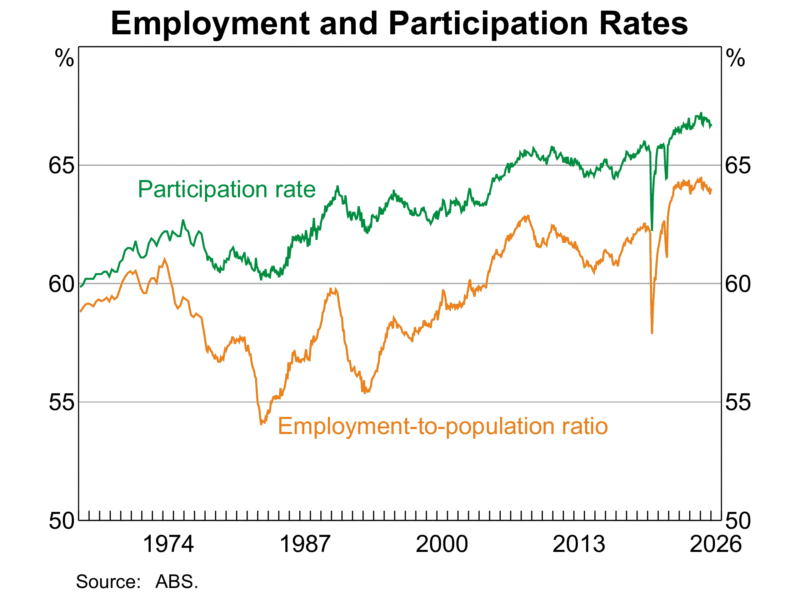
- unemployment rate decreased to 4.2%.
- participation rate remained at 66.8%.
- employment increased to 14,721,400.
- employment to population ratio increased to 64.0%.
- underemployment rate remained at 5.9%.
- monthly hours worked increased to 2,009 million.
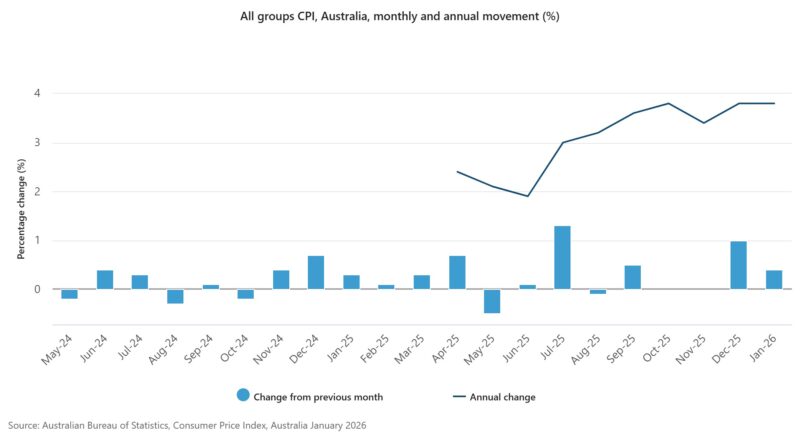
- The Consumer Price Index (CPI) rose 3.8%, unchanged from 3.8% in the 12 months to December 2025.
- The largest contributors to annual inflation were Housing (+6.8%), Food and non-alcoholic beverages (+3.1%) and Recreation and culture (+3.7%).
Household Sector
- The following chart shows how the disposable income for Aussie households dropped last year as they grappled with rising costs, yet it has picked up over the last few months.
- Despite the Reserve Bank's best efforts to slow down household spending, we’re still spending up big on discretionary items such as clothes, restaurants, and lifestyle, defying cost of living pressures.
- According to the ABS: in January 2026, household spending:
- Rose 0.3% month-on-month on a current price, seasonally adjusted basis.
- Rose 4.6% compared with January 2025.
- In seasonally adjusted, current price terms household spending increased for five of the nine spending categories. The largest increases were in:
- miscellaneous goods and services (+2.5%)
- health (+1.7%)
- transport (+0.3%).
- In seasonally adjusted, current price terms, household spending on goods fell 0.3% month-on-month, driven by decreased spending on purchase of vehicles, goods for recreation and culture, and motoring goods.
This chart also shows how our savings ratio dropped to below pre-pandemic levels as we kept spending our stashed cash to support our lifestyles but this is rising slowly again.
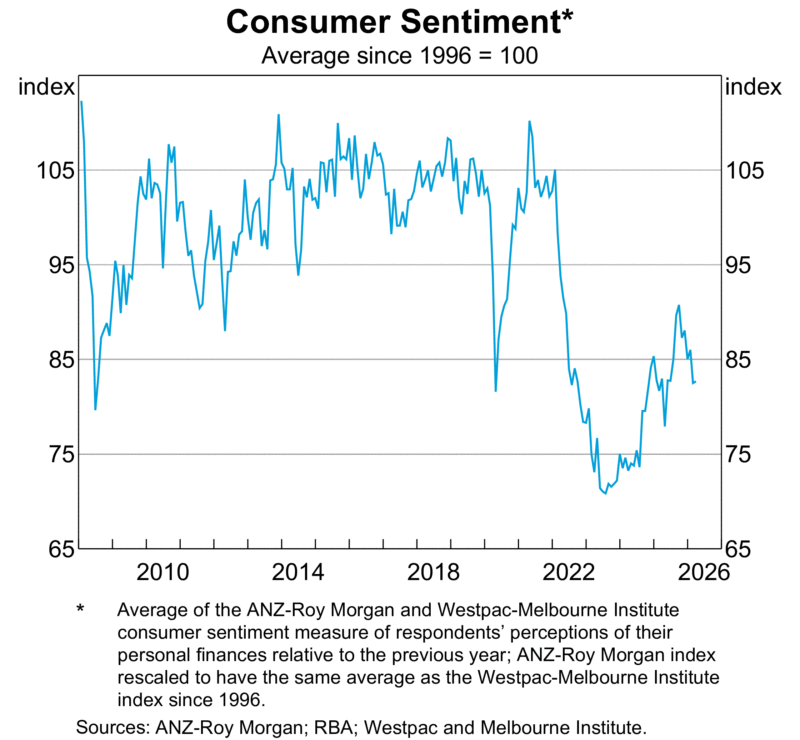
- I keep careful track of consumer confidence because it's a good leading indicator of what's ahead for our economy and property markets.
- The media's continual barrage of negative news about the economy, inflation and interest rates has a significant impact on consumer sentiment.
- While not long ago consumer confidence started bouncing up from historically low levels, it has started to fall again due to rising inflation and the RBA's decision to raise interest rates, and now the geopolitical problems are causing even more concern.
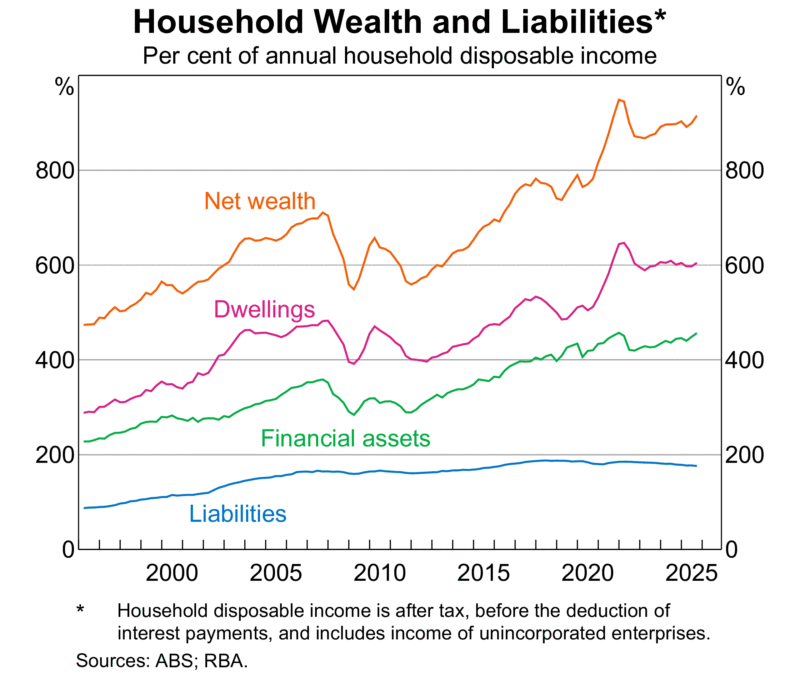
- While rising interest rates and inflation have eaten away at the average household budget, in general, Aussies have significantly more equity in their homes than they had before the pandemic.
- The following chart shows our net wealth position, and that our main assets are in real estate (particularly our homes) and financial assets (including our superannuation.)
- As you can see, the net wealth position of Australian households is still high since asset growth has outpaced the increased debt levels, meaning our net wealth position, while falling a little lately, is very strong.
- The Australian residential property market is valued at over $12.5 trillion, yet there is only around $2.5 trillion worth of debt against this large asset base. In fact, 50% of homeowners don't have a mortgage against their homes.
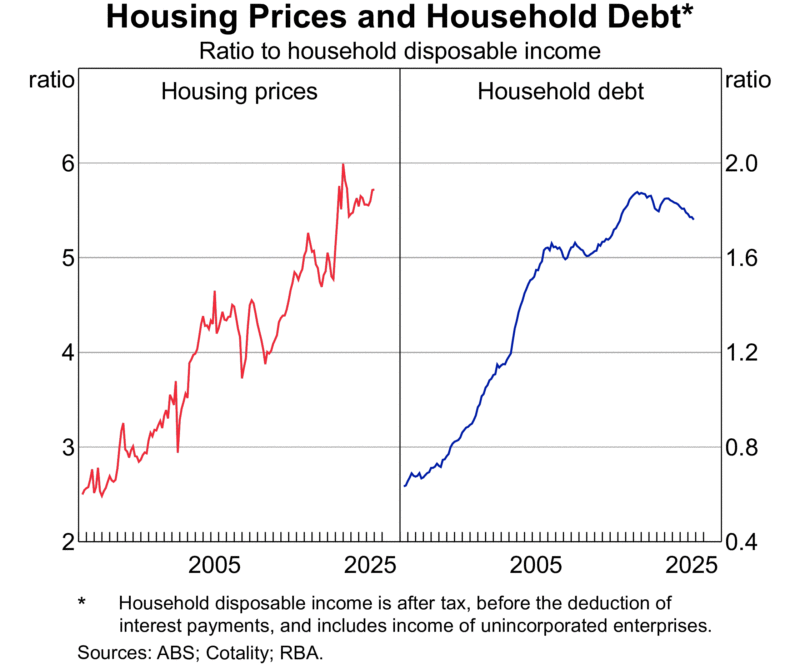
- Housing values continue to rise despite affordability squeeze and renewed cost of living pressures, and I expect our property values to keep rising moving forward, albeit more slowly.
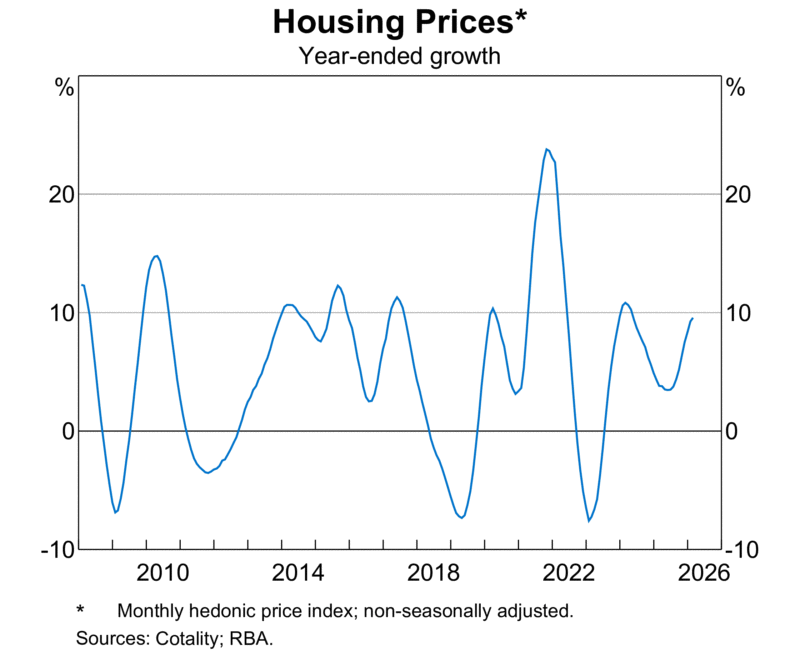
- Currently, Australia has a shortfall of housing, which is particularly showing up in our rental markets with historically low vacancy rates and skyrocketing rents.
- The government has a plan to build 1.2 million homes in the next 5 years, but I can't see how this will be achieved.
- The cost of residential construction has risen substantially in the last few years, in part because of the lack of available skilled labour and supply chain restrictions.
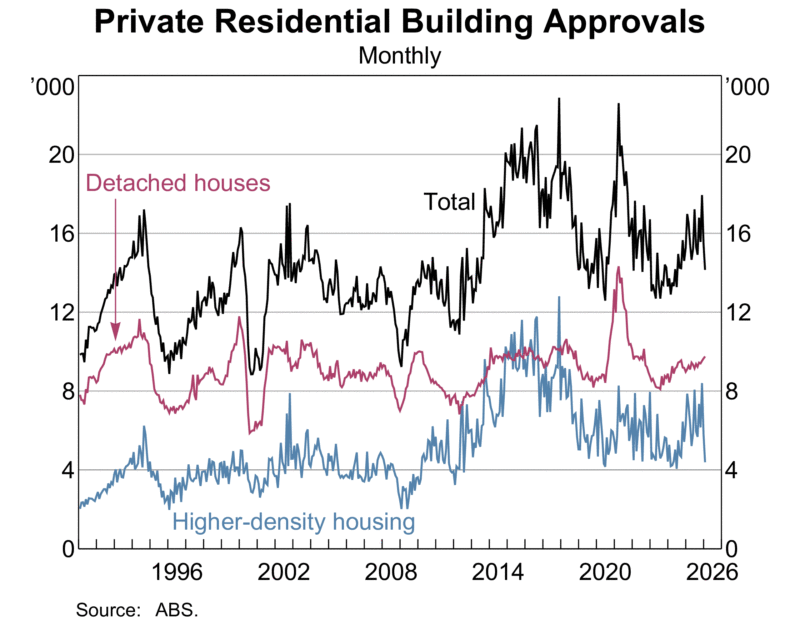
- This means the cost to build new apartments has risen to such an extent that most developments on the drawing board (see the following chart of dwelling approvals) are not currently financially viable and won’t be built until the market is prepared to pay substantially more than the current prices.
- It has been estimated that currently we have a deficit of well over 250,000 properties, something that won't be made up any time soon.
- In other words... there is no end in sight for the undersupply of dwellings. It also means that there is substantial inbuilt equity in established properties, as their replacement cost is very much higher than their current market value.
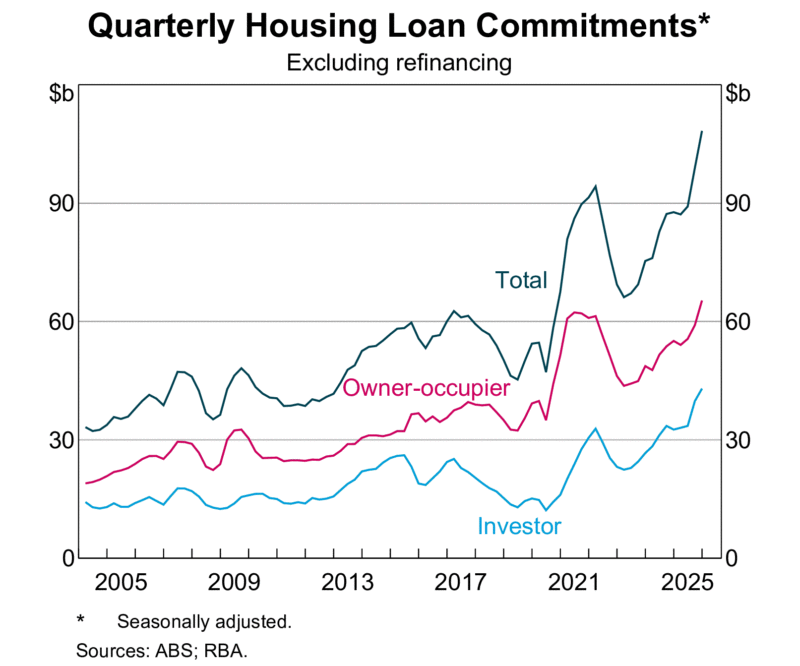
While the property pessimists were making a fuss about low housing loan commitments, which are clearly a leading indicator of what's ahead for our property markets, the following chart shows that they have picked up recently and are well above long-term averages.
In particular, investor lending is up by more than 30% over the last 12 months. In other words, strategic investors are taking advantage of the current window of opportunity to get into the housing market.
Business Sector
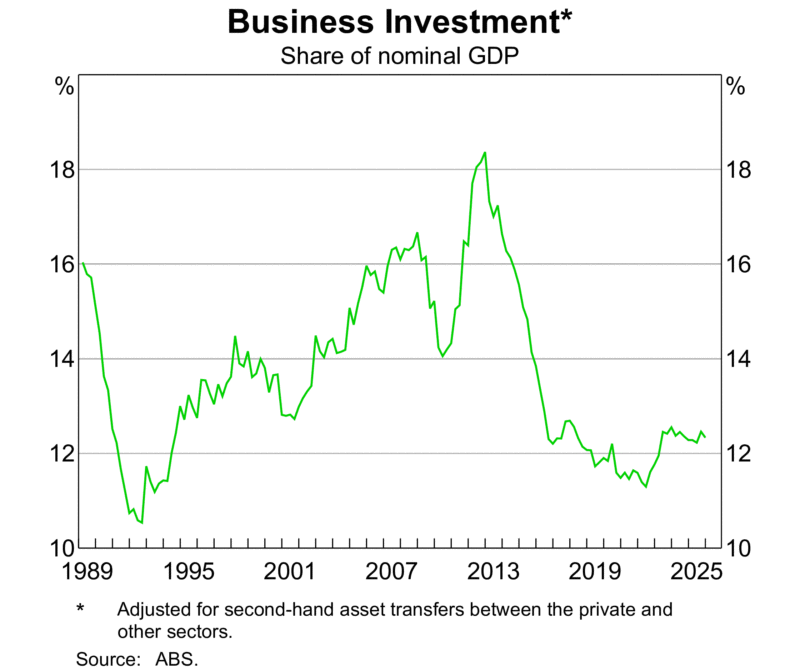
- Australian businesses are facing a continual conveyor belt of challenges, including the rising cost of living, which is dampening discretionary spending as the RBA is hell-bent on slowing our economy.
- The near-term business outlook is one of softening consumption and investment growth, tightening government expenditures, and high debt costs.
- This troubled backdrop has been reflected in low business investment, which now seems to be picking up.
Labour Markets
- Australia's labour market continues to show impressive resilience in the face of high-interest rates and unprecedented global challenges.
- The ABS has reported the following Key Statistics in trend terms, in February 2026:
- unemployment rate decreased to 4.2%.
- participation rate remained at 66.8%.
- employment increased to 14,721,400.
- employment to population ratio increased to 64.0%.
- underemployment rate remained at 5.9%.
- monthly hours worked increased to 2,009 million.
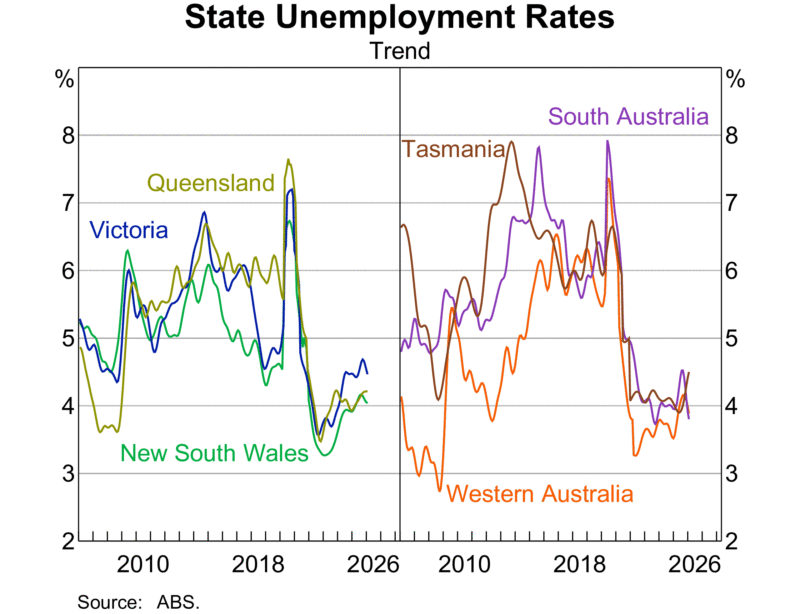
- Australia's unemployment rate, a key indicator of labour market health, has been at very low levels for a number of months now.
- The labour force participation rate is an estimate of an economy’s active workforce. The formula is the number of people ages 16 and older who are employed or actively seeking employment, divided by the total non-institutionalized, civilian working-age population.
- The participation rate in Australia averaged 63.51% from 1978 until 2022, as you can see from the chart below the participation rate has increased over the last few years as a bigger percentage of Australians have entered or re-entered the workforce.
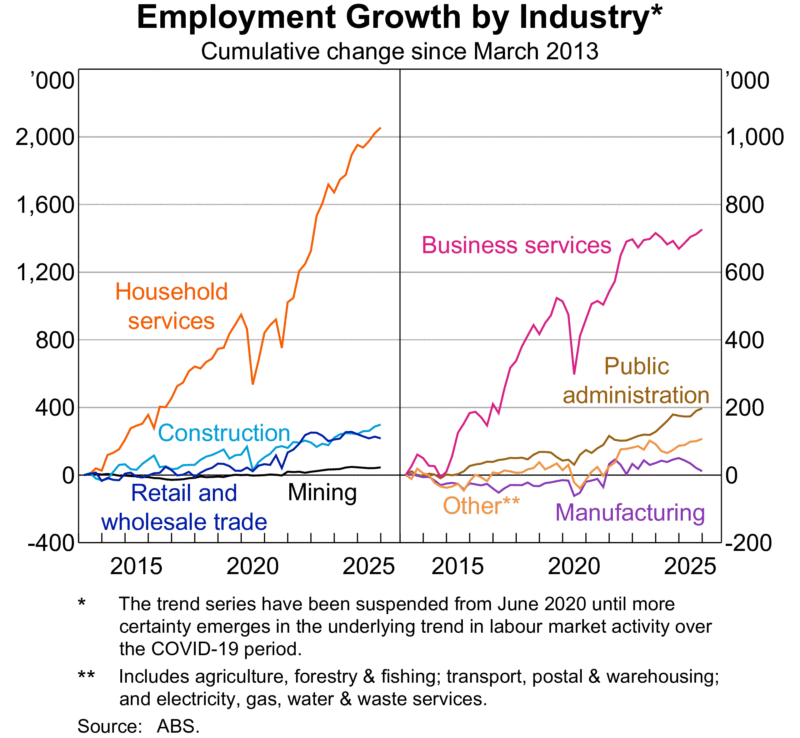
- As you can see from the chart below, service-related industries have had significant growth, and in particular, there has been strong growth in the healthcare, accommodation and food services industries.
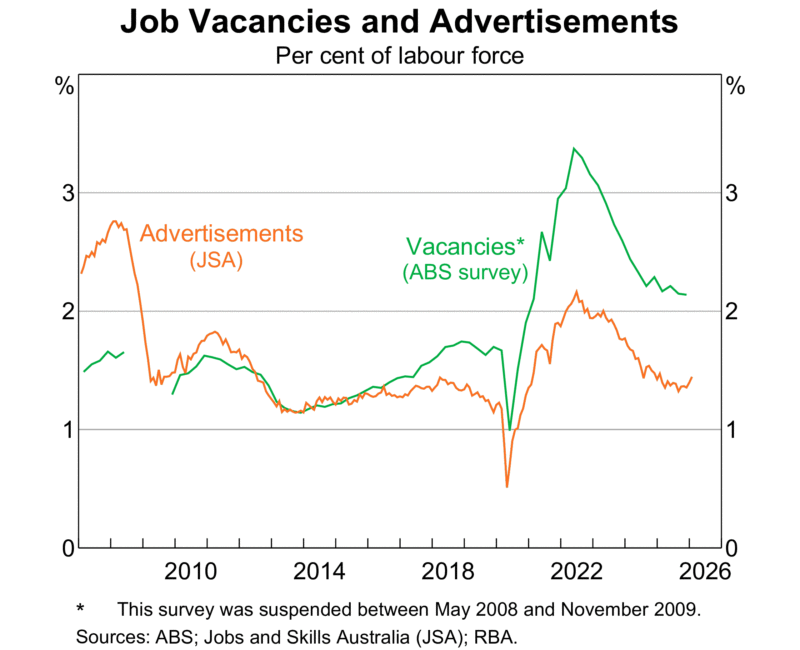
- Currently, there are 326,700 jobs advertised, a decrease of 0.2% from August 2025.
- Private sector vacancies were 287,400, a decrease of 0.5% from August 2025.
- Public sector vacancies were 39,300, an increase of 1.8% from August 2025.
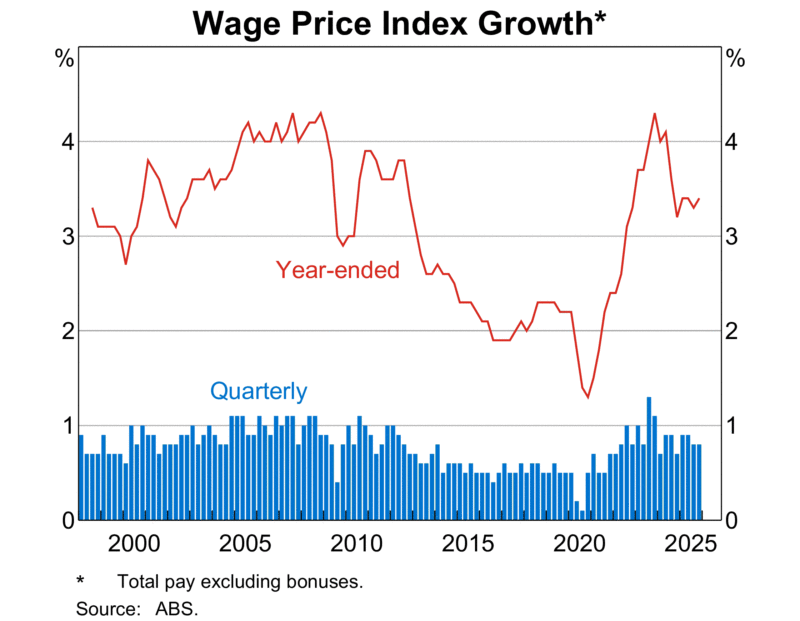
- While national average wages have underperformed inflation over the last couple of years, meaning that “real” wages have actually fallen, we are now experiencing moderate wage increases.
- Recently the Fair Works Ombudsman increased the minimum award wage.
Interest Rates
- Interest rate levels set by the RBA respond to changes in inflation. When rates rise, they slow economic growth and discourage borrowing, typically signalling a strong economy. On the other hand, low interest rates promote economic growth.
- In a unanimous decision, the Reserve Bank Board increased interest rates by 0.25% at its meeting in February, marking the end of the shortest and most modest rate-cutting cycle since the RBA started inflation targeting in 1993. And of course, interest rates were raised again at the RBA March meeting.
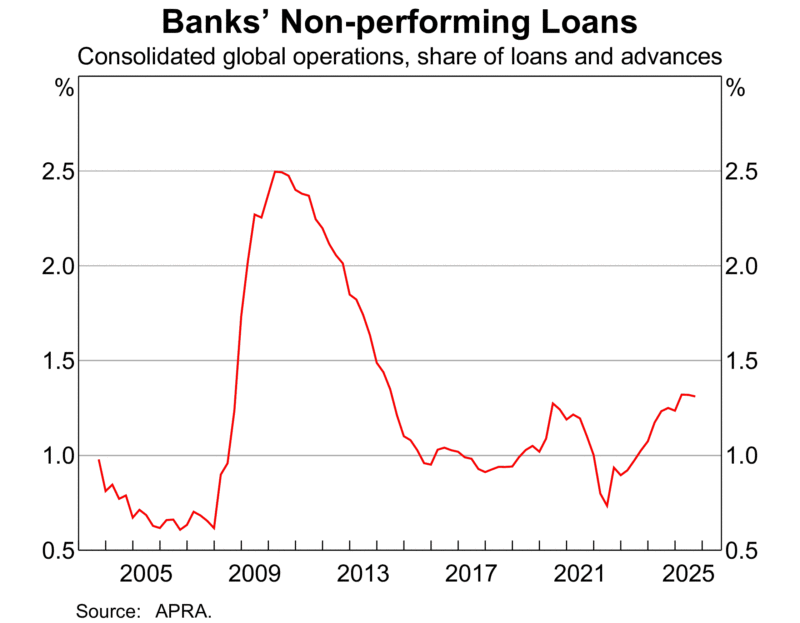
- Despite the sharp rise in interest rates over the last few years, home loan arrears remain at post-GFC lows, defying those property pessimists who forecast that significant levels of mortgage stress would lead to forced sales by homeowners who got over their heads in debt.