

Key takeaways
Despite today's challenges, we are living in one of the most prosperous periods in human history. Modern technology, healthcare, education, and opportunities provide advantages previous generations could only dream of.
The media and our brains are wired to focus on negative news. Negativity bias makes bad news feel bigger than it is, causing many people to overlook the progress and opportunities around them.
Real wealth is about more than money. Financial success matters, but true wealth also includes health, relationships, personal growth, contribution, and time freedom.
Financial freedom comes from mindset and discipline, not income alone. Successful investors think long term, ignore short-term noise, and consistently make decisions that benefit their future selves.
Delayed gratification is the foundation of wealth creation. Spending less than you earn, investing in growth assets, and allowing compounding to work over time remains the proven path to financial independence
If you were to score 2026 on a scale of "good times in human history," plenty of people would give it a pretty low mark, and I understand why.
Right now we're watching ongoing wars in Ukraine and the Middle East, with real fears about wider escalation.
The World Economic Forum's Global Risks Report for 2026 found that half of all surveyed leaders and experts anticipate a turbulent or stormy world over the next two years - up sharply from the year before.
And here at home, Australians are dealing with a fresh round of interest rate rises, energy prices surging again thanks to global conflict disrupting supply, and a cost of living that just won't seem to let up.
NAB's Consumer Stress Index recently hit its highest level since 2014, with households under pressure on groceries, utilities, rent and mortgages.
The Westpac-Melbourne Institute Consumer Sentiment Index dropped 12.5% in April 2026, with near-term expectations falling back to the levels we saw during the 2022-23 cost of living crisis at its worst.
Add to that the relentless drumbeat of bad news from our 24/7 news cycle, social media feeds algorithmically designed to amplify outrage, and you'd be forgiven for thinking things have never been worse.
These are enough to get anyone down.
It’s just too easy to buy into the doom and gloom hype that seems so prevalent in the mainstream media these days.
So it’s no wonder many of us are pining for the “good old days”.
But what if I told you that you’ve won the lottery and right now, we are living in the best country in the world and at the best time in human history – if only we could stop complaining long enough to realise it?

Note: What if I told you that, right now, we are living in the best country in the world at one of the best times in human history - and we're just too distracted by the noise to appreciate it?
Thanks to the invention of the internet, we have access to a whole world of possibilities our parents and grandparents would never have dreamed possible.
We can video chat with friends and family on the other side of the world, work from home and even gain qualifications through prestigious overseas universities, all without leaving the couch.
Not to mention the seemingly limitless news and entertainment that we have right at our fingertips.
While once upon a time dining out was a rare treat, reserved for birthdays and anniversaries, most of us can afford to eat at restaurants and buy takeaway on a regular basis, even if we don’t have a huge income.
And if we can’t be bothered going out, we can have the finest cuisine delivered to our home using UberEats.
Due to modern technology, more of us have been able to work from home and many of us have recognised the importance of friends family and neighbourhood this year.
And only a few years ago our governments and medical system helped avert the disaster that COVID-19 could have been.
Yes, we have real problems in 2026. But we also have the tools, the technology, and the collective knowledge to solve them.
So why does it feel so bad?
Unfortunately, human nature is such that with all these advances and improvements, we can’t help but want more, more, more.
The house, the cars, the holidays, and the daily double-shot macchiato, and dare I mention the controversial smashed avo on sourdough toast.
We want everything, and we want it yesterday, and this mentality leaves us wide open to the relentless pursuit known as “keeping up with the Joneses”.
And when we can't quite afford to keep up with that moving standard, we feel as though we're going backwards - even when we're objectively doing well.
But none of it is real
Real happiness, and real financial security, can’t be found at the bottom of an award-winning bottle of wine in a fancy restaurant.
It’s gained through hard work, discipline, and maintaining your priorities – spend a little here, save a little there, until you reach a point where you’re no longer dependent on your weekly wage to make ends meet.
Until that time, you’re never truly free, because you’re always at the mercy of your creditors, your employer, or the economy.
Of course, money can't buy happiness, but any problem that money can solve isn't really a problem, is it?
That means money is important in those areas of your life where it's important, and it's not important in those areas where it's not important.
To be truly wealthy, you need more than just money – you need your health, your family and friends, your ability to keep learning and growing, the ability to contribute to the community, spirituality, and time to appreciate your life.
- Also read:This week’s Australian Property Market Update – Latest Data, State by State October 13th 2026

- Also read:Latest Property Price Forecasts. Australian Property Market Outlook 2026-2027: Navigating a Market Correction

- Also read:Brisbane Property Market Forecast [2026 & Beyond] – What The Olympics Decade Means for Investors.
- Also read:Sydney property market forecast for 2026 and 2027 | Why the short-term softness is a long-term opportunity
- Also read:Melbourne property market forecast for 2026 & 2027 | Separating the fundamentals from the sentiment
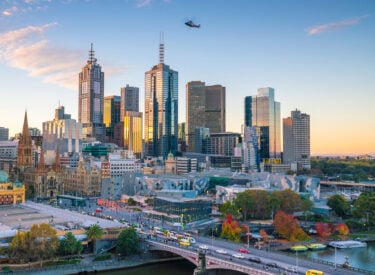
We're hardwired to see the negative
One of the main reasons we feel like things are falling apart, even when the evidence says otherwise, comes down to the biology of the human brain.
We are literally wired for negativity bias.
Early in human history, the people who noticed threats first - who scanned for danger, who assumed the worst - survived longer and passed on more of their genes.
That wiring is still very much with us, even though the threats have changed from predators and famine to rising interest rates and geopolitical headlines.
Research has consistently shown that negative information has a stronger psychological pull than positive information of equal weight.
We notice bad news more. We remember it longer. We let it shape our mood more completely.
And in an era where the 24-hour news cycle is in direct competition for our attention, the algorithm rewards anxiety.
Outrage gets clicks. Fear gets shares. Good news about human progress mostly just gets ignored.
Understanding this bias is the first step to overcoming it. Because once you recognise that your brain is actively scanning for threats and filtering out good news, you can start to correct for it deliberately.
An attitude of genuine gratitude - not just a buzzword, but a practised discipline - goes a long way toward seeing what's actually in front of you.
Mindset is the real edge
Look at the most financially successful people in the world, and you'll find a consistent pattern.
It's rarely about income. It almost always comes down to mindset and behaviour.
Warren Buffett still lives in the same house he bought in 1958 for $31,000. His edge was never a hot tip or a special advantage - it was the ability to think long-term, stay disciplined, and resist the temptation to react to short-term noise.
And that's exactly the skill set needed in 2026, when consumer sentiment is fragile, interest rates have risen again, and global uncertainty is making everyone nervous.
Australia's economy is neither entering a recession nor enjoying a boom right now - it's simply navigating a patch of difficulty.
And difficulty, for the patient and prepared investor, is opportunity.
Becoming financially free isn't about having the best of everything today. It's about making disciplined choices now so that your future self has genuine options.
So instead of buying the newest car, upgrading the wardrobe every season, or financing a lifestyle that looks successful but isn't building real wealth - run your own race.
Take the coffee from home and redirect that money into your mortgage.
Delay the upgrade and use the freed-up cash for an investment property. Make choices that your future self will thank you for, even if they feel small right now.
Delayed gratification is the whole game
The formula for financial freedom has never changed, and it's deceptively simple.
Follow these three simple steps to financial freedom:
- Spend less than you earn (otherwise you’ll always owe money.)
- Save and invest wisely in income-producing growth assets like residential real estate.
- Reinvest your money and use compounding and leverage to grow your asset base until you have a cash machine.
Now don’t underestimate the importance of this simple message.
Keep your eye on the prize, the big picture, long-term goals you want to achieve.
It could be a private school for the kids, early retirement, or a sea-change for a life less complicated.
Every little step you take towards that dream is progress, even if it doesn’t seem that way at the time.
But one day, you’ll wake up and realise you’ve made it… and it will all be totally worth it.
Most people don't fail financially because they made one terrible decision. They fail because they couldn't resist the short-term pull of consumption over the long-term power of accumulation.