

Key takeaways
We're likely to live much longer than previous generations. Advances in healthcare, technology and medical research mean living to 100 could become increasingly common, changing how we should plan our finances.
Retirement needs a new approach. A retirement that lasts 30 or 35 years requires a larger asset base, multiple income streams and a strategy that extends well beyond superannuation.
Owning property becomes even more important. Home ownership reduces living costs in retirement and provides greater financial security, while quality property remains a powerful long-term wealth-building asset.
Healthy ageing is about more than money. Staying physically active, socially connected and mentally engaged can improve both quality of life and financial resilience by helping people remain independent for longer.
Longevity changes how we work, learn and invest. Lifelong learning, flexible careers and long-term investing will become increasingly important as Australians enjoy longer working lives and much longer retirements.
Imagine being told that there's a very good chance you'll celebrate your 100th birthday.
Not because you're exceptionally lucky, not because you'll have access to some futuristic medical breakthrough.
But simply because you're living in Australia at a time when life expectancy continues to rise, and healthcare keeps improving.
For most people, that sounds like wonderful news.
Yet there's another side to the story that receives far less attention - if you live to 100, will your money last that long?
Will the retirement you've imagined still be financially possible?
Will your investment strategy, your property portfolio and your superannuation be enough to support another 30 or 35 years after you stop working?
These aren't hypothetical questions anymore, they're becoming some of the most important financial planning challenges Australians will face over the coming decades.
While politicians continue arguing about tax policy, housing affordability and the cost of living, a much bigger demographic shift is quietly unfolding beneath the surface.
Australians are living longer than ever before, and that changes almost everything.

For weekly insights, subscribe to the Demographics Decoded podcast, where we will continue to explore these trends and their implications in greater detail.
Subscribe now on your favourite Podcast player:
We're entering the age of longevity
When most people think about demographics, they picture birth rates, migration or an ageing population.
But longevity may prove to be the biggest demographic story of them all.
According to demographer Simon Kuestenmacher, Australia's life expectancy continues to rise because we keep solving the health problems that once limited human lifespan.
As Simon explains:
"We are living longer, we are dying later in life, on average."
Early improvements in life expectancy came from reducing infant mortality, improving sanitation and controlling infectious diseases - today the focus has shifted.
Medical researchers are increasingly tackling the illnesses associated with old age, including cancer, cardiovascular disease and dementia.
At the same time, advances in artificial intelligence are improving diagnosis, accelerating medical research and helping doctors identify diseases much earlier than ever before.
The good news is that Australia is particularly well positioned to benefit.
We're one of the wealthiest nations in the world, with a high standard of healthcare, strong education, relatively healthy lifestyles and continued investment in medical research.
Simon believes there is little evidence that this trend is about to reverse - in fact, the fastest-growing age group in Australia is expected to be people aged over 100.
Just think about that for a moment....
For much of history, reaching 100 was almost unimaginable -within our children's lifetime, it may become increasingly common.
Most Australians are still planning for the wrong retirement
Here's where the financial challenge begins - most people still carry around a retirement model that was designed decades ago.
Work until about 65. Retire. Spend 15 or perhaps 20 years enjoying life. That framework simply no longer reflects reality.
But if retirement lasts 30 or even 35 years, everything changes.
The amount of money required changes. The investment strategy changes. The role of property changes. Even our attitude towards work changes.
Simon points out that the traditional retirement age of 65 wasn't chosen because people were physically incapable of working beyond that age.
It was established at a time when average life expectancy was actually below 65.
Many people never even reached retirement - today, most Australians can expect to live decades beyond it. That means the old rules no longer work.
Retirement is becoming a transition, not an event
One of the biggest misconceptions about retirement is that it's a single moment - one day you're working, the next day you're retired forever.
The reality is becoming much more flexible.
We're already seeing more Australians gradually reduce their workload rather than walking away completely.
Some consult. Some mentor. Some work two or three days each week. Others start entirely new businesses.
For many people this gradual transition is financially smarter, emotionally healthier and socially more rewarding than stopping work overnight.
Simon believes this trend will continue because it benefits both employees and employers.
Experienced workers retain purpose, income and social interaction.
Businesses retain valuable knowledge that would otherwise disappear overnight.
This is particularly important because the skills that matter most in the future may actually favour older workers.

Note: While artificial intelligence can process enormous amounts of information, experience, judgement, emotional intelligence and pattern recognition remain uniquely human strengths. These qualities often improve with age.
A 35-year retirement requires a different financial strategy
One of the biggest risks investors face today isn't market volatility - it's longevity risk.
Quite simply, many Australians underestimate how long they'll need their wealth to last.
Think about someone retiring at 65 - if they live until 100, that's a 35-year retirement.
Thirty-five years without regular employment income. Thirty-five years of inflation slowly eroding purchasing power. Thirty-five years of healthcare costs, lifestyle expenses and unexpected financial shocks.
Suddenly, the superannuation balance that once looked substantial doesn't seem quite so comfortable.
As Simon explains:
"One of the big concerns retirees quote is the fear of running out of money."
It's an understandable concern as nobody wants to spend their retirement constantly worrying about every dollar they spend.
Yet neither do people want to deny themselves experiences because they're afraid of spending too much.
Finding that balance becomes increasingly difficult when nobody knows exactly how long they'll live.
That's one reason I've always encouraged investors to build wealth beyond superannuation alone.

Tip: A well-structured property portfolio, diversified investments and multiple income streams provide flexibility that becomes increasingly valuable over a very long retirement.
Property ownership becomes even more important
The longer we live, the more valuable owning your own home becomes.
Housing is usually the largest expense in retirement - remove mortgage repayments and rent from the equation, and suddenly your retirement income stretches much further.
Simon summarises it perfectly:
"The single best indicator that you're not suffering from poverty in old age is that you live in your own property."
This observation carries enormous implications for Australia.
As home ownership gradually declines among younger generations, there's a real possibility that future retirees will increasingly enter retirement as renters. That creates financial pressure not only for individuals but also for governments.
Rent assistance, pensions and housing support all become more expensive.
For investors, however, the lesson is clear...
- Also read:This week’s Australian Property Market Update – Latest Data, State by State October 13th 2026

- Also read:Latest Property Price Forecasts. Australian Property Market Outlook 2026-2027: Navigating a Market Correction

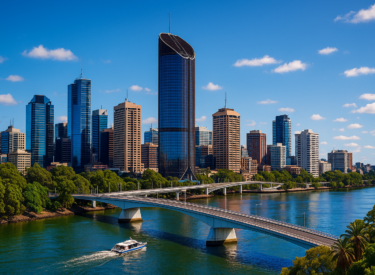
- Also read:Brisbane Property Market Forecast [2026 & Beyond] – What The Olympics Decade Means for Investors.
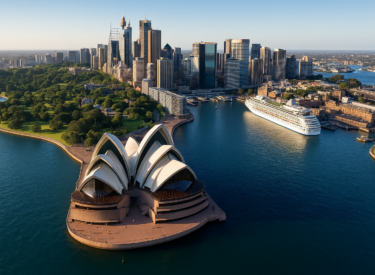
- Also read:Sydney property market forecast for 2026 and 2027 | Why the short-term softness is a long-term opportunity
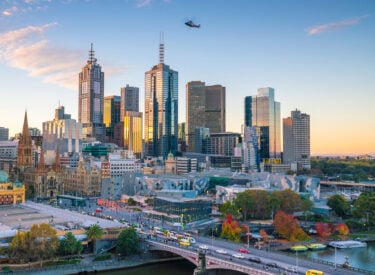
- Also read:Melbourne property market forecast for 2026 & 2027 | Separating the fundamentals from the sentiment
Tip: Owning quality residential property remains one of the strongest long-term financial foundations available.
It provides security, reduces living costs and creates a valuable asset that can support future generations.
Longer lives will reshape Australia's housing market
Longevity won't simply change who owns homes - it will also change the homes Australians want.
As life expectancy increases, more people will spend extended periods living alone after losing a partner.
Many older Australians will want to remain independent for as long as possible, which means housing design will need to evolve.
Simple design features such as level entrances, wider hallways, accessible bathrooms and adaptable living spaces will become increasingly desirable.
At the same time, retirement villages, independent living communities and aged care facilities will experience growing demand.
There's another interesting consequence...
Many people assume older Australians will eventually free up large family homes for younger families, but that process may take much longer than expected.
If someone remains healthy enough to live independently into their late nineties, that family home may stay off the market for another 20 or 30 years, which has implications for housing supply that many policymakers haven't fully appreciated.
Health may become your greatest financial asset
One of the strongest messages from demographic research is that living longer isn't enough.
We want to live healthier for longer.
There's little benefit in adding years if those years are dominated by poor health and declining independence.
Fortunately, many of the factors influencing healthy ageing are well understood.
Regular exercise. Strong friendships. Mental stimulation. Good nutrition. Purpose.
Simon often points to China as an example.
Early each morning, parks fill with older residents practising Tai Chi, walking together, exercising and socialising.
It's a cultural habit that combines physical activity with community connection.
Australia has plenty of parks. Perhaps we need more of the mindset because the financial benefits are obvious.
Note: Healthier retirees generally remain independent for longer, reducing healthcare costs while enjoying a much higher quality of life.
Retirement isn't just about money. It's about purpose.
Many people underestimate how much of their identity comes from work.
Careers provide routine, status, friendships and a sense of contribution.
Removing all of that overnight can create unexpected emotional challenges.
Simon believes gradual retirement helps solve this problem.
Rather than suddenly losing one identity, people slowly develop another. That transition often improves mental health and even relationships.
Interestingly, he notes that sudden retirement can place enormous pressure on marriages.
Couples who have spent decades working separately suddenly spend every day together.
A gradual adjustment gives both partners time to adapt.
Our education system will also need to evolve
If Australians routinely work for 50 or 60 years, education can no longer be something completed in your early twenties. Learning becomes lifelong.
Simon encourages younger Australians to think differently.
Instead of completing every qualification immediately, gain experience first.
Return to study later if it genuinely adds value.
Develop a habit of continuous learning. Read consistently. Stay curious. Adapt.
Note: The future workplace will reward people who continue growing rather than those relying on knowledge acquired decades earlier.
Every generation faces a different challenge
Baby Boomers are already redefining retirement.
Generation X faces the challenge of carrying larger mortgages later into life while preparing for retirement.
Millennials may experience the greatest pressure of all as they'll eventually become the largest elderly generation Australia has ever seen, placing enormous demands on healthcare, aged care and retirement systems.
Fortunately, governments have decades to prepare- whether they use that time wisely remains to be seen.
Relationships may become even more important
Longer lives don't simply change finances -they reshape families.
If people routinely live into their nineties or beyond, second marriages, blended families and later-life relationships become increasingly common.
Friendships become even more valuable.
Simon highlights one area where older men often struggle.
Many build strong professional networks but neglect personal friendships, but when retirement arrives, work relationships fade surprisingly quickly.
Note: Maintaining genuine friendships throughout life may become one of the most valuable investments anyone can make. Not financially - but emotionally.
And those two things are often closely connected.
What should investors do now?
You don't need to overhaul your financial plan tomorrow, but you do need to start thinking differently.
If there's a reasonable chance you'll live to 100, your investment decisions today need to reflect that possibility.
Build a larger asset base than you think you'll need.
Prioritise owning your home. Develop multiple income streams.
Stay physically active. Keep learning. Maintain your friendships.
Continue developing skills that remain valuable regardless of technology.
Most importantly, don't think of retirement as the end of something.
Think of it as another stage of life that could easily last one-third of your entire lifetime.
Final thoughts
I've often said successful wealth creation isn't simply about accumulating assets -it's about creating choices.
The choice to work because you want to, not because you have to.
The choice to help your children and grandchildren.
The choice to travel, volunteer, mentor or pursue passions that were impossible during your working years.
Living longer gives us more time to enjoy those choices, but only if we prepare for them.
As Simon reminds us, simply recognising that you may live much longer changes the entire financial equation.
The wealth strategies that served previous generations may no longer be enough.
For today's investors, longevity isn't something to fear -it's another trend to understand, prepare for and ultimately use to your advantage.
After all, if you're fortunate enough to live to 100, you'll want to make sure your money, your health and your purpose are still with you every step of the way.