
Most people say they want better results in life.
Better finances. Better investments. Better opportunities.
But very few people actually measure the things that create those results.
And as one of my early mentors, Jim Rohn, taught me many years ago, if you don’t measure something, you can’t improve it.
In fact, Jim boiled it down to three simple words:
Weigh. Count. Measure.
Because if you don’t measure something, you really have no idea whether you’re improving or going backwards.
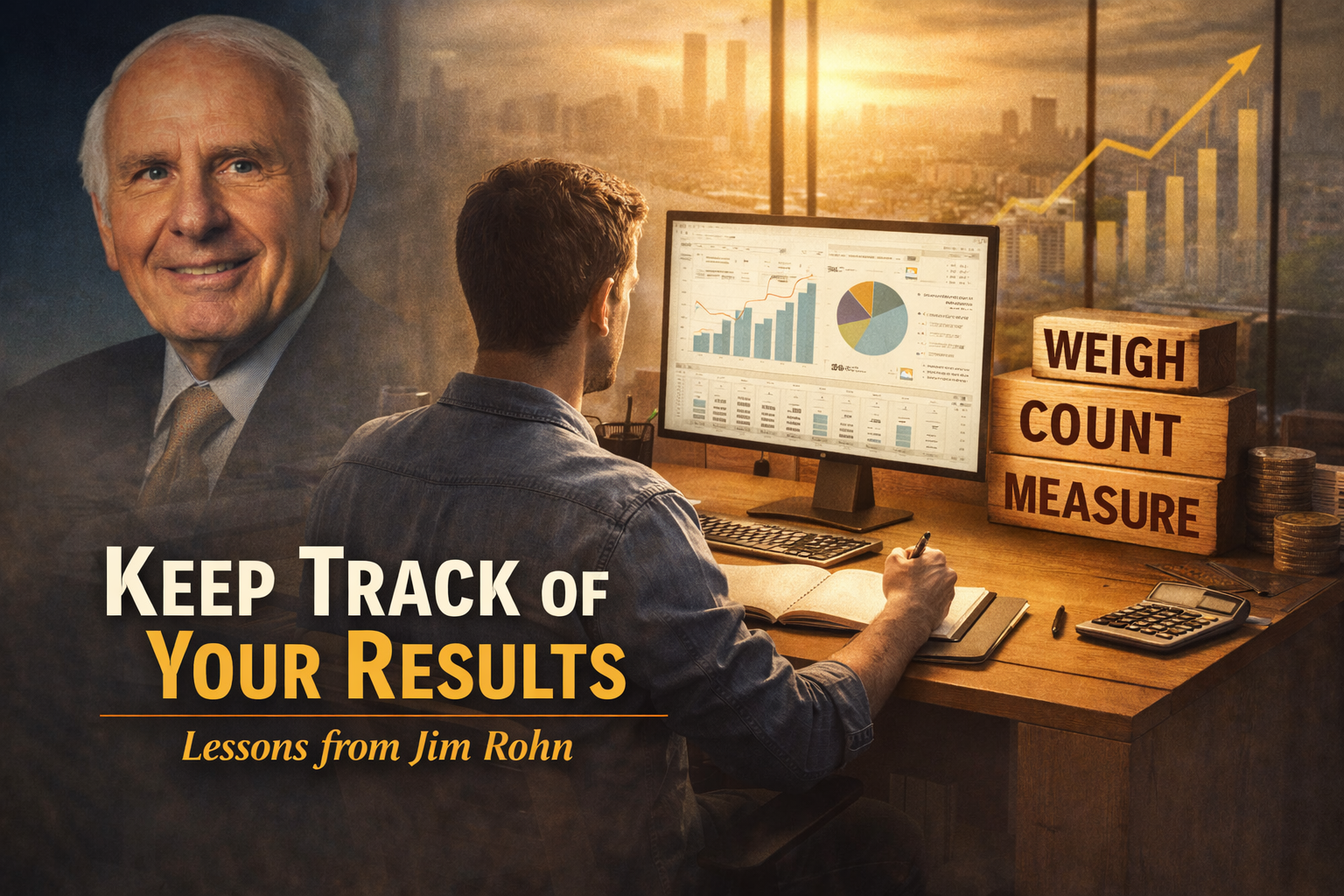
Jim used to say that our results come from three things:
- our philosophy
- our attitude
- and our activity.
And when the results aren’t what we want, the answer is usually found in one of those three areas.

Tip: In other words, results don’t just happen.
They’re the outcome of how we think, how we feel about things, and what we consistently do.
Over the years, I’ve seen this play out countless times with investors.
Some people are incredibly busy. They’re reading articles, watching the news, talking to friends about property.
But they’re not actually measuring what matters.
They’re not tracking their savings rate.They’re not tracking the growth of their assets. They’re not tracking the actions they’re taking each week to move closer to their goals.
And without measurement, it’s very easy to drift.
Jim Rohn also had an interesting perspective on timeframes.
He believed we should measure our progress regularly, but not obsessively.
You can’t ask someone every five minutes how they’re doing, because progress takes time.
But you shouldn’t wait five years before checking whether you’re on track.
Instead, Jim suggested looking at your progress over sensible periods.
For example:
At the end of each day, ask yourself whether you moved forward.
- Also read:National Weekly Auction Report – October 10th 2026 | Auction Markets Remain Generally Subdued as Listings Surge

- Also read:Unsold Stock Drives 21.6% Annual Jump in Listings as Spring Season Opens | Latest SQM Listing Data

- Also read:Home Prices Down Again Over September – But Not as Much | Latest Property Market Stats

- Also read:Unemployment rises, student numbers fall and Melbourne still leads the auction market | Property Insiders

- Also read:This week’s Australian Property Market Update – Latest Data, State by State September 29th 2026

At the end of each week, review your activity and productivity.
And over longer periods, measure the things that really matter - such as how much you’re learning, saving, and investing.
In fact, Jim told a story about his mentor asking him some confronting questions early in his career.
“How many books have you read in the last ninety days?”
“How many classes have you attended in the last six months?”
“How much money have you saved and invested?”
When Jim answered “zero,” the response was blunt: “That’s not a good number.”
Because, as his mentor explained: If the numbers don’t change, your life won’t change.
And I’ve found that to be absolutely true.
Successful people don’t just hope things improve. They track their progress.They measure their habits. They keep an eye on the numbers that actually matter.
Because success, in many ways, is a numbers game.
Whether it’s how much you save, how much you invest, how many opportunities you analyse, or how consistently you improve your skills.
But perhaps Jim’s most powerful lesson was this:
Don’t wait for someone else to measure your results.
Don’t wait for your employer, the government, or even your accountant to tell you how you’re doing.
Instead, hold yourself accountable.
Ask yourself regularly: Am I making the progress I want?
And more importantly…will the numbers I’m producing today take me where I want to go tomorrow?
Because when you start measuring the right things, something interesting happens.
You start improving them.