

Last time we talked about the rise of the solo household - the quiet surge of Australians who now live alone, and why one-third of all households could fit that description within twenty years.
This time, we turn to the job side of the story. Because the way Australians work is changing just as fast as the way they live.
And where work goes, housing soon follows.
Welcome to Australia’s growing gig economy, where more people are stitching together incomes from apps, short contracts, side hustles, freelance assignments and digital platforms.
It is flexible. It is precarious.
And it could have a profound impact on where and how Australians house themselves in the years ahead.

The gig shift has arrived
Let’s start with the basics.
The gig economy in Australia isn’t a fringe. It is already sizeable and expanding.
- Around 1.1 million Australians now work as independent contractors - roughly 7.5% of the workforce.
- For digital-platform workers specifically (Uber, Deliveroo, Airtasker, etc.), the ABS says the average paid hours are just 17.7 a week, with a median of only 10 hours.
- A McKell Institute survey found 81% of transport-gig workers rely on gig work as their main income, 74% use multiple apps, and 45% earn below minimum wage.
- And regulation still lags reality - many gig workers operate without traditional entitlements or predictable earnings.
This is the new labour market: flexible, fragmented and increasingly normal.
And while Australia is not China - far from it - there are some useful parallels.
China’s gig economy has exploded into a workforce of 80–200 million, becoming a pressure valve for a slowing industrial economy.
The Economist recently painted the picture: delivery riders criss-crossing Beijing, state-owned firms shrinking, platform companies taking on semi-official labour-market roles.
Gig work has become a national safety net.
Australia is nowhere near that scale, but the direction of travel is similar: fewer secure jobs, more ad-hoc work, and a cohort of workers whose housing choices no longer fit yesterday’s assumptions.
When work becomes fluid, housing does too
The traditional model - stable job + stable income + stable home - is under strain.
If a large and growing share of workers are stitching together multiple gigs with fluctuating hours, the consequences spill directly into the housing market.
Gig workers operate with a mobility that traditional full-time employees rarely need.
When your next pay depends on where the next opportunity appears, the ability to move quickly becomes essential. That can mean edging closer to high-demand areas, sliding between suburbs as work changes, or even relocating regionally.
Shorter leases become attractive, and long-term commitments like home ownership are often pushed aside simply because working lives lack the stability to support them.
Income instability also makes buying a home harder. Banks still want predictable payslips and long stints with one employer - the opposite of gig work.
- Also read:Latest Property Price Forecasts. Australian Property Market Outlook 2026-2027: Navigating a Market Correction

- Also read:Brisbane Property Market Forecast [2026 & Beyond] – What The Olympics Decade Means for Investors.
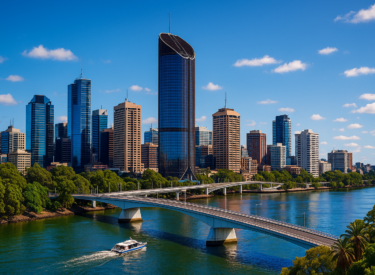
- Also read:Melbourne property market forecast for 2026 & 2027 | Separating the fundamentals from the sentiment
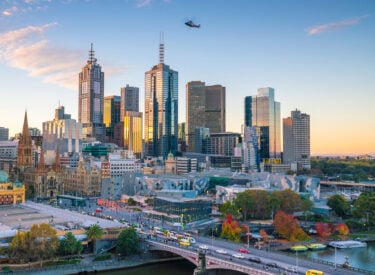
- Also read:Sydney property market forecast for 2026 and 2027 | Why the short-term softness is a long-term opportunity

- Also read:Home Prices Down Again Over September – But Not as Much | Latest Property Market Stats

Even well-earning freelancers struggle to prove serviceability, leading to delayed purchases and longer periods in the rental market. For single gig workers, the challenge is even sharper.
With uncertain income, people gravitate toward smaller, cheaper, more flexible housing.
Micro-units, shared living, modular options and lower-cost regional homes become appealing ways to keep expenses light.
And because gig workers aren’t tied to CBD offices, they favour transport-rich, mixed-use areas and regional hubs - exactly where many cities are failing to supply enough small, affordable dwellings.
Living alone + gig working = A new housing cohort
The surge in people living alone, we now have a second major social trend running in parallel.
One is about household size. The other is about employment structure.
When you combine them, a new demographic emerges:
The mobile, solo, income-patchwork worker.
This group is:
- less likely to buy early
- more likely to rent long-term
- more cost-sensitive
- more location-fluid
- more drawn to compact or shared housing
- more vulnerable to rental stress
- more likely to cluster around urban or regional amenity nodes
And this is no small niche. If living-alone households rise towards one-third of all households by the mid-2040s, and if gig-style work continues to grow, we are looking at a structural shift in Australia’s housing demand profile.
What this means for the housing market
1. Demand for rental housing will stay strong. Gig workers represent long-term renters. Build-to-rent, co-living, rooming-style housing and furnished micro-dwellings will all find deeper demand.
2. Developers will need to build for mobility. Think flexible floor plans, smaller footprints, minimal car requirements, and proximity to multiple job hubs.
3. Regions could benefit. If employment becomes less CBD-focused, regional cities with good amenities and lower housing costs look increasingly attractive. But as noted recently, the right type of housing needs to be supplied.
4. Mortgage policy will need to evolve. Banks and governments may need to rethink serviceability rules, income verification and home-ownership pathways — or lock out hundreds of thousands of future buyers.
5. Infill, granny flats and small-townhouse projects become essential. The “missing middle” becomes even more critical. Smaller households with flexible incomes need smaller, more affordable dwellings in well-connected locations.
The bigger picture
The rise of the gig economy isn’t just a work story. It’s a housing story.
And it’s unfolding faster than our planning, lending and supply systems are prepared for.
If Australia wants a functioning housing market for the next generation, we must recognise that the 20th-century model - permanent job, permanent partner, permanent home - is fading.
In its place: fluid work, fluid households, fluid housing.