


Key takeaways
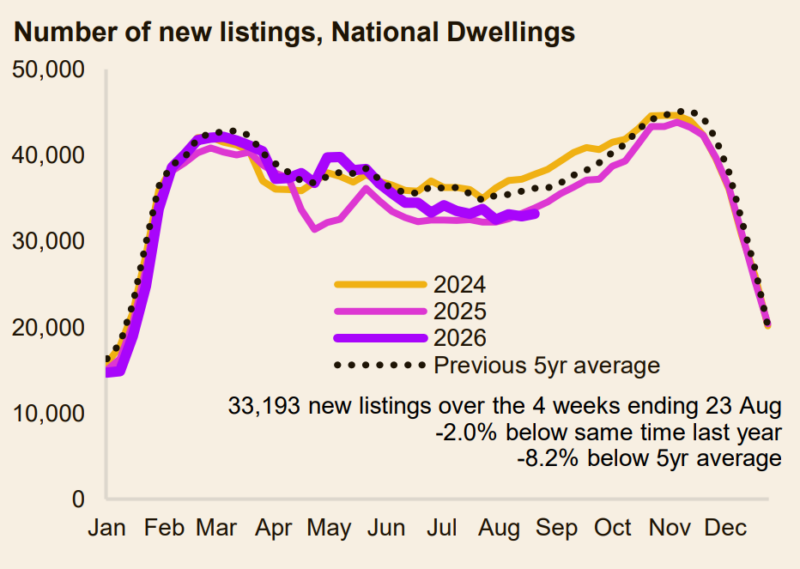
Spring selling season could be cooler than usual, with new listings running 8.2% below the five-year average and 2.0% below last year.
Vendors are becoming more cautious with falling values nationally and weak demand discouraging some owners from listing.
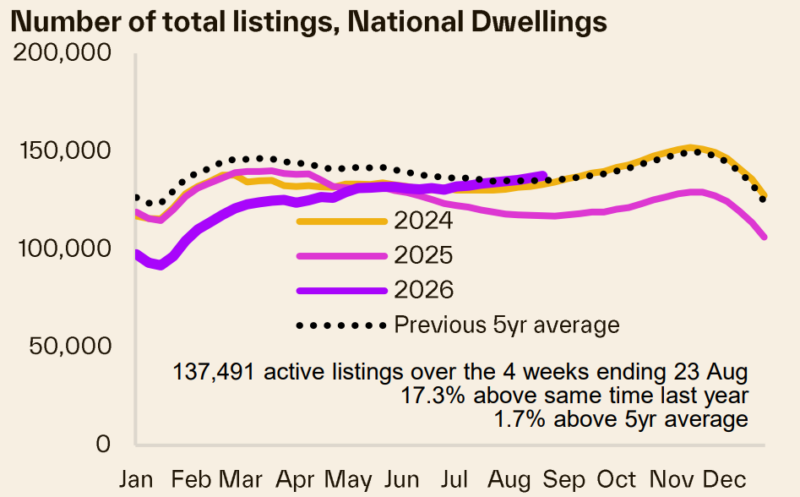
Buyers have regained the upper hand, with total listings rising to 137,000 properties, sitting 1.7% above the five-year average.
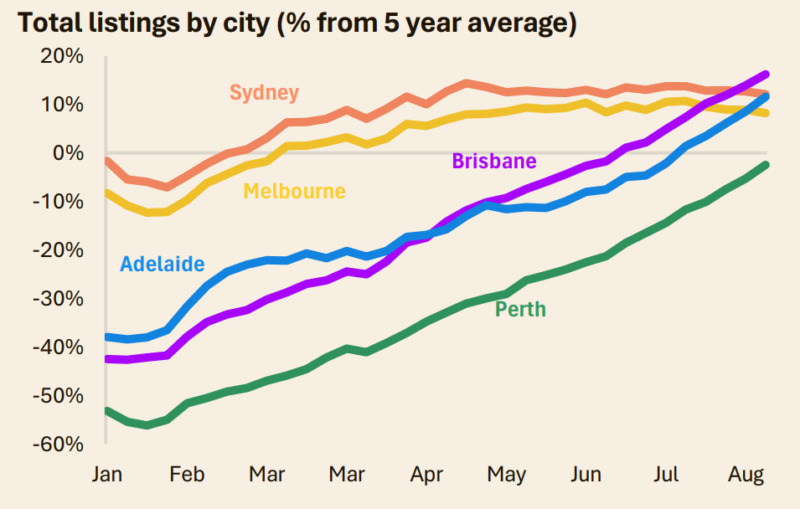
Sydney is leading the slowdown, with new listings sitting 14% below average. Melbourne and Brisbane also recorded notable declines, pointing to a broader national cooling trend.
As the weather starts to warm, green shoots typically begin to emerge in the property market.
The spring and summer season historically sees vendor activity rise, with a surge in new listings and an increase in auction volumes following the winter lull, particularly in the southern states.
This spring could prove to be cooler than the past, with potential vendors assessing a market with falling values, cautious and constrained buyers and an uncertain rates outlook.
Cotality tracks the listings of properties for sale across the country, a key metric that can provide high frequency insights into the interaction of supply and demand in the property market.
Between early February and early June, new listings were broadly in line with the five-year average, with a noticeable spike in markets such as Brisbane and Adelaide during this period.
This may have reflected vendors attempting to cash out after a windfall of capital gains at the peak of these markets.
The flow of new listings coming to market has faded since June, as the housing downturn becomes more geographically broad-based and the decline in values builds momentum.
There were just over 33,000 newly listed properties in the four weeks to 23 August, 8.2% below the average recorded over the past five years and 2.0% below the weak levels seen during the same period in 2025.
Sydney has led this pull back
New listings in the Harbour City were over 14% below average in the four weeks to 23 August, compared with more than 9% down on average levels in Melbourne and almost 5% lower in Brisbane.
Vendors in Adelaide have been slower to respond, with listings still around 4.0% above average over this period.
This supply response has lagged the evident decline in demand from its peaks in late 2025.
This is clear in the listings data, with the total stock of properties available for sale steadily increasing in recent months, even as new listings have faded (compared with average levels).
Total listings were over 137,000 in the four weeks to 23 August, 1.7% above the five-year average.
In contrast, they were almost 26% below average in mid-January, highlighting how rapidly demand contracted over the following months.
- Also read:Migration Is Falling: What Happens to Australian Property Prices Now? | Property Insiders

- Also read:This week’s Australian Property Market Update – Latest Data, State by State September 22nd 2026

- Also read:Latest Property Price Forecasts. Australian Property Market Outlook 2026-2027: Navigating a Market Correction

- Also read:National Weekly Auction Report – September 19th 2026 | Clearance Rates Ease as Auctions Surge

- Also read:Adelaide housing market update | September 2026

While Sydney and Melbourne have seen elevated advertised stock levels for several months, which implies more choice for buyers and a greater ability to negotiate around price, the mid-sized capitals have seen the greatest change, with Brisbane moving from around 43% below average in the four weeks to 11 January, to over 16% above average in the four weeks to 23 August.
What does this mean for the spring selling season this year?
The property market is in a very different position heading towards spring than it was 12 months ago.
This time last year, home values were rising, the Reserve Bank had recently made its third rate cut (and expectations were that further cuts could still occur), consumer sentiment was stronger and investors were highly active in the market.
In contrast, as this winter comes to an end, we are already four months into a national downturn in home values, with demand impacted by affordability constraints, the reversal of last year’s interest rate cuts, higher fuel costs and pessimistic consumer confidence and subdued investor activity following changes in the Federal Budget.
There remains some risk of a further rate hike, but none of these factors look likely to improve in the short term, meaning they will continue to limit property demand across spring.
The RBA looks unlikely to start cutting rates until well into 2027 at the earliest.
Warmer weather usually brings vendors out of hibernation.
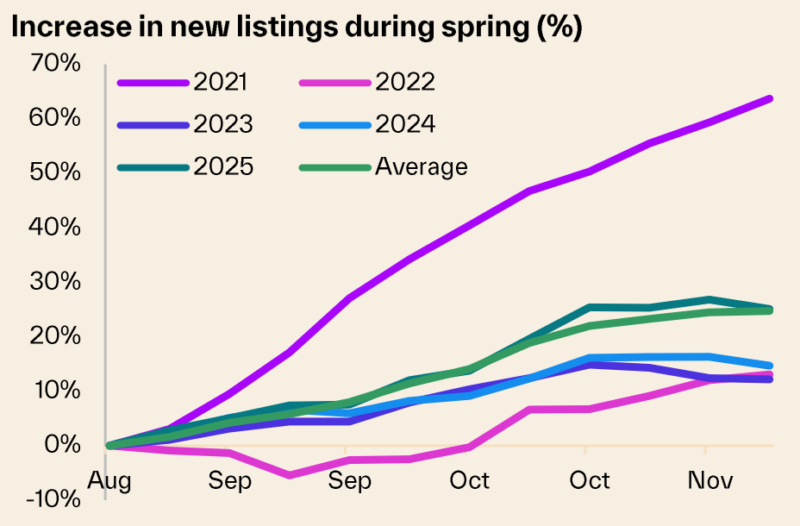
Over the past five years, spring has brought a sizeable increase in new property listings nationally, up almost 25% between the end of August and the middle of November.
This year, we are likely to see more caution.
Vendors assessing the market would see fewer buyers, who have a greater range of properties to choose from, more time to evaluate and more power to negotiate.
Those owners that can afford to wait for stronger market conditions may make that choice, leading to a continuation of the weaker trend in new listings evident more recently.
For buyers who have the confidence to transact in this market, spring could provide an opportunity.
With less competition from other buyers, lower housing prices and plenty of leverage at the negotiating table, buyers are well and truly in the driver’s seat across most markets.