

Key takeaways
High achievers often feel dissatisfied not because they’re failing, but because they’re measuring themselves against an ever-moving ideal.
Living in “the Gap” means focusing on where you think you should be, which creates frustration and pressure.
Living in “the Gain” means measuring progress against where you started, which builds confidence and momentum.
The most ambitious investors are often the most vulnerable to this mindset trap.
Comparing your property portfolio to others can lead to poor decisions and unnecessary risk-taking.
Long-term wealth is built through consistent, disciplined progress, not constant comparison.
Goals should guide your direction, not define your sense of success.
Regularly reflecting on how far you’ve come can improve decision-making and reduce stress.
A balanced mindset combines ambition for the future with appreciation of past progress.
You’re probably doing better than you think.
Yet if you’re like most successful investors I speak with, it rarely feels that way… and that disconnect could be quietly holding you back.
The problem isn’t your results.
In fact, in most cases, it’s not your strategy, your portfolio, or even the market that’s letting you down.
It’s the way you’re measuring your progress… and that subtle shift in perspective can make all the difference.
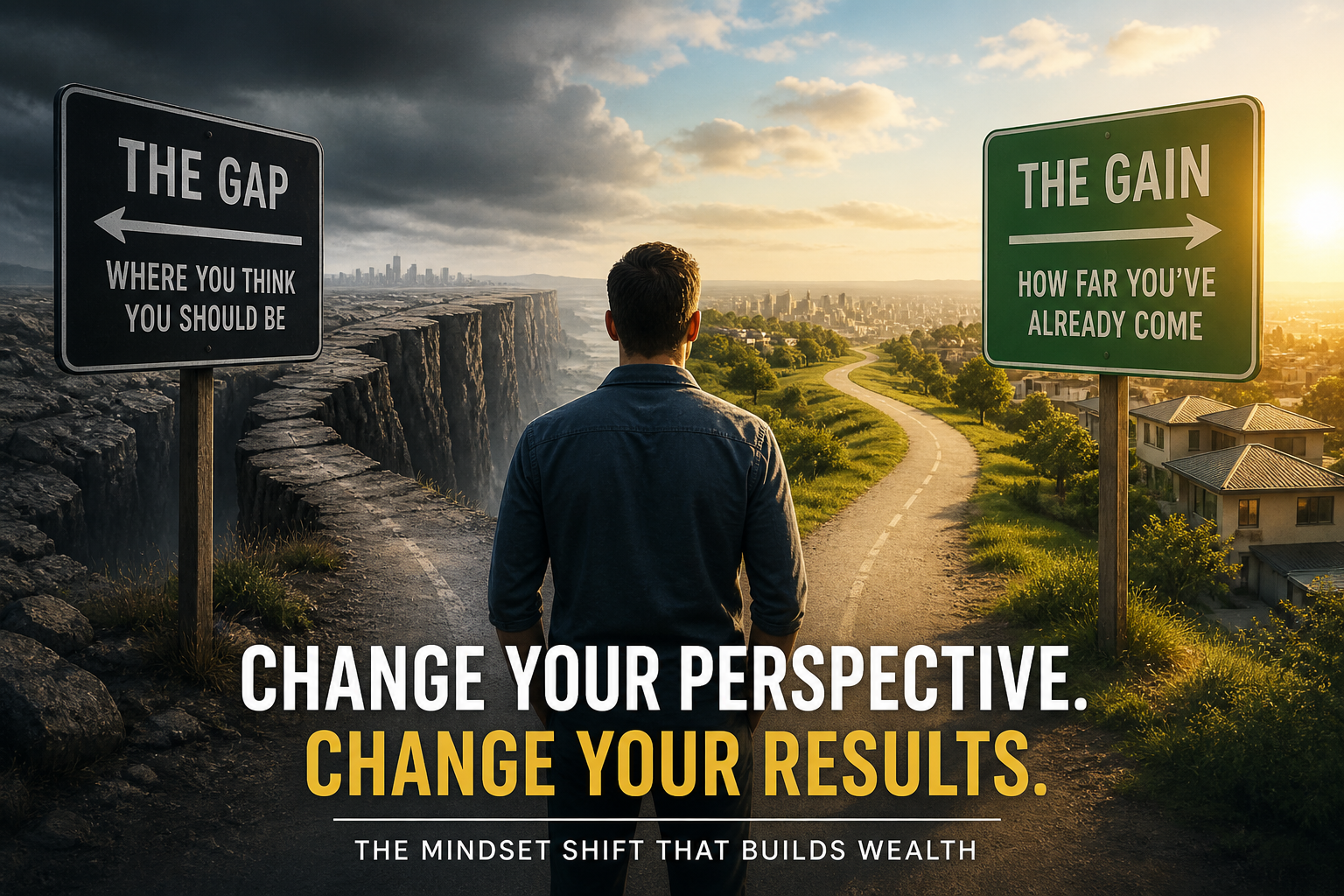
Let me explain…
Dan Sullivan’s The Gap and the Gain is a deceptively simple book, but it tackles a problem that I see all the time with successful people, especially investors and business owners.
At its core, the book explains why so many high achievers feel dissatisfied despite making real progress, and it comes down to how they measure success.
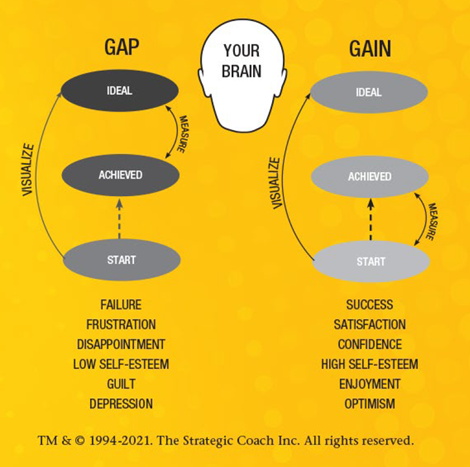
Sullivan describes two ways of thinking
The “Gap” is when you measure yourself against an ideal, against where you think you should be.
The problem is that the ideal keeps moving.
As you grow, your expectations rise, so you’re always falling short in your own eyes. This creates frustration, anxiety, and a constant sense that it’s never enough.
The “Gain” is the opposite approach. Here, you measure yourself against where you started.
Instead of focusing on how far you still have to go, you focus on how far you’ve already come. That shift sounds small, but it changes your psychology completely.
What’s interesting is that the people most prone to living in the Gap are often the most successful. They’re ambitious, driven, and always pushing for more.
In other words, the very traits that help them succeed financially can undermine their sense of achievement.
Sullivan’s argument isn’t about lowering standards or becoming complacent. It’s about changing the reference point.
You can still be ambitious and goal-driven, but if you don’t regularly acknowledge your progress, you’ll never feel satisfied, no matter how well you do.
- Also read:Latest Property Price Forecasts. Australian Property Market Outlook 2026-2027: Navigating a Market Correction

- Also read:Brisbane Property Market Forecast [2026 & Beyond] – What The Olympics Decade Means for Investors.

- Also read:Melbourne property market forecast for 2026 & 2027 | Separating the fundamentals from the sentiment

- Also read:Sydney property market forecast for 2026 and 2027 | Why the short-term softness is a long-term opportunity

- Also read:This week’s Australian Property Market Update – Latest Data, State by State September 29th 2026

He also links this idea to confidence and performance
When you operate from the Gain, you build momentum. You feel more capable because you can see evidence of your progress.
That leads to better decisions and more consistent action.
From a wealth creation perspective, this is particularly relevant.
Property investors, for example, often compare themselves to others or to some ideal portfolio they’ve seen online.
That can lead to poor decisions, like overextending financially or chasing the next deal for the wrong reasons.
A Gain mindset encourages a longer-term view
You’re more likely to stick to a strategy, make measured decisions, and recognise that compounding takes time. It also aligns well with how real wealth is built in Australia, through disciplined, incremental progress rather than quick wins.
One practical takeaway from the book is to regularly review your progress.
Not just financially, but across all areas of life.
When you consciously measure backward instead of forward, you start to appreciate your achievements and reduce unnecessary stress.
You need a balance
If I were to add a slightly contrarian angle, I’d say there’s a balance to strike.
Living entirely in the Gain without any forward-looking ambition could make some investors too comfortable.
The real sweet spot is using the Gain for satisfaction and confidence, while still using future goals as direction, not as a yardstick for self-worth.
That’s where many people go wrong. They let their goals define their happiness rather than guide their actions.
Overall, The Gap and the Gain is less about productivity and more about perspective.
And in my experience, getting that perspective right is just as important as choosing the right investment strategy.