


Key takeaways
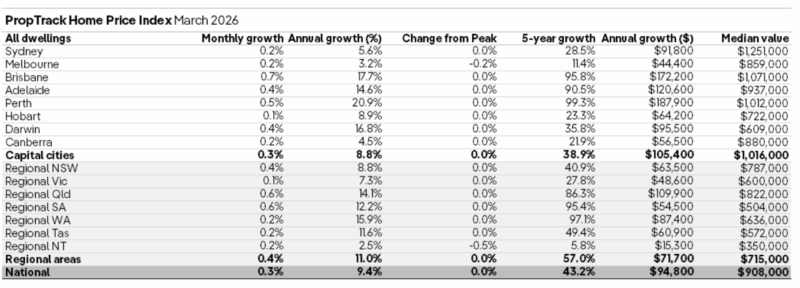
National home prices increased 0.3% in March, taking the national median home value to $908,000.
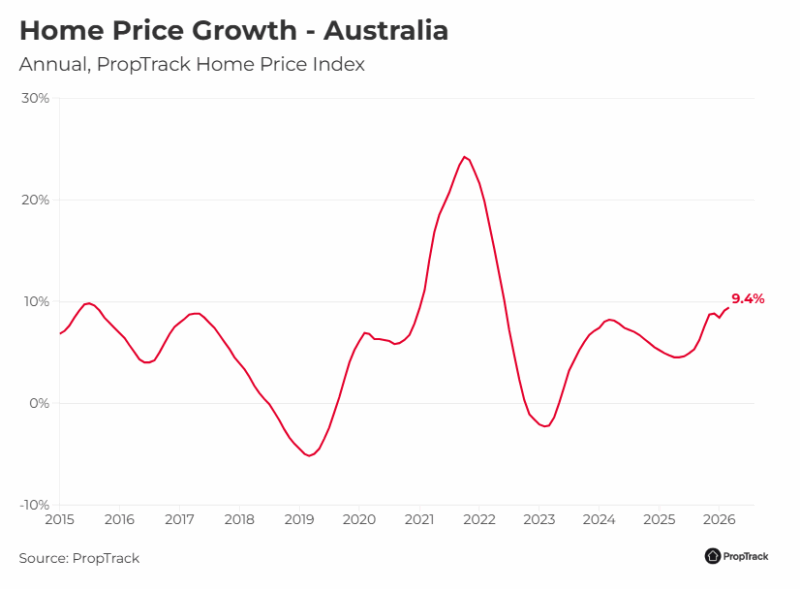
Prices are now 9.4% higher than a year ago, adding around $94,800 to the value of the median home.
Capital city prices rose 0.3% over the month, lifting the median home value to $1,016,000.
Brisbane (+0.7%) recorded the largest monthly rise among capital cities, followed by Perth (+0.5%) and Adelaide (+0.4%).
Perth remains the fastest growing capital over the year (+20.9%), followed by Brisbane (+17.7%), Darwin (+16.8%) and Adelaide (+14.6%).
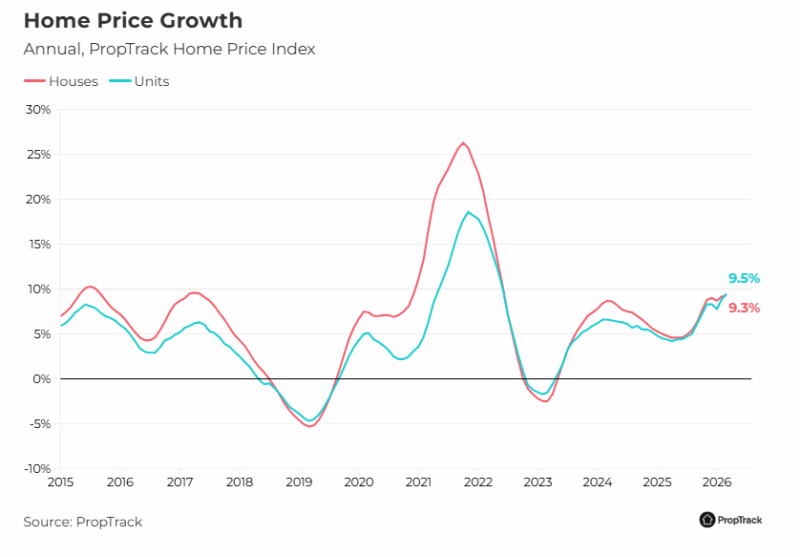
Across the capital cities, annual growth for houses and units remains similar. However, monthly unit price growth was more than double that of house price growth in March, suggesting demand is stronger for more affordable stock as borrowing capacity has been constrained further by recent rate rises.
Regional prices climbed 0.4% in March and were up 11.0% year-on-year. Regional growth has outpaced the capitals over the past year (11.0% vs 8.8%) and five years (57% vs 39%), supported by relative affordability and lifestyle appeal.
Australia’s property market has just hit another record...
According to the latest PropTrack Home Price Index, the national home prices rose to a fresh record in March, extending the current upswing, but the pace of home price growth is slowing,
National home prices increased 0.3% in March, taking the national median home value to $908,000.
In fact, prices are now 9.4% higher than a year ago, adding around $94,800 to the value of the median home.
Eleanor Creagh, PropTrack's Senior Economist said:
"Momentum has clearly eased, with more than three quarters of SA4 regions recording a deceleration in monthly growth relative to February, pointing to a broad-based slowdown emerging across the country and a clear turning point in the cycle as rising interest rates weigh."
The report also notes that while price declines remain limited, they are beginning to emerge in some inner- and middle-ring markets, most notably in Sydney and Melbourne.
Ms Creagh further explained:
"The slowdown in monthly price growth, alongside weaker auction clearance rates, particularly in Sydney, indicates housing momentum has turned, shifting from broad upswing, to widespread moderation.
- Also read:Migration Is Falling: What Happens to Australian Property Prices Now? | Property Insiders

- Also read:This week’s Australian Property Market Update – Latest Data, State by State September 22nd 2026

- Also read:Latest Property Price Forecasts. Australian Property Market Outlook 2026-2027: Navigating a Market Correction

- Also read:National Weekly Auction Report – September 19th 2026 | Clearance Rates Ease as Auctions Surge

- Also read:Adelaide housing market update | September 2026

Annual growth for houses and units remains similar
The report shows that across the capital cities, annual growth for houses and units remains similar.
However, monthly unit price growth was more than double that of house price growth in March, suggesting demand is stronger for more affordable stock as borrowing capacity has been constrained further by recent rate rises.
The data also highlights that regional prices climbed 0.4% in March and were up 11.0% year-on-year.
Regional growth has outpaced the capitals over the past year (11.0% vs 8.8%) and five years (57% vs 39%), supported by relative affordability and lifestyle appeal.
Ms Creagh further explains:
"Recent rate rises will weigh on buyer sentiment, borrowing capacity, and erode already poor affordability, though a resilient labour market, population growth and first-home buyer support continue to underpin demand against limited supply."
Outlook
The latest PropTrack Home Price Index Report highlights that looking ahead, the housing market is likely to slow further.
Ms Creagh suggests that if another interest rate rise is delivered in May and potentially again later in the year, it would add further pressure on borrowing capacity and buyer demand.
As a result, the market is shifting into a slower-growth phase, with an increasing likelihood of flat or declining prices in some areas, although persistent supply shortages should help limit the moderation.