

Key takeaways
The broad-based uplift driven by rate cuts and returning confidence has run its course. Interest rates are likely to stay higher-for-longer, and possibly even rise slightly.
Strategies that worked in 2025 will not automatically work in 2026.
Construction is broken, approvals are at decade lows, and vacancy rates remain tight. Migration may have normalised, but the structural housing shortage hasn’t.
Price growth will continue where housing is scarce — regardless of what the RBA does next.
Outer, mortgage-dependent suburbs are hitting affordability ceilings and will underperform.
In contrast, inner- and middle-ring suburbs with wealthier, equity-rich buyers will remain resilient and continue to see capital growth.
A-grade properties in gentrifying, well-located suburbs will outperform, while secondary assets (poor locations, compromised dwellings, oversupplied high-rise) will stagnate.
Building cash buffers, avoiding over-leverage, and maintaining flexibility will separate successful long-term investors from forced sellers as conditions tighten later in 2026.
There is a dangerous assumption circulating among investors right now - the belief that 2026 will simply be a repeat of 2025, just with lower interest rates.
They couldn't be more wrong, meaning that if you’re relying on the same strategy that worked for you in 2025, you’re in for a rude shock—the 'easy money' phase of this property cycle is officially over.
If you recall, the media narrative at the start of last year was that high interest rates would “crash the market”.
Instead, in 2025 the RBA cut the cash rate to 3.6%, sparking a resurgence in buyer activity and pushing values in most capital cities to new record highs.
But as we settle into 2026, the "easy" phase of the recovery is behind us, and many of the assumptions investors made 12 months ago are now out of date.
The expectation that rates would continue to keep falling has hit a wall.
Inflation remains stickier than the RBA would like (hovering above 3%), and major banks are now split—with some even forecasting a potential "fine-tuning" rate hike in February to cool things down.
At the same time, the massive migration surge of 2023–24 has normalised, yet we are left with a chronic, structural undersupply of housing that isn't going away.
So, does real estate still offer a safe path to wealth creation in this confused economic climate?
The answer is yes—but the "rising tide" that lifted all ships in 2025 is over.
We are moving into a fragmented, two-speed market.
To succeed in 2026, you need to ignore the old playbook and follow these three updated rules.

1. Focus on structural shortages — not the "rate cut" narrative
For the last year, many investors were obsessed with the RBA. When will they cut? How much will they cut?
In 2026, you must decouple your strategy from the cash rate.
While we saw some relief in 2025, the "cheap money" era is not returning. The cash rate is likely to settle around the mid-3% range for the foreseeable future.
If you are waiting for rates to drop back to 2% to make a deal stack up, you will be waiting forever.
Instead, focus on the one driver that interest rates cannot fix: Supply.
- Construction is in crisis: Building approvals remain at decade lows. High construction costs and labour shortages mean developers simply aren't building enough projects to meet demand.
- The Rental Trap: Vacancy rates are still critically low in Perth, Adelaide, and Brisbane, and tightening again in Sydney and Melbourne.
- Government Stimulus: The expanded First Home Buyer Guarantee is acting like a rocket under the affordable end of the market, effectively pulling forward tens of thousands of buyers.
The Lesson: Ignore the monthly RBA "will they/won't they" drama. The structural shortage of accommodation is the safety net under this market.
Prices will continue to rise not because credit is cheap, but because homes are scarce.
- Also read:This week’s Australian Property Market Update – Latest Data, State by State September 15th 2026

- Also read:Latest Property Price Forecasts. Australian Property Market Outlook 2026-2027: Navigating a Market Correction

- Also read:Brisbane Property Market Forecast [2026 & Beyond] – What The Olympics Decade Means for Investors.
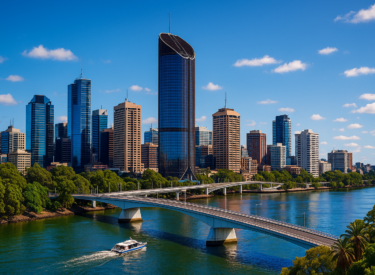
- Also read:Melbourne property market forecast for 2026 & 2027 | Separating the fundamentals from the sentiment

- Also read:Sydney property market forecast for 2026 and 2027 | Why the short-term softness is a long-term opportunity

2. Capital growth will be selective — the "2-tier" market is here
In 2025, we saw broad-based growth as confidence returned. In 2026, affordability constraints are hitting a ceiling.
We are now seeing a distinct 2-Tier Property Market:
- The "Debt-Dependent" Market: These are the outer suburbs and blue-collar areas where buyers rely heavily on mortgages. These markets are hitting an "affordability wall." With borrowing capacity capped and cost-of-living pressures still biting, growth here will slow significantly in the second half of 2026.
- The "Wealth-Driven" Market: These are the established inner- and middle-ring suburbs of Sydney, Melbourne, and Brisbane. Buyers here often have significant equity, higher incomes, or help from the "Bank of Mum and Dad." They are less sensitive to interest rate fluctuations.
Buy Investment Grade or Regret It
Gone are the days when you could buy "anything" and watch it double in 7 years.
In 2026, A-grade properties in gentrifying, aspirational suburbs will outperform. Secondary properties—those on main roads, with poor floor plans, or in oversupplied high-rise precincts—will languish.
My advice: You must buy the best asset you can afford. If that means buying a smaller townhouse in a blue-chip suburb rather than a large house in the outer fringe, choose the blue-chip suburb. Scarcity and land value in connected locations will drive capital growth this year.
3. Build a "war chest" — plan for higher-for-longer
Perhaps the biggest incorrect assumption leading into 2026 was that the cost of holding property would drastically drop.
It hasn't.
While rates are off their peaks, holding costs remain high. You cannot rely on rental yield increases alone to cover your mortgage.
Smart investors are using this time to build a financial buffer - a "War Chest."
- Don't over-leverage: Banks are still assessing serviceability conservatively.
- Keep cash reserves: If the economy hits a wobble or the RBA does hike rates in February, you want to be the buyer who can hold on, not the distressed seller forcing a sale.
The window is still open, but it’s narrowing
We are likely in for a "game of two halves" in 2026.
The first half of the year will see strong momentum carry over from late 2025, driven by the First Home Buyer stimulus and pent-up demand.
But as we move later into the year, affordability constraints will naturally slow the pace of growth.
The question isn't "Is it a good time to buy?"
The question is: "Am I buying a property that will outperform the averages over the long term?"
If you buy an investment-grade asset in a gentrifying supply-constrained location now, you are setting yourself up for the next stage of the cycle.
On the other hand, if you wait for "perfect" conditions, you will likely be priced out of the best markets.
- Sydney & Melbourne: Look for the "ripple effect" in gentrifying middle-ring suburbs.
- Brisbane & Perth: These markets will still be strong,but be cautious of chasing the boom too late in the cycle—stick to quality.
In today's climate, playing it safe means playing it smart. Don't follow the herd, because the herd is usually running in the wrong direction.