
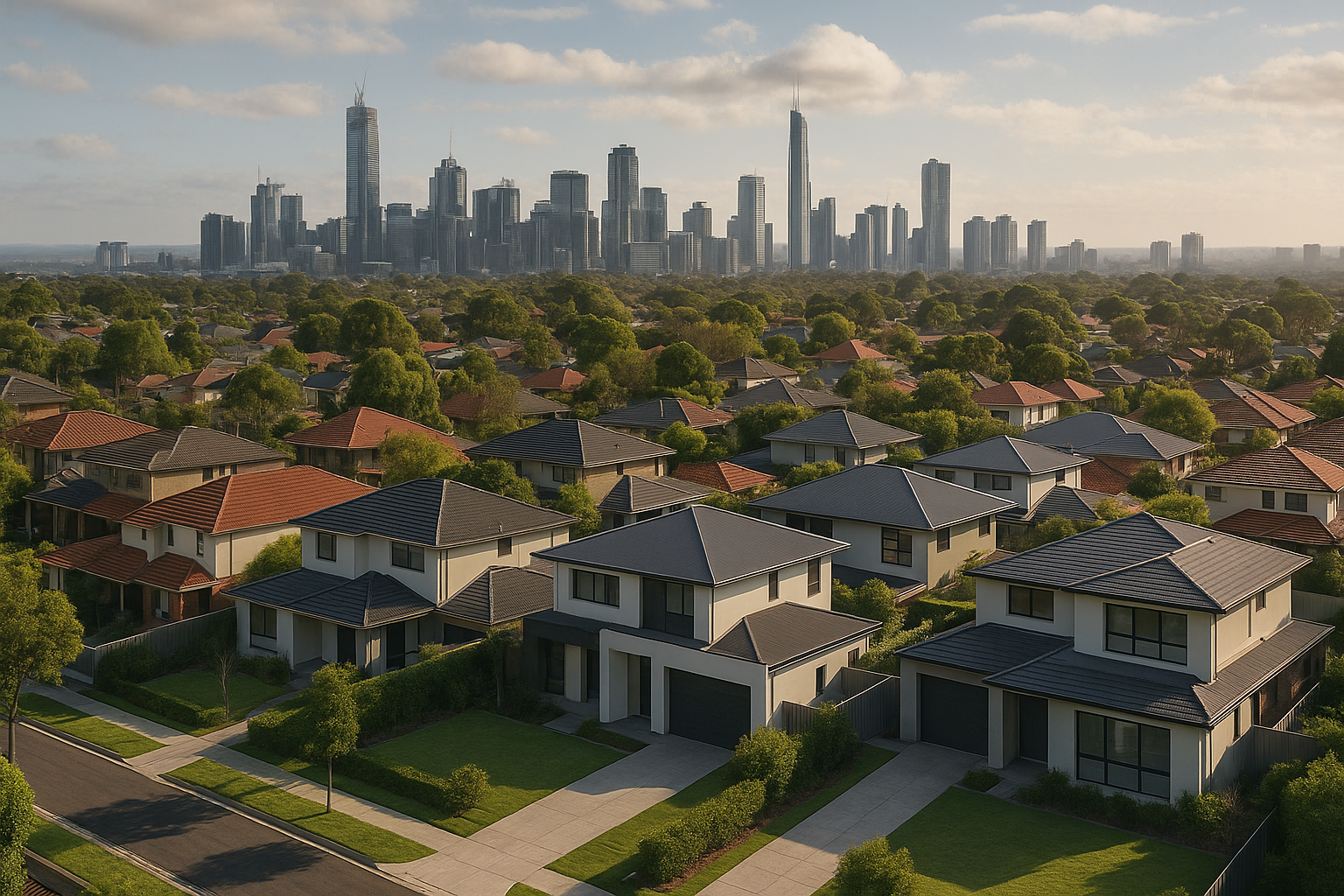

Key takeaways
By 2036, renting will be a lifestyle choice for many Australians, not just a necessity.
A new demographic of long-term renters — especially among Millennials and Gen Z — will emerge.
Governments will adapt with stronger tenant protections, longer leases, and incentives for build-to-rent developments. Security of tenure, not ownership, will become the new aspiration.
The massive wealth transfer from Baby Boomers to Gen X (and their children) will inject trillions into the economy, much of it tied to property.
Gen X will become the wealthiest generation in Australia, accelerating investment activity and helping the next generation enter the market.
Australia’s population will likely exceed 33 million by 2036, pushing housing demand far beyond supply.
This imbalance will keep pressure on both property prices and rents, particularly in capital cities and desirable regions. Despite fluctuations, long-term values will keep climbing.
Buyers and tenants will pay premiums for lifestyle factors, proximity, design, and liveability, rather than size. Sustainability features such as solar power and energy efficiency will be standard and directly tied to property values.
The era of easy capital growth is over. Future success will come from data-driven, professionally guided investment strategies
It’s always fascinating to look forward a decade and imagine what Australia’s property markets might look like.
Of course, we can’t predict the future with precision, but we can look at the big demographic, social and economic trends already in motion today.
And when you connect the dots — population growth, the passing of wealth from Baby Boomers to Gen X, changing lifestyles, and the chronic undersupply of housing — it paints a clear picture of where we’re heading.
So here are my ten big predictions for what Australia’s property landscape will look like in 2036.
1. The “Forever Renter” will be a recognised demographic
By 2036, there will be a whole new demographic of Australians who never buy a home — and not necessarily because they can’t afford to. Many will simply choose to rent for life.
The Australian dream of home ownership is changing.
With high prices, lifestyle flexibility, and a more mobile workforce, long-term renting will become a mainstream choice meaning we’ll see a large, permanent renter class, particularly among Millennials and Gen Z.
Governments will catch up with this reality by strengthening tenant protections, introducing longer-term leases and increase tax incentives for “build-to-rent” developments.
It is likely that owning won’t be the only aspiration anymore; security of tenure will be the new dream for many Australians.
2. The Great Wealth Transfer will supercharge Gen X investors
Over the next decade, Baby Boomers will pass on an estimated $3–4 trillion in wealth, to their children and grandchildren, mostly through property.
Gen X, already a financially savvy and property-focused generation, will become Australia’s wealthiest cohort.
Many will use their inheritance to pay off their own mortgages, invest in property and help their adult children into the market.
This intergenerational wealth shift will create a powerful wave of property investment throughout the 2030s.
3. Australia’s population will boom past 33 million
Australia’s population is projected to soar past 33 million by 2036, possibly reaching 34 million if migration remains strong.
We’re already growing faster than many forecasts not that long ago and we’re not building anywhere near enough homes to keep up.
That imbalance between strong population growth and chronic undersupply will continue to fuel property prices and rental demand for years to come.
Even if we manage to build more dwellings, the reality is we’ll still be short.
That’s just what happens when you live in one of the most desirable countries in the world.
4. Property values will keep climbing, despite the naysayers
Sure, prices will fluctuate along the way. There will be periods when affordability tightens, lending rules change, or interest rates move.
But over the long term, property values in our capital cities will keep rising.
Australia’s median house price could easily double again by 2036, driven by population growth, land scarcity, and the rising wealth of the nation.
History shows that well-located real estate in major cities outperforms almost every other asset class over the long run. That’s unlikely to change.
5. Smaller homes, bigger lifestyle expectations
The quarter-acre block is well and truly history.
By 2036, the typical Australian home will be smaller, smarter, and more sustainable.
And this will not only be because of the cost of new construction, but also because household sizes in Australia continue to shrink. So the type of property we need to live in will be different.
We’ll see more medium-density living - townhouses, duplexes, and boutique apartment developments - especially in inner and middle-ring suburbs.
But “smaller” won’t mean “cheaper” or “less desirable.” People will pay a premium for lifestyle - for convenience, good design, walkability, and community.
The winners will be developers and investors who understand that liveability, not size, drives long-term value.
- Also read:This week’s Australian Property Market Update – Latest Data, State by State March 24th 2026

- Also read:Melbourne property market forecast for 2026 | Is it a good time to invest in Melbourne?
- Also read:Latest Property Price Forecasts Revealed. Australian Property Market Outlook 2026: Where To Now After The Rate Rise.

- Also read:Brisbane Property Market Forecast [2026] – What’s Ahead & Where to Invest
- Also read:Sydney property market forecast for 2026. Is it a good time to invest in Sydney?
6. The rise of the “15-Minute suburb”
The concept of the “15-minute city” - where you can live, work, shop, and socialise within a short walk or e-bike ride - will shape urban planning by 2036.
As our cities densify and traffic/congestion intensify, access to local amenities becomes a more compelling driver of value than outer-ring cheap land.
With more people working hybrid or remote, proximity to nodes of social and transport infrastructure will matter even more.
That means people will pay more to live in suburbs that offer lifestyle and connectivity rather than simply proximity to the CBD.
Meanwhile, outer suburban “drive until you qualify” areas will face tougher times unless they evolve with new infrastructure and employment opportunities.
7. Technology will reshape how we buy, sell, and build property
Buying and selling real estate in 2036 will look nothing like it does today.
Artificial intelligence will analyse millions of data points to forecast suburb growth, blockchain will make property transactions instantaneous, and 3D-printed modular homes will be commonplace.
Virtual reality inspections, smart home systems, and predictive design will all be standard features.
Yet despite all the technology, one thing won’t change: the timeless fundamentals of property success — location, scarcity, and quality.
8. Sustainability will drive property value
Sustainability will be a major driver of property value.
By 2036, buyers will expect homes that are energy-efficient, climate-resilient, and environmentally friendly. Solar power, battery storage, insulation, and smart home energy systems will all be standard — not luxury extras.
Homes that aren’t upgraded will fall behind, both in value and desirability.
We might even see banks offering cheaper interest rates for sustainable housing, and governments providing tax breaks for green retrofits.
In short, being green won’t just feel good – it will be the new gold and pay off financially.
9. Regional hotspots will mature into “mini-capitals”
The regional boom sparked by the pandemic won’t fade — it will evolve.
By 2036, lifestyle-rich, economically diverse regions such as Geelong, the Sunshine Coast, Newcastle, and Wollongong will have matured into fully-fledged mini-cities with vibrant local economies and infrastructure to match.
They’ll attract not just remote workers, but businesses, entrepreneurs, and investors looking for affordability and quality of life.
However, not all regions will thrive. Only those with strong economies and amenities and good transport will hold long-term appeal.
10. Property investment will be more strategic — and more professional
By 2036, successful property investment will require strategy, not speculation.
The days of buying any old property and expecting it to rise in value are over.
With tighter lending rules, higher entry costs, and more complex tax and planning environments, investors will need a more businesslike approach.
That means understanding demographics, planning for multiple property cycles, and working with professionals — strategists, buyers’ agents, and wealth advisors — to build a portfolio with purpose.
Those who treat their investments like a business will continue to outperform those who treat them like a hobby.
Some final thoughts
Looking ahead to 2036, one thing is clear - property will still be the cornerstone of wealth in Australia.
Yes, housing will be less affordable. Yes, the rules of the game will evolve.
But the underlying story remains the same: a growing, prosperous nation with limited land and rising demand.
Those who think long term, invest strategically, and focus on quality assets in the right locations will once again find themselves on the winning side of history.
And as always, those who understand the trends and take a strategic, long-term approach will find themselves on the right side of history.