

Key takeaways
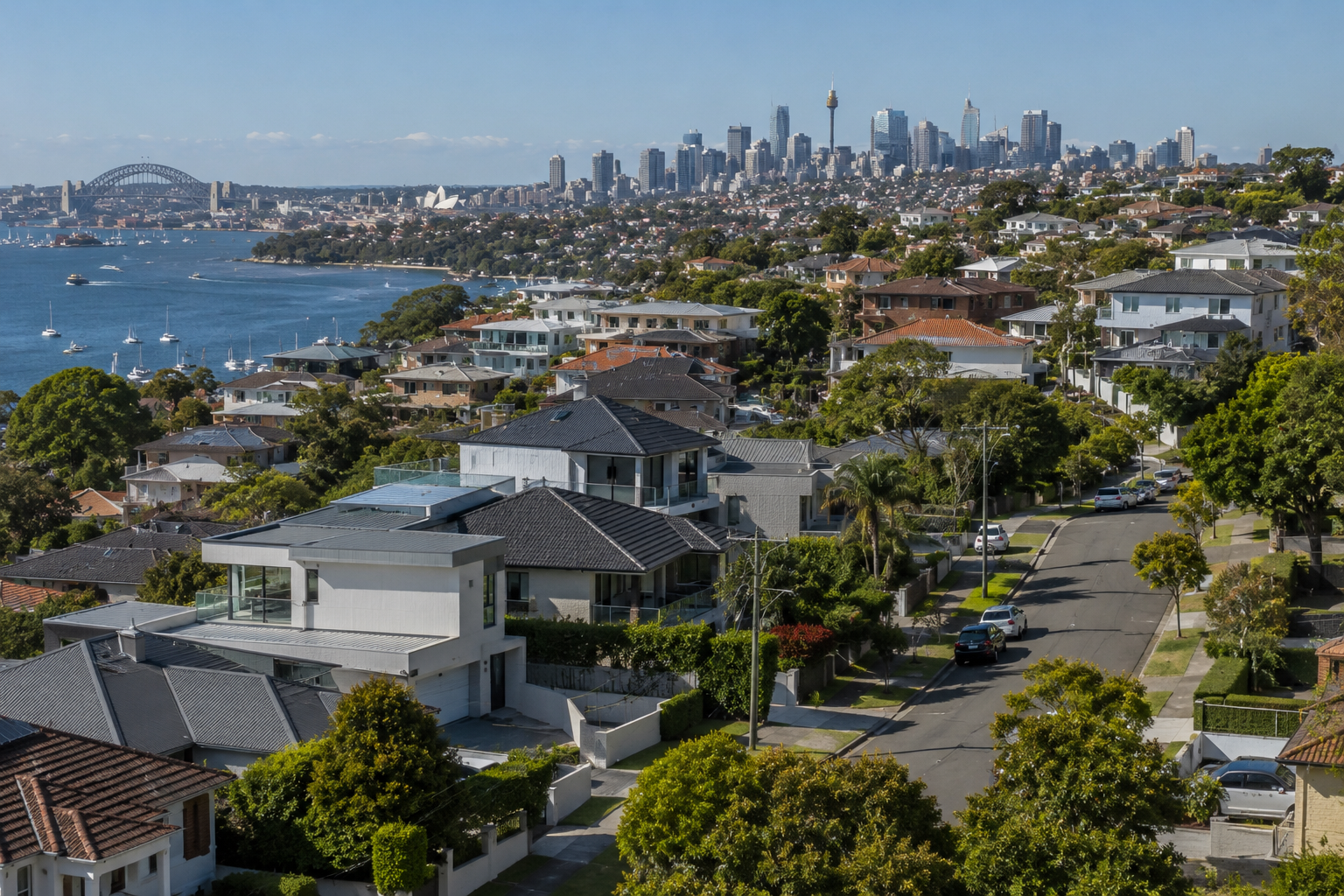
Good locations tend to get better because they combine scarcity, amenity and enduring demand.
Property values are driven by people, not buildings.
Buildings depreciate over time, but well-located land can continue to appreciate.
The best suburbs attract higher-income residents, better businesses, improved streetscapes and more private investment.
Affluent owner-occupiers create emotional competition, and that competition pushes prices higher.
Established inner and middle-ring suburbs are hard to replicate because the land supply is fixed.
Infrastructure, schools, transport and lifestyle amenities usually reinforce the advantage of already desirable locations.
Gentrification works best where the fundamentals are already strong - proximity, scarcity, amenity and aspiration.
Cheap property is not always good value. Often it is cheap for a reason.
Long-term wealth is created by owning investment-grade assets in locations future buyers will want to live in.
The real question is not “Where can I afford to buy?” but “Where will people with more money than me want to live in the future?”
Good locations tend to get better over time because they have something most other locations can’t manufacture quickly - scarcity plus enduring demand.
And in property, that is the combination that quietly does the heavy lifting.
Good locations have advantages that compound
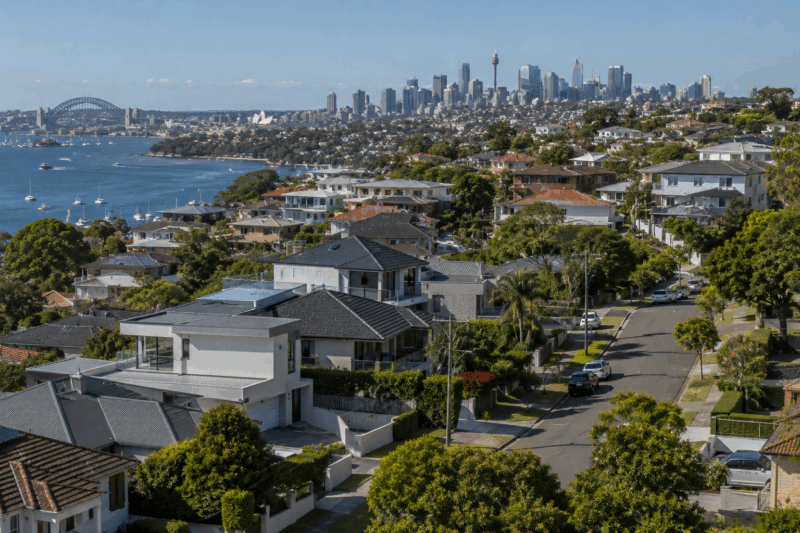
A good location is usually good because it already has a cluster of advantages: access to jobs, transport, schools, lifestyle amenities, walkability, medical services, universities, beaches, parks, cafes, shopping, and a sense of community.
These things attract people with higher incomes and more choices.
Over time, those same people attract more services, more infrastructure, better retail, better schools, better hospitality and more investment. So the suburb does not just sit still - it compounds.
That is why I often say that property markets are not really driven by buildings. They are driven by people.
The dwelling itself gets older every year, but the land underneath it can become more valuable because the location around it becomes more desirable.
The house depreciates, but the land appreciates, provided it is in the right location.
Scarcity becomes more powerful over time
This is especially true in Australia’s established inner and middle-ring suburbs, where there is very little new land to create. You can build another house. You can build another apartment tower.
But you can’t create another Toorak, Paddington, Hawthorn, New Farm, Cottesloe, Norwood, or Bondi.
The best locations usually have a fixed supply of land and a rising pool of people who would like to live there. That imbalance becomes more powerful over time.
And population growth makes this even more obvious.
Australia’s population keeps growing, but most people do not want to live just anywhere.
They want to live near employment hubs, transport, good schools, lifestyle precincts and established infrastructure.
So while governments can release more land on the outskirts, they cannot easily replicate the convenience, amenity and prestige of our best-established suburbs.
That is why outer suburbs can grow in price during booms, but superior locations tend to hold their value better during downturns and outperform over multiple cycles.
The wealth magnet effect
Another reason good locations improve is what I’d call the “wealth magnet” effect.
Affluent households tend to gravitate toward the same desirable locations.
They then renovate, rebuild, improve the streetscape, support better local businesses and lobby for better infrastructure.
Their presence lifts the tone of the suburb, and the suburb’s improved character then attracts the next wave of affluent buyers.
It is a self-reinforcing cycle.
That is also why gentrification can be so powerful. A once-overlooked suburb close to the CBD, beach, university, hospital precinct or major employment centre can gradually transform as higher-income residents move in, older housing stock gets renovated, cafes and restaurants follow, and the suburb’s reputation shifts.
But the key is that gentrification works best when the suburb has the right fundamentals already in place. It needs proximity, scarcity and a reason for aspirational buyers to want to be there.
Infrastructure reinforces the winners
Infrastructure also tends to favour already-good locations.
Governments are more likely to invest in transport, hospitals, schools, cultural facilities and public realm upgrades where population density and political pressure justify it.
Private businesses then follow the money and the foot traffic.
So, rather than spreading value evenly across a city, infrastructure often deepens the advantage of already desirable places.
- Also read:Melbourne housing market update | October 2026

- Also read:Australian housing market update | October 2026

- Also read:Latest Property Price Forecasts. Australian Property Market Outlook 2026-2027: Navigating a Market Correction

- Also read:Brisbane Property Market Forecast [2026 & Beyond] – What The Olympics Decade Means for Investors.
- Also read:Melbourne property market forecast for 2026 & 2027 | Separating the fundamentals from the sentiment
Owner-occupiers drive long-term value
There is also a psychological layer.
People pay for status, identity and belonging.
A property is not just shelter. For many owner-occupiers, it is a statement about who they are and the life they want to live.
That is why emotional owner-occupier appeal matters so much.
Investors sometimes get seduced by cheap prices, high yields, or the next so-called hotspot.
But the best long-term capital growth usually comes from owning the type of property that affluent owner-occupiers will fight over in the future.
These buyers do not just calculate yield. They compete with emotion, family needs, school zones, lifestyle preferences and long-term security.
That competition pushes prices higher.
The right property still matters
Of course, not every “good” suburb will automatically keep getting better.
Some locations become overdeveloped. Some lose character. Some become congested. Some become too investor-heavy, with too many generic apartments and too few committed long-term residents.
So the real art is not just buying in a good suburb. It is buying the right property in the right part of that suburb.
In my view, the best locations have several enduring traits: they are close to jobs, have multiple transport options, contain a high proportion of owner-occupiers, have strong household incomes, offer lifestyle amenity, have architectural character, face limited new supply, and sit in suburbs where people aspire to live.
The contrarian point is that a good location is rarely cheap, and that is exactly why many investors avoid it.
They look for affordability instead of scarcity. They chase yield instead of wealth creation. They buy where they can afford to buy rather than where affluent future buyers will want to buy from them.
But the market does not reward what is cheap. It rewards what is scarce and desired.
Good locations get better because they benefit from compounding advantages.
More people want them, more money flows into them, more amenity develops around them, and their scarcity becomes more obvious with every passing decade.
In the long run, the best property investment strategy is not to ask, “Where can I buy the most property for my money?”
It is to ask, “Where will people with more money than me want to live in 10 or 20 years’ time?”
And this is why strategic property investors don’t just buy properties. They buy locations with a future.
The right property in the right location can give you more than rental income. It can give you choices, security and a growing asset base that helps you build real wealth over time.
But of course, knowing this in theory is one thing. Knowing which locations, which streets and which properties are likely to outperform over the next decade is another matter altogether.
That’s where having the right team around you makes all the difference.
At Metropole, we help investors cut through the noise, avoid costly mistakes and build a personalised property strategy based on their financial position, goals and risk profile. We don’t chase hotspots or short-term trends. We help our clients invest in the kind of assets that are more likely to grow in value and support their long-term wealth creation journey.
So, if you’re wondering whether your current property strategy is really taking you where you want to go, why not have a chat with one of our Wealth Strategists?
Book a complimentary Wealth Discovery Chat with Metropole here now and take the next step toward building, protecting and passing on your wealth.