

Key takeaways
Migrant workers are essential to Australia’s economy - currently around 35 per cent of the workforce was born overseas.
Healthcare and aged care services are especially dependent on migrants. Overseas-born workers make up 59 per cent of aged care workers and GPs.
Australia needs more migrant tradespeople. Construction labour shortages are increasing costs and limiting new housing supply.
Broad migration cuts would only worsen existing skills shortages. Policy should target the workers Australia needs rather than focus on an arbitrary number of immigrants.
Migration will continue to support housing demand. Well-connected suburbs near jobs, transport and services are likely to benefit most.
Believe it or not, more than one-third of everyone working in Australia was born overseas.
In our capital cities, that figure rises to around 42 per cent.
In my mind, those numbers should change the way we discuss migration because overseas-born workers are central to the Australian economy.
They help staff our hospitals, care for the elderly, maintain our technology systems, move freight and keep businesses productive.
Yet the migration debate usually focuses on population growth, crowded roads, stretched infrastructure and housing pressure. Those concerns are real, but they are only part of the story.
The harder question is this: who will do the work if migration is cut substantially?

For weekly insights, subscribe to the Demographics Decoded podcast, where we will continue to explore these trends and their implications in greater detail.
Subscribe now on your favourite Podcast player:
Migrant workers are already holding up the economy
Australia has a workforce of a little over 15 million people, and around 5.4 million of them were born overseas.
According to leading demographer Simon Kuestenmacher, migrants make up about 35 per cent of the workforce, compared with roughly 32 per cent of the population.
“They are not a marginal workforce,” Simon says. “They are a big fat chunk of the workforce.”
Migrants are generally more likely to be of working age, while the Australian-born population includes a larger share of children and retirees.
That means migration does more than increase the population - it also supports workforce participation, tax revenue and economic activity.
And this will become increasingly important as more Baby Boomers retire, as their departure reduces the number of available workers, while their demand for healthcare, aged care and other services continues to rise.

Note: Therefore, migration is not simply a population issue. It is also a workforce and living standards issue.
Our cities depend heavily on migrant labour
Around 42 per cent of the capital city workforce was born overseas, while the figure is closer to 20 per cent in regional Australia.
That gap helps explain why regional communities continue to struggle with shortages of doctors, nurses, carers, truck drivers, hospitality workers and tradespeople.
New migrants naturally gravitate towards Sydney, Melbourne and Brisbane, where they are more likely to find established communities, employment networks and familiar services.
As Simon explains, many potential workers may not even know that regional opportunities exist.
“Migrants don’t know there might be a truck-driving job for them in Orange or Wagga Wagga,” he says. “They might never have heard of those places, so why would they grab a job there?”
To gain more workers, regional employers need to promote more than the vacancy - they must also sell the lifestyle, housing, schools, services and employment opportunities available to a worker’s partner.
Most households now rely on two incomes, so attracting one worker to the region usually means attracting an entire family.
Regional councils, employers and industry groups could work together to present a stronger proposition, supported by carefully designed employer-sponsored visas and firm safeguards against exploitation.
Essential services are the most exposed
Australia’s dependence on migrant workers is particularly high in the services we rely on most.
Around 59 per cent of aged care workers were born overseas. That matters because Australia may need to roughly double the aged care system over the next 15 years as the Baby Boomer generation moves further into retirement.
Young Australian workers sometimes enter the aged care sector, but many leave as other occupations offer higher incomes and clearer career progression. Across the prime working ages, the sector is increasingly reliant on migrants.
“If you were to lose these workers, that is unthinkable,” Simon says. “We have created a system where many jobs highly rely on imported labour.”
Healthcare faces a similar challenge - around 44 per cent of hospital workers were born overseas, while approximately 59 per cent of general practitioners are overseas-born.
Many regional communities would have little access to healthcare without internationally trained doctors.
Australia cannot replace these workers quickly.
Training more doctors requires university places, supervised hospital placements, practical experience and specialist positions. Expanding those pathways would take years.
Information technology is another highly exposed sector, with around 58 per cent of workers born overseas.
Note: As Australian businesses adopt artificial intelligence, cyber security and more advanced digital systems, access to global talent will remain important.
These workers are not filling peripheral roles - they are helping operate the systems modern Australia depends on.
Construction is the glaring weakness
While migrants are heavily represented in healthcare, aged care and technology, they remain underrepresented in construction.
Only around 26 per cent of construction workers were born overseas, well below the national workforce average.
That makes little sense when Australia is struggling with both a housing shortage and a severe shortage of tradespeople.
Governments can release land, reform planning systems and announce housing targets, but homes will not be completed without electricians, plumbers, carpenters, bricklayers and construction managers.
Labour shortages also increase building costs, delay projects and make more developments financially unviable.
Simon argues Australia should actively recruit more qualified tradespeople.
“We should do our utmost to get more tradies from other countries,” he says. “We are not talking about falling wages, but a slowing in the growth of wages.”
Australia should maintain proper licensing and safety standards, but overseas qualifications could be assessed more efficiently through bridging courses, supervised work and faster recognition pathways.
- Also read:This week’s Australian Property Market Update – Latest Data, State by State October 13th 2026

- Also read:Latest Property Price Forecasts. Australian Property Market Outlook 2026-2027: Navigating a Market Correction

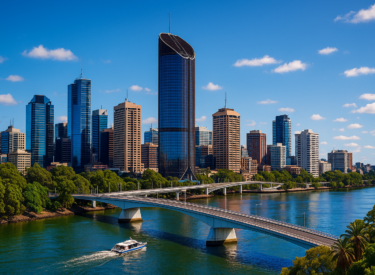
- Also read:Brisbane Property Market Forecast [2026 & Beyond] – What The Olympics Decade Means for Investors.
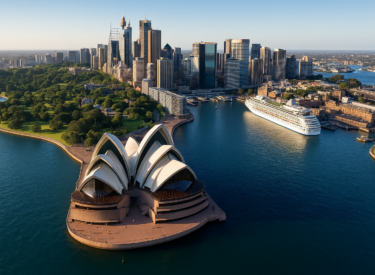
- Also read:Sydney property market forecast for 2026 and 2027 | Why the short-term softness is a long-term opportunity
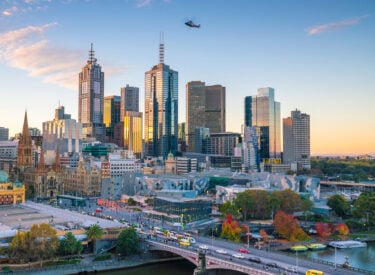
- Also read:Melbourne property market forecast for 2026 & 2027 | Separating the fundamentals from the sentiment
It makes little sense for skilled migrants to work in unrelated jobs while the construction industry complains it cannot find workers.
Note: Australia should be importing more of the people who can help build the homes and infrastructure the country needs.
Broad migration cuts would deepen shortages
Australia’s migration program should not be beyond reform. It is reasonable to question the scale, timing and composition of migration when housing and infrastructure have failed to keep pace.
However, broad cuts would be a blunt response to a complex problem.
Australia already faces shortages in health, aged care, transport, technology and construction. Reducing skilled migration into those sectors would make the problem worse.
“When we talk about cutting migration, we need to be very precise,” Simon says. “Minimising the skilled workforce is a terrible idea.”
Note: Any reform should begin with the skills Australia needs, rather than a politically convenient headline number.
There may be a case for tighter English language and academic standards for international students, along with changes to temporary visa categories that offer limited long-term value.
However, cutting doctors, carers, construction workers, technology specialists and truck drivers would be economically damaging.
More permanent migrants would strengthen communities
Another weakness in the current system is Australia’s heavy reliance on temporary visas.
Simon argues that Australia should shift towards more permanent migration, rather than repeatedly rotating temporary workers through essential jobs.
“If one aged care job needs to be filled for 45 years, you could have one permanent worker fill that role and become part of the community,” he explains. “Or you could have 15 temporary workers filling that same job one after another.”
Permanent migrants are more likely to buy homes, build careers, establish businesses and put down roots.
Temporary migrants also contribute, but uncertainty about their future can make it harder to fully invest in a community.
A greater focus on permanent migration would not necessarily mean more people in Australia at any one time.
It would mean giving greater certainty to the workers the country already needs.
Note: Australia should be selecting people we want to become future Australians, rather than relying on a revolving door of temporary labour.
Lower migration will not solve housing affordability
Migration adds to housing demand because every new arrival needs somewhere to live; however, lower migration will not automatically make housing affordable.
Developers generally build when demand is strong enough to make a project viable. If population growth falls sharply, the likely result is fewer new projects rather than a large oversupply of cheap homes.
“I don’t understand why a housing market would build oversupply,” Simon says. “Developing property is difficult and expensive enough.”
Australia experienced negative net migration during the pandemic, yet housing did not become sustainably affordable.
Construction remained constrained by planning delays, taxes, infrastructure costs, material prices and labour shortages.
In fact, reducing migration could make the housing shortage worse if it also reduces the number of tradespeople available to build homes.
Note: Housing affordability is the result of decades of poor planning, restrictive supply policies, high development costs and inadequate infrastructure. Migration adds demand, but it is far from the only cause.
Blaming migrants for the housing crisis allows governments to avoid responsibility for the structural failures they control.
Technology will help, but not soon enough
Automation and artificial intelligence will improve productivity and replace parts of some jobs over time.
However, technology will not solve Australia’s immediate shortages in healthcare, aged care, transport and construction.
Self-driving trucks are a good example. They may work in controlled mining environments, but public roads are far more complex, and Australia’s ageing truck fleet will take decades to replace.
We should welcome productivity-enhancing technology, but we cannot base today’s workforce policy on systems that may not operate at scale for many years.
Australia will still need human workers, and many of them will need to come from overseas.
The question migration critics must answer
Australians are entitled to be concerned about housing shortages, congestion and infrastructure pressure.
However, anyone promising major migration cuts should also explain who will care for an ageing population, staff hospitals, build homes, maintain technology systems and move goods around the country.
Australia should invest more heavily in apprenticeships, domestic training and workforce participation.
Careers in aged care, health, transport and construction also need to become more attractive.
Even then, the demographic reality remains. Australia is ageing, the number of workers relative to retirees is falling and demand for essential services is rising.
Note: Skilled migration will remain central to our future.
What this means for property investors
Australia’s reliance on migrant workers is unlikely to diminish. An ageing population and persistent shortages in healthcare, construction, technology and other essential industries will continue to support skilled migration, population growth and housing demand.
However, this demand will not be spread evenly.
New arrivals generally settle near employment, public transport, education, established communities and essential services, giving well-connected locations with diverse economies a stronger foundation for long-term growth.
Strategic investors should therefore look beyond short-term migration headlines and concentrate on where people are likely to live and work over the next decade.
Demographics alone will not make every property a good investment, but they remain an important part of identifying locations with sustained demand.
At Metropole, we believe successful property investment begins with a sound strategy built around population growth, employment, infrastructure and local supply.
Choosing the right property matters, but having the right strategy is what helps you safely build, protect and pass on your wealth.