
Key takeaways
Around $5 trillion will be transferred over the next two decades, mostly from Baby Boomers to younger generations.
This is the largest intergenerational wealth shift Australia has ever seen, with massive implications for housing, the economy, and inequality.
Wealth often doesn’t last: 70% is gone by the 2nd generation, 90% by the 3rd.
Without planning, financial literacy, and discipline, inheritances can vanish.
Boomers risk their own retirement security if they give too much too soon without safeguards.
Expect strong property markets in the 2030s as wealth flows into upgrades, investments, and debt repayment.
Premium suburbs will see even greater concentration of property wealth as family homes are passed down.
The wider economy could see boosts in consumption, investment, and philanthropy—but also growing inequality if wealth clusters among already-affluent families.
We’re about to face one of the biggest financial shifts in Australian history, and it won’t come from the stock market, government policy, or even migration.
Instead, it will come quietly, gradually and inevitably as Baby Boomers pass on their wealth to younger generations.
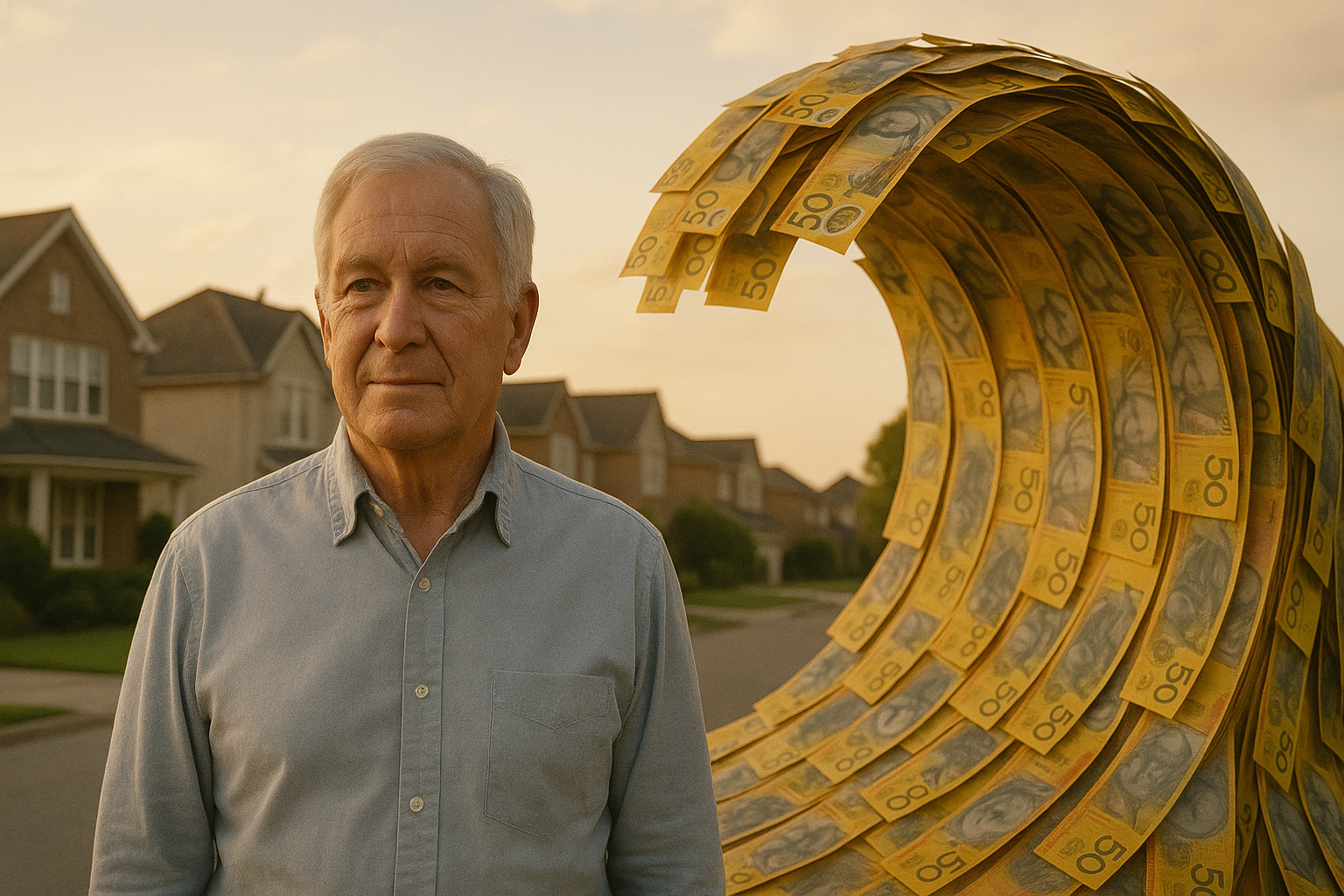
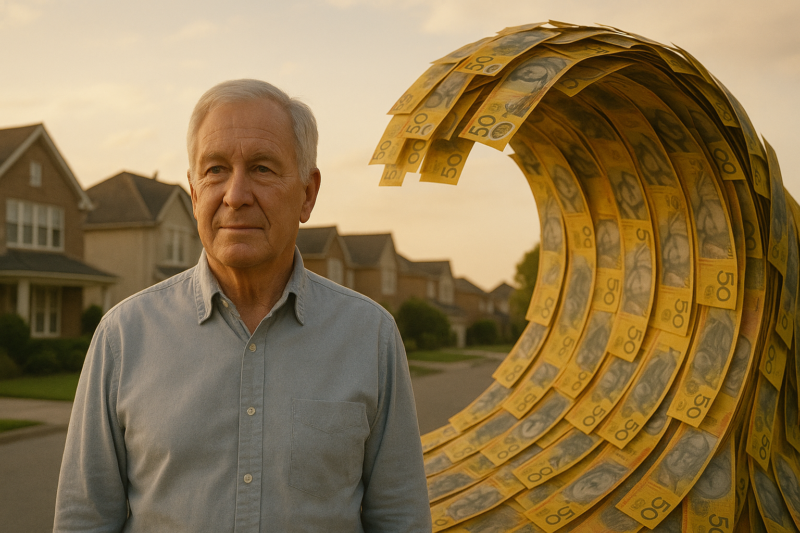
This so-called “inheritance tsunami” will see close to $5 trillion transferred over the next two decades - a tidal wave of money, property, and assets moving from one generation to the next.
It’s the largest intergenerational wealth transfer Australia has ever seen, and it will have profound effects on our housing market, economy, and social fabric.
Boomers and the property fortune
Baby Boomers, now aged between their late 50s and mid-70s, hold an extraordinary share of Australia’s private wealth.
They represent just over 20% of the population, yet they own almost half of all private wealth, largely locked up in property, superannuation, and investments.
It’s not hard to see why.
Many Boomers bought property when median house prices were three to four times average earnings, not the nine to twelve times we see today. They rode the wave of rising values, generous tax policies, and a long stretch of relatively low interest rates.
The home that cost them $40,000 in the 1970s might be worth $2 million today.
That extraordinary property boom is the foundation of the wealth they will now pass on.
The scale of the tsunami
Digging deeper , the numbers are staggering:
- The Productivity Commission forecasts suggest $224 billion a year in inheritances will change hands by 2050.
- JBWere estimates the total will be close to $5.4 trillion over the next 20 years, given continued property and asset growth.
- On average, it’s expected that each millennial child could inherit about $320,000 - but of course, averages hide the extremes. In wealthier suburbs, inheritances will be in the millions, while many families will see much smaller windfalls, or none at all.
This uneven distribution will widen only the divide between those who already have a foothold in the property market and those still struggling to get in.
Timing: help comes late
One of the quirks of this inheritance boom is the timing.
Most people won’t receive an inheritance in their 20s or 30s, when it could make the biggest difference for buying a first home or starting a business.
Instead, inheritances are likely to arrive in people’s 50s or 60s, by which time they may already be mortgage-free or close to retirement themselves.
However, the Bank of Mum and Dad - already Australia’s fifth-largest lender - is stepping in earlier to reverse this trend. Many parents are helping their children and grandchildren into the market while still alive, often by gifting deposits, offering guarantees, or unlocking equity from their own homes. Others are helping pay their grandchildren's school fees.
This early help may tilt the playing field even further.
Children of wealthy Boomers will be able to buy into expensive suburbs, while others remain locked out, meaning even more inequality in the housing market and a concentration of property wealth in already affluent areas.
Risks in the tsunami
While the numbers are staggering, history tells us much of this wealth won’t last.
- Also read:Latest Property Price Forecasts Revealed. Australian Property Market Outlook 2026: Where To Now After The Rate Rise.

- Also read:Melbourne property market forecast for 2026 | Is it a good time to invest in Melbourne?
- Also read:Brisbane Property Market Forecast [2026] – What’s Ahead & Where to Invest
- Also read:Sydney property market forecast for 2026. Is it a good time to invest in Sydney?
- Also read:This week’s Australian Property Market Update – Latest Data, State by State February 24th 2026

Studies suggest 70% of inherited wealth is gone by the second generation, and 90% by the third.
In other words, without planning, education and discipline, a financial windfall can vanish quickly.
There are also risks for the parents themselves. With many already dipping into their wealth to help children with deposits or school fees, some Boomers are risking their own retirement security by giving too much, too soon, without safeguards in place.
What this means for property and the economy
The transfer of wealth will ripple through the housing market.
Some heirs will use their inheritance to upgrade their homes, others will invest in property, and many will use the funds to pay off debt. This suggests we're going to have very strong property markets in the 2030s.
In areas with concentrated wealth, we’re likely to see younger generations inherit family homes outright, entrenching advantage and driving further price pressure in premium suburbs.
For the economy more broadly, the sheer scale of this transfer could fuel consumption, investment, and philanthropy. But it also risks widening the gap between the “haves” and “have-nots,” particularly if inheritance is concentrated in already wealthy families.
Turning inheritance into legacy
The inheritance tsunami is inevitable, but its impact doesn’t have to be left to chance.
Families can make this transfer intentional rather than accidental by planning ahead.
That means:
- Early gifting with structure – Helping children with a home deposit or business capital while you’re alive, but doing so with agreements in place to protect both parties.
- Estate planning and financial literacy – Passing on knowledge and values along with money to reduce the risk of wealth being squandered.
- Philanthropy and legacy – Using wealth to make a lasting difference beyond the family, whether through charitable giving or community support.
Ultimately, money is just a tool. Without a strategy, the inheritance tsunami could fuel waste and inequality.
However, with foresight, it can strengthen families, improve opportunities, and leave a meaningful legacy for future generations.
We’re standing on the edge of the largest wealth transfer in our history
Over the next two decades, trillions of dollars, much of it tied to property, will change hands.
For some families, this will be life changing. For others, it will only reinforce the wealth divide that’s already visible in our housing market.
Property has always been central to Australia’s story of wealth.
As the inheritance wave builds, it will continue to shape who gets ahead, who struggles, and how opportunity is shared across generations.
The key lies in planning wisely and thinking beyond mere money.
Because while the tsunami is inevitable, whether it drowns opportunity or builds lasting prosperity is entirely up to us.