

Key takeaways
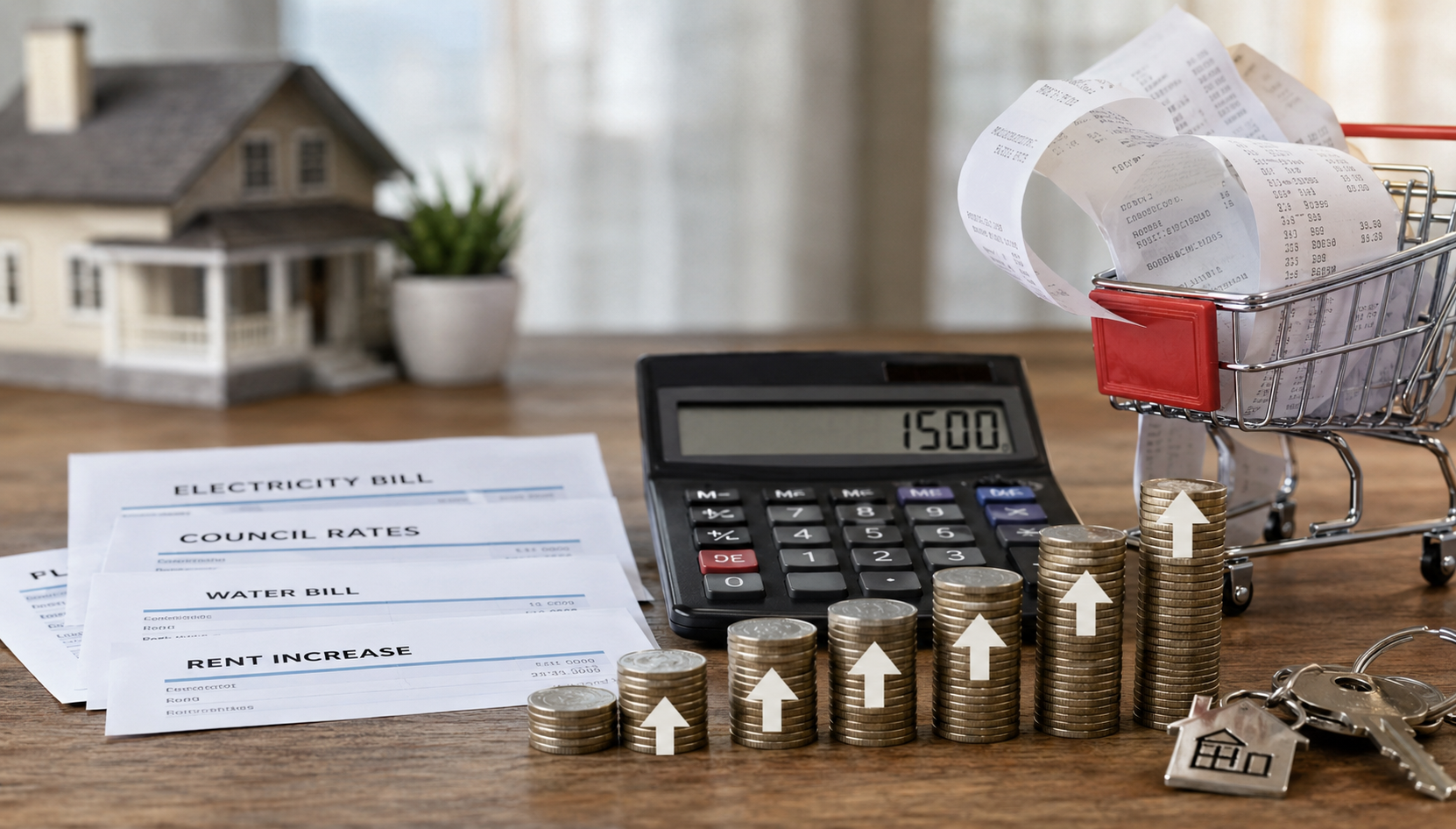
Your personal inflation rate may be much higher than CPI. Housing, energy, mortgage and rental costs affect households very differently.
Small differences compound into big costs. Housing-related expenses rising faster than inflation over decades significantly erodes household purchasing power.
Government charges add substantially to housing costs. Property taxes, infrastructure charges and compliance costs eventually flow through to buyers and renters.
Australia needs more financially viable housing supply. Planning approvals mean little if high construction and development costs prevent projects from being built.
Blaming investors or migrants oversimplifies the affordability problem. Better coordination between housing, taxation, infrastructure and population policies is needed.
Have you ever looked at the latest inflation figures and wondered whether economists are living in the same country as you?
We’re told inflation is running at three or four per cent, yet electricity bills have surged, council rates keep climbing, insurance costs more, rents have risen sharply and mortgage holders are paying thousands of dollars more each year.
For many Australians, their household budget simply doesn’t resemble the inflation number reported in the news.
There’s a good reason for that...
The Consumer Price Index is an important economic measure, but it represents an average basket of goods and services. But your household doesn’t consume that average basket, and whether you own your home outright, have a large mortgage or rent dramatically changes your personal experience of inflation.
Analysis by Ashley Owen of Owen Analytics suggests the cost of living in and maintaining our homes has been rising at roughly four per cent a year over the past quarter of a century, compared with inflation averaging closer to three per cent.
That one percentage point may not sound significant, but over 25 years compounding creates an enormous difference.
And it reveals something important about Australia's affordability problem: this isn't only about the price of buying a home. Increasingly, it's simply about the cost of keeping a roof over your head.

For weekly insights, subscribe to the Demographics Decoded podcast, where we will continue to explore these trends and their implications in greater detail.
Subscribe now on your favourite Podcast player:
Your personal inflation rate
As leading demographer Simon Kuestenmacher explains in this week's episode of Demographics Decoded, the CPI is essentially a basket designed to represent spending across the broader economy.
It's useful for policymakers and the Reserve Bank, but it doesn't necessarily describe your household finances particularly well.
As Simon puts it:
“Someone with a big mortgage, someone who’s renting, and someone who owns their mortgage outright, they might have the same CPI associated with their lives, but they feel this very differently because they just live in very different realities.”
A retiree who owns their home outright may experience rising food, electricity and insurance bills, while a younger family with a large mortgage faces those same pressures plus significantly higher repayments.
Renters face another version of the squeeze through rising rents and other essential living costs.
All three households live in the same economy, but experience inflation very differently.
One percentage point makes a big difference
Over the past 25 years, housing-related costs have increased at roughly four per cent annually compared with CPI inflation closer to three per cent.
Simon points out that costs growing at three per cent annually roughly double over 25 years. At four per cent, they rise by around 167 per cent.
As he explains:
“It looks very small, one percentage point, but that’s the power of compound growth.”
Within those figures, some costs stand out. Electricity and gas prices have more than quadrupled over those 25 years, while property taxes and construction costs have also climbed significantly.
For a country with Australia's enormous energy resources, that should raise questions.
Simon argues that much of the answer lies in policy choices accumulated over many years. Australia exports enormous quantities of energy, yet households remain exposed to global energy pricing alongside a complicated mixture of regulations, subsidies and market interventions.
He points to Norway as an interesting alternative model, where resource wealth has been channelled into a sovereign wealth fund while the country has simultaneously pursued ambitious environmental goals.

Note: Australia can't simply copy Norway, but there is an important lesson here. Sensible resource policy and environmental responsibility can coexist.
Housing has become a convenient tax base
Another major contributor to rising housing costs is taxation.
State governments rely heavily on property-related revenue, including stamp duty and land taxes, while developers face infrastructure charges, planning costs and compliance requirements that eventually find their way into the price of housing.
Governments often describe these as costs imposed on developers or investors, but they don't stay neatly with the person whose name appears on the bill. Developers incorporate them into project feasibilities, builders recover higher costs and investors account for the rising expense of providing rental accommodation.
Eventually, the consumer pays.
Simon argues that governments could make housing cheaper relatively quickly by reducing this burden:
“We could massively minimise the tax burden on housing.”
Of course, governments would then need to replace that revenue elsewhere, which means meaningful housing reform ultimately requires broader tax reform. That's politically difficult, so governments tend to tinker around the edges instead.
Approved homes aren't necessarily built homes
Governments regularly announce housing targets and celebrate planning approvals, but approvals don't house anybody - completed dwellings do.
Increasingly, projects receive approval but don't proceed because the numbers simply don't stack up.
Construction and financing costs are higher, labour remains expensive, development charges have risen and compliance requirements continue accumulating.
Simon describes the contradiction well:
“Governments are doing their job at the moment by pushing through enough building approvals... but then they are also partially to blame for creating an environment that makes building unviable.”
Note: This is why housing targets alone won't solve Australia's shortage. We need to make homes easier and cheaper to actually produce.
- Also read:Latest Property Price Forecasts. Australian Property Market Outlook 2026-2027: Navigating a Market Correction

- Also read:Brisbane Property Market Forecast [2026 & Beyond] – What The Olympics Decade Means for Investors.
- Also read:Melbourne property market forecast for 2026 & 2027 | Separating the fundamentals from the sentiment
- Also read:Sydney property market forecast for 2026 and 2027 | Why the short-term softness is a long-term opportunity
- Also read:This week’s Australian Property Market Update – Latest Data, State by State August 25th 2026

We need to build differently
One opportunity lies in changing how we construct housing.
Simon has been examining the rapidly developing prefabricated housing industry overseas, particularly factory-built housing from China.
Cheap prefab homes won't replace quality family homes or architect-designed properties, but they could help at the affordable end of the market, where Australia's housing shortage is particularly acute.
Factory construction, modular housing and prefabrication can potentially reduce labour requirements and construction times, and Australian builders are already exploring these approaches.
At the same time, our cities need more of the "missing middle": townhouses, villa units, duplexes and well-designed boutique apartments in established suburbs with good transport, employment and amenities.
Technology won't solve the shortage by itself because cheaper dwellings still need appropriately zoned land and infrastructure, but after decades of poor construction productivity, we should be willing to rethink how we build.
Renters haven't escaped the squeeze
Over the longer term, rents have risen only slightly faster than CPI, although that average disguises the sharp increases of recent years.
Population growth has outpaced new rental supply, vacancy rates remain tight, and some investors have reconsidered residential property as taxes, regulations and ownership costs increase.
When an investor sells to an owner-occupier, the home remains in the housing stock but disappears from the rental pool. Repeated across the market, that matters.
Simon points to another consequence:
“High rental costs are one part of low productivity in a roundabout way.”
Expensive and scarce rental accommodation reduces labour mobility because workers become less able or willing to relocate for better employment opportunities.
Note: Tenant protections and minimum standards have legitimate objectives, but policymakers must also consider their cumulative impact on rental supply. If investors leave while new supply remains inadequate, the pressure eventually appears in rents.
Build-to-rent may add another source of supply, but institutional landlords still need to generate acceptable returns for their investors. They don't have an economic incentive to create a substantial rental oversupply either.
Blaming investors misses the bigger picture
Property investors have become convenient villains in Australia's housing debate.
They're accused of competing with first-home buyers and pushing up prices, yet this ignores their role in supplying rental accommodation.
For decades, Australia has relied on around 2.27 million mostly ordinary investors to provide much of its 3.3 million rental properties.
As Simon explains:
“You always need to do justice to the complexity of the situation.”
The same applies to developers. Development is capital intensive and risky, and projects operating on relatively small margins can quickly become unviable when interest rates or construction costs change.
If projects aren't profitable, developers don't build them. If fewer homes are built, scarcity becomes worse.
Note: Australia's affordability problems won't be solved by finding another group to blame. Investors, developers, migrants, homeowners and first-home buyers all operate within a system shaped largely by taxation, planning, infrastructure, credit conditions and population policy.
Three governments, one housing problem
Responsibility for housing is divided across Australia's three levels of government.
Canberra influences demand through migration, taxation and housing incentives. States control much of the planning framework while relying heavily on property taxes. Councils influence zoning, approvals and local infrastructure, while the Reserve Bank affects borrowing costs through monetary policy.
That makes finger-pointing easy.
Population policy illustrates the problem...
Australia needs skilled migration to support economic growth and offset an ageing population. But if population grows faster than housing, roads, schools and other infrastructure, affordability inevitably suffers.
As Simon argues, these policies need to be interconnected. Housing policy cannot sensibly operate independently of population, infrastructure, taxation and energy policy.
What would make housing more affordable?
No single policy can undo decades of accumulated problems, but we already know many of the changes that would help.
Stamp duty reform could reduce the enormous upfront cost of moving home. Planning reform could allow more housing in established suburbs, while governments could reconsider the taxes, infrastructure charges and compliance costs embedded in new dwellings.
Construction productivity must improve, with modular and prefabricated housing becoming part of the solution where appropriate.
Rental policy needs to protect tenants while still encouraging enough investment to provide accommodation, and population growth needs to be more closely aligned with infrastructure and housing capacity.
Note: Most importantly, Australia eventually needs a serious discussion about tax reform. Continually loading more government revenue requirements onto property while simultaneously promising cheaper housing is becoming increasingly difficult to reconcile.
Where does that leave us?
Australia's housing affordability problem wasn't created overnight or by one group. It's the result of decades of decisions that have increased demand, constrained supply and added costs to the homes Australians build, buy and rent.
That helps explain why household expenses can feel so disconnected from the headline CPI, and why blaming investors, developers or migrants won't solve the underlying problem.
The encouraging point is that many of these pressures result from policy choices, which means better choices can improve the outcome.
For property investors, the lesson is to look beyond short-term inflation figures, Budget announcements and market movements. Governments and interest rates will change, but well-located, investment-grade property will remain scarce because people will continue wanting to live close to jobs, infrastructure and desirable amenities.
Australia has the resources and capability to improve housing affordability and increase supply. What we need is better coordination between governments and policies that make it easier and more financially viable to build the homes our growing population needs.
de