


Key takeaways
Most people build wealth at the expense of living, then have less ability to enjoy it later; timing matters as much as money.
Money is most valuable when you have the health and energy to use it, so align spending with life stages, not just retirement.
Experiences create long-term “memory dividends,” making early-life spending on meaningful moments incredibly valuable.
Helping your children earlier, especially with property, can deliver far greater financial and emotional impact than leaving an inheritance.
The goal isn’t to die rich, but to use your wealth deliberately to create a fulfilling life without regret.
Most Australians think retirement is a fairly linear process.
You work hard for 30 or 40 years, pay off your home, build a solid nest egg… and then, when the time comes, you ease into retirement and carefully draw down your savings so you don’t run out.
It sounds logical, even sensible.
But the more I think about it, and the more I see it play out in real life, the more I’m convinced many people are unknowingly getting it wrong.
Because the traditional model assumes something that simply isn’t true.
It assumes that time, health, energy and opportunity will all be waiting for you when you finally decide to enjoy your wealth.
And that’s where the cracks begin to show.

For weekly insights, subscribe to the Demographics Decoded podcast, where we will continue to explore these trends and their implications in greater detail.
Subscribe now on your favourite Podcast player:
The real problem with the way we approach retirement
Fact is...most people spend the first half of their lives accumulating wealth, and the second half trying not to spend it.
But in my mind, that’s not a strategy, it’s a habit.
And it leads to a mismatch between when you have money and when you can actually enjoy it.
As Simon Kuestenmacher explains in this episode of Demographics Decoded...
“You don’t get any bonus points if you die with a lot of money.”
That single sentence cuts through decades of conventional thinking.
Because if the purpose of wealth is to enhance your life, then hoarding it until the very end just doesn’t make much sense.
Yet that’s exactly what many Australians are doing.
Why we default to saving… even when we don’t need to
This isn’t about ignorance; it’s about psychology.
Most people develop a strong saving muscle early in life.
You budget. You sacrifice. You delay gratification. And those behaviours are essential when you’re building wealth.
But the problem is… they don’t automatically switch off.
Even when you’ve “made it,” the habits remain.
Simon describes this as a scarcity mindset:
“You are afraid of spending this money… you got hooked into the idea of accumulating.”
And it shows up everywhere.
I’ve met retirees living in multi-million-dollar homes… yet worrying about everyday expenses.
People who could comfortably travel, upgrade their lifestyle, or help their family, but don’t.
Not because they can’t. Because they’re afraid.
Afraid of running out of money. Afraid of future uncertainty. Afraid of making the wrong decision.
Sure, those concerns are valid, but taken too far, they create a different kind of risk, the risk of under-living.
The concept that changes everything: time value of money… and life
We often talk about the time value of money.
But there’s another dimension that’s just as important, the time value of life.
In simple terms: A dollar spent at age 30 is not the same as a dollar spent at age 80.
Not because of inflation. But because of what that dollar can buy you in terms of experience, energy and opportunity.
Simon puts it this way:
“Money is more valuable when you can buy experiences… when you can physically enjoy it.”
That’s a profound shift in thinking.

Note: It means financial planning shouldn’t just focus on how much you have…but when you use it.
Why experiences compound more than money
One of the most compelling ideas in this whole discussion is the concept of memory dividends.
Unlike financial assets, experiences don’t just deliver a one-off return. They compound emotionally over time.
Simon explains:
“You have maybe 70 years’ worth of remembering this thing… and you get this wonderful benefit of reliving those experiences."
Think about your own life...
The trips you’ve taken. The moments with family. The experiences that shaped you.
They don’t fade; they become richer.
And importantly, they influence how you see the world, how you relate to others, and even how you make decisions.
Compare that to leaving everything until later in life.
Yes, you may have more money. But you’ve missed decades of emotional return.
The danger of deferring life
If there’s one recurring theme I see, it’s this: People assume they’ll “get around to it some day.”
- Also read:This week’s Australian Property Market Update – Latest Data, State by State September 22nd 2026

- Also read:Latest Property Price Forecasts. Australian Property Market Outlook 2026-2027: Navigating a Market Correction

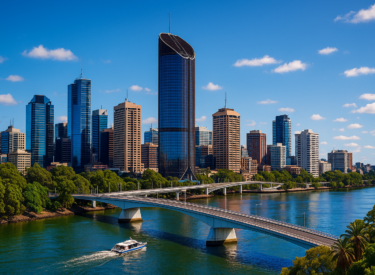
- Also read:Brisbane Property Market Forecast [2026 & Beyond] – What The Olympics Decade Means for Investors.
- Also read:Sydney property market forecast for 2026 and 2027 | Why the short-term softness is a long-term opportunity

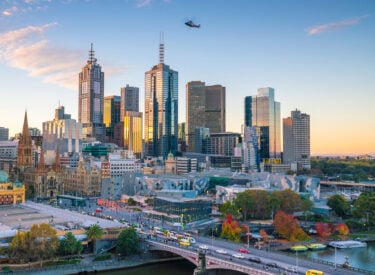
- Also read:Melbourne property market forecast for 2026 & 2027 | Separating the fundamentals from the sentiment
Travel later. Spend later. Help the kids later.
But as Simon bluntly says:
“Quite often you won’t.”
Note: Life doesn’t operate on a neat timeline. Health changes. Priorities shift. Energy declines.
And by the time many people reach retirement, their desire, or ability, to do certain things has diminished.
Interestingly, Simon notes that even the appetite for travel often reduces in later years.
So the idea that you’ll suddenly become more adventurous at 75 than you were at 55 doesn’t always hold up.
Why helping your children earlier is a game changer
Now this is where the conversation becomes particularly relevant in today’s Australian property market.
We’re now seeing a structural shift where family wealth is playing a bigger role than income. And timing matters enormously.
Note: Helping your children in their 30s, when they’re buying a home, raising a family, and managing large expenses, can have a disproportionate impact.
Simon explains the maths:
“A $500,000 mortgage becomes a million dollars when you include interest over 30 years… so giving $100,000 can create a $200,000 benefit.”
That’s leverage you simply can’t replicate later.
But beyond the numbers, there’s something more important. You get to see the impact. You’re not just leaving a legacy, you’re actively shaping it.
And in my mind, that’s far more meaningful.
The unintended consequences of waiting
Many parents assume the “fairest” thing to do is leave everything to their children equally in their will.
But in practice, it doesn’t always play out that way.
Simon makes an interesting observation:
“A fight over the inheritance is the most common reason for siblings not to talk to each other.”
Even with clear instructions, differences in perception, emotion, and value can create conflict.
And once you’re gone, you have no control over how it unfolds.
Which raises an important point:

Tip: Passing on wealth isn’t just about fairness; it’s about timing, communication, and structure. And often, doing more while you’re alive leads to better outcomes.
The housing dilemma: asset rich, life poor
Australia’s property market adds another layer to this discussion.
We have a growing number of older Australians sitting on high-value homes… but living relatively modest lifestyles.
They’re asset rich, but cash flow constrained.
Downsizing is often the obvious solution. But it’s rarely just about money.
Simon explains that downsizing can:
- Reduce mental and physical burden
- Free up attention and lifestyle capacity
- Make life simpler and more manageable
And importantly:
“Do it as long as both partners are still physically active and healthy.”
Leave it too late, and it becomes overwhelming. Do it earlier, and it can significantly enhance your quality of life.
The broader shift: from income to wealth
Stepping back, there’s a bigger structural trend at play as Australia is moving towards a system where wealth, not just income, determines outcomes.
We’re seeing:
- Increasing intergenerational inequality
- Greater reliance on family support
- Growing discussion around wealth-based taxation
As Simon notes:
“We run out of income to tax… and we’ve got to find our tax from somewhere.”
This has major implications for investors.
It suggests that:
- Asset ownership will become even more important
- Policy settings may gradually shift towards taxing wealth
- Strategic planning, not just accumulation, will be critical
A better question to ask yourself
So this isn’t about abandoning discipline or “blowing the lot.” It's far from it.
It’s about being more intentional.
It's about recognising that:
- Money has different value at different stages of life
- Experiences compound in ways that money doesn’t
- Timing matters, especially when helping family
- Holding on too tightly can be just as risky as spending too freely
And perhaps most importantly… It’s about understanding that retirement isn’t just a financial plan. It’s a life plan.
Instead of asking: “How much money do I need to retire?”
A better question might be: “How can I use my money to create the best possible life, at every stage?”
Because in the end, the goal isn’t to die with the most. It’s to live with purpose.
It's about how to use your resources, wisely, strategically, and at the right time, to create a life that’s rich in experiences, relationships, and meaning.
Or as I see it, it’s not about dying with zero. It’s about making sure you don’t die with regrets.
For weekly insights, subscribe to the Demographics Decoded podcast, where we will continue to explore these trends and their implications in greater detail.
Subscribe now on your favourite Podcast player: