


Key takeaways
Existing homeowners, investors, banks, tradies, governments and the broader property ecosystem all benefit when values climb.
This “wealth effect” keeps consumption strong, props up the financial system and supports political stability. But it’s a narrow view, and it blinds many to the long-term risks.
When first home buyers, renters, younger Australians and essential workers are locked out of the propery market, affordability becomes not just an economic problem but a social and political one.
High housing costs strain government services, weaken productivity, suppress spending, and lay the groundwork for future backlash against investors and the system that supports them.
Migration levels, planning rules, tax structures, credit policy and land supply have all been tuned to favour rising prices.
But demographics are shifting: a growing renter cohort means future policy settings may prioritise affordability over asset inflation. Investors need to assume the rules will evolve.
Unrestrained price growth invites regulatory tightening, rent caps, extra taxes, rapid up-zoning and other interventions that erode investor returns.
A resilient market is one where prices outpace wages modestly, ownership remains feasible for aspirational households, and the middle class can still grow.
Prices are up again. Headlines scream “new record highs.”
Homeowners quietly smile. Renters quietly seethe.
And somewhere in the background, a much bigger question gets ignored:
As a nation, how expensive do we actually want housing to be?
This is the uncomfortable conundrum that leading demographer Simon Kuestenmacher, my co-host of the Demographics Decoded podcast, laid out in a recent column in The New Daily, and it is worth unpacking from a property investor’s point of view.
Because, in my mind, if all we ever cheer is “higher prices at any cost,” we will eventually destroy the very system that made property such a powerful wealth creation vehicle in the first place.

The awkward truth: rising prices create a lot of winners
For decades Australians have treated rising house prices as a sign that everything is going well.
If your home is worth more this year than last, life feels easier.
The Reserve Bank has long discussed the “wealth effect” - when households feel wealthier on paper, they tend to spend more, even if their income hasn't actually increased.
That helps explain why so many parts of the system quietly support higher property prices.
Simon listed a long list of winners from rising house prices, and he is right, but let me group them a little differently and view them through an investor lens.
1. Existing owners and investors
- Homeowners and property investors see their net worth rise tax free.
- About two thirds of Australian households own their home with or without a mortgage, so politically this group has dominated the narrative for decades.
- Many then tap equity to buy investments, renovate, or help their kids.
2. The financial system
- Banks and mortgage lenders write larger loans for longer periods, so interest revenue grows.
- Mortgage brokers earn higher commissions as average loan sizes rise.
- Super funds and SMSFs with property exposure report stronger returns.
Property is not just an asset class. It is plumbing for the entire financial system.
3. The property and renovation ecosystem
- Real estate agents, buyer’s agents, auctioneers and marketing firms.
- Tradies, builders, architects and building suppliers
- Hardware, furniture and homewares retailers
When property owners feel richer, renovation budgets grow and people happily spend at Bunnings, Harvey Norman and their local tradies.
That’s the wealth effect in action - it “greases the wheels of industry” and is one of the reasons why the government and politicians love it when property values keep rising.
4. Governments and professionals
- State governments collect more stamp duty and land tax
- The Federal government gets more capital gains tax from investors
- Local councils receive more in rates
- Financial planners, wealth advisers, estate planners and even divorce lawyers see larger balance sheets to manage or divide.
In his article, Simon explains that from a narrow point of view, rising prices are fantastic. They boost measured wealth, support consumption, reduce political pain for incumbents, and underwrite the super system.
So if you already own assets, why would you ever want prices to stop climbing?
But there is another side of the ledger.
The other side: who loses when housing gets too expensive?
The people who benefit most from cheaper housing are not a small fringe group. They are a large and growing share of Australia.
In his article, Simon’s “winners from lower prices” list is long, and again, he is right.
So here are the key losers from permanently high prices.
1. First home buyers, renters and younger Australians
- First home buyers now face million dollar mortgages in many capitals just to live near work.
- Renters pay higher rents.
- Millennials and Gen Z cop the worst of this because they are later into the system and hit with higher price to income ratios than any previous generations
My concern is that this is not just about “whinging young people”. What is happening is locking out a generation from ownership, and this will fundamentally reshape our society and future electorate.
2. Essential workers and employers
When nurses, teachers, police and hospitality staff can’t afford to live within a reasonable commuting distance of their jobs, cities become less functional and less fair.
Employers then struggle to recruit and retain staff, particularly in high cost inner and middle ring suburbs where many of the jobs are.
That eventually shows up in higher costs, reduced service levels and lower productivity.
3. Governments, charities and the social system
Housing stress is strongly linked to:
- Higher demand for rent assistance and social housing
- Increased use of mental health services
- Greater family breakdown and child protection involvement
That is expensive for taxpayers and devastating for the families involved.
4. The wider economy
When 40 or 50 per cent of a household’s income goes to rent or the mortgage, there is less left for:
- Education
- Small business formation
- Discretionary spending in local businesses
High prices may boost wealth on paper, but they can suppress real economic dynamism. The Reserve Bank regularly highlights housing as a key channel for both economic growth and risk.
5. The future middle class
If we embed a system in which owners get richer and permanent renters fall further behind, we do not just have a housing problem; we have a class structure problem.
We risk becoming a two tier society:
- A large cohort of asset rich Australians who benefit from compounding capital growth
- A growing cohort of asset poor Australians permanently on the wrong side of the wealth divide.
And that is not good for social stability or for long term investors.
This is a policy choice
One of the most critical points Simon makes is that where prices sit is not fate.
It is deliberate policy design, whether we admit it or not.
Governments decide:
- How much land can be built on
- How much migration to allow
- Which housing types get fast tracked or blocked
- How property is taxed
- How tight or loose credit conditions are
He explains that for decades the settings have overwhelmingly favoured existing property owners.
Grants, tax concessions, negative gearing, discount capital gains tax and planning constraints around established, land rich suburbs have all tilted the game in favour of rising prices.
- Also read:This week’s Australian Property Market Update – Latest Data, State by State September 22nd 2026

- Also read:Latest Property Price Forecasts. Australian Property Market Outlook 2026-2027: Navigating a Market Correction

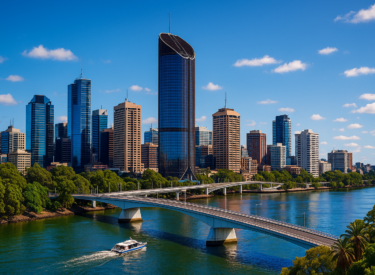
- Also read:Brisbane Property Market Forecast [2026 & Beyond] – What The Olympics Decade Means for Investors.
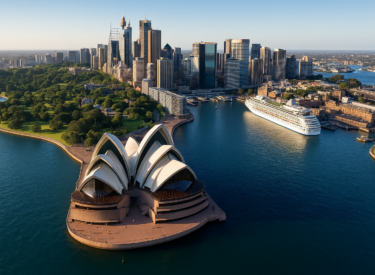
- Also read:Sydney property market forecast for 2026 and 2027 | Why the short-term softness is a long-term opportunity
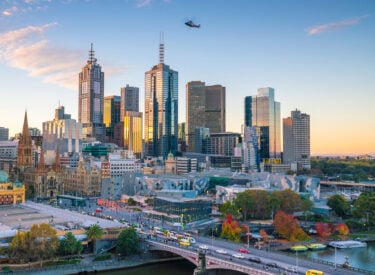
- Also read:Melbourne property market forecast for 2026 & 2027 | Separating the fundamentals from the sentiment
Politically, that made sense while two thirds of households owned homes and the median voter was a comfortable owner occupier in the suburbs.
But the demographic maths are changing.
- Younger Australians, who are more likely to be renting, are becoming a much bigger voting bloc.
- The gap between those inside and outside the property system is wider and more visible than ever.
At some point, political pressure for policies that restrain prices rather than drive them up will grow, which means that if you are a property investor, you need to think many moves ahead on this chessboard.
As investors, how expensive do we really want housing to be?
It is tempting to say “as expensive as possible.”
But that is actually a very naive investment strategy.
High, but not brittle
From an investor’s perspective, we want a housing system that:
- Delivers steady, compounding capital growth over decades
- Keeps rental demand strong and diverse
- Avoids the kind of social and political backlash that leads to heavy handed policy responses
Think about what happens if prices break too far away from incomes and rents:
- Lending rules get tightened
- Investor lending is targeted
- Talk of rent caps, vacancy taxes and additional land taxes grows louder
- Planning systems may suddenly lurch toward aggressive upzoning in ways that erode scarcity
In other words, unrestrained short term gains increase long term risk.
Long term, sustainable wealth is built when:
- Prices grow consistently a little faster than wages and inflation over the cycle
- Ownership is still possible for aspirational households who do the right things financially
- The country remains attractive to skilled migrants who can actually afford to form households here
That is the kind of system that supports a healthy, growing middle class and, therefore, robust property values.
What might need to change at a system level?
In his article Simon frames this as a national conversation about the sort of country we want to be.
From my perspective as a property strategist, a few themes stand out.
1. More of the right supply, in the right places
Simply shouting “build more” is lazy.
We need:
- More medium density in established, infrastructure rich suburbs
- A serious build to rent sector to provide quality long term rental stock
- Incentives and approvals for missing middle housing, not just more fringe estates, a 90 minute commute from jobs
2. A better tax mix
We keep leaning on transaction taxes and investors instead of reforming the structure:
- Over time, we may need to shift away from heavy stamp duty and toward a broad based land tax
- Target tax settings at speculation, not at long term, buy and hold investing that provides rental stock and stability
3. Serious social and key worker housing
A wealthy nation can afford to ensure that:
- The most vulnerable are not sleeping in cars or tents
- Essential workers can live within a reasonable distance of where they are needed
Well designed social and key worker housing is not a threat to investors. It is part of a resilient system.
So what should savvy property investors do now?
All of this can sound a bit abstract, so let’s bring it back to actionable steps.
1. Invest as if policy will change
Assume that:
- Lending rules will tighten and loosen over the cycle
- Taxes will get tweaked
- Planning will gradually allow more density in some areas
So favour assets that are robust under multiple policy regimes:
- Family friendly dwellings (and these can be houses, townhouses or the right type of apartments - not high-rise) in land constrained, affluent suburbs.
- Locations with wealthy gentrifying demographics, diverse employment bases, and strong school catchments.
- Properties where you can add value through renovation or redevelopment, rather than hoping for speculative uplift.
2. Price in political risk
Do not build your strategy on unrealistic assumptions like:
- “The government will always support ever rising prices”
- “Rent controls could never happen here”
Even if some policies never eventuate, the risk of them matters. The more politically angry renters and shut-out younger voters become, the more creative future governments will be.
3. Be part of the solution, not just a beneficiary
Investors who:
- Maintain properties well
- Treat tenants as valued customers
- Keep rents fair and transparent
- Work constructively on longer leases where appropriate
are not just doing the right thing ethically. They are de risking their portfolio by reducing vacancy, turnover and the likelihood of being caught on the wrong side of sentiment.
4. Take a multi asset, whole of life view
If housing ends up a little less explosive in its price growth over the next 20 years than it was in the last 20, that is not the end of the world.
It just means:
- Quality property remains your asset base
- You also pay attention to superannuation, equities and businesses as part of your wealth plan
- You focus on household balance sheet strength, not just bragging rights about suburb medians
The real question we need to ask
Simon ends his piece by saying the real question is not whether house prices will keep rising, but whether we want them to.
I would frame it this way for investors:
Do you want a short burst of extreme capital growth that triggers a political backlash and decades of resentment or a calmer, more sustainable system that allows your children and grandchildren to participate and keeps the country prosperous?
Personally, I am backing the second option.
Because, as property investors, our job is not just to ride the wave.
Our job is to understand the deeper currents - demographics, politics, social cohesion - and position ourselves on the right side of them.
That means welcoming a genuine national conversation about how expensive we want housing to be, and being smart enough to invest accordingly.