

Key takeaways
The negative gearing and CGT reforms are now law, but they only affect established properties bought after 7.30pm on 12 May 2026.
The new tax rules will change the cash flow calculations for many future property investors.
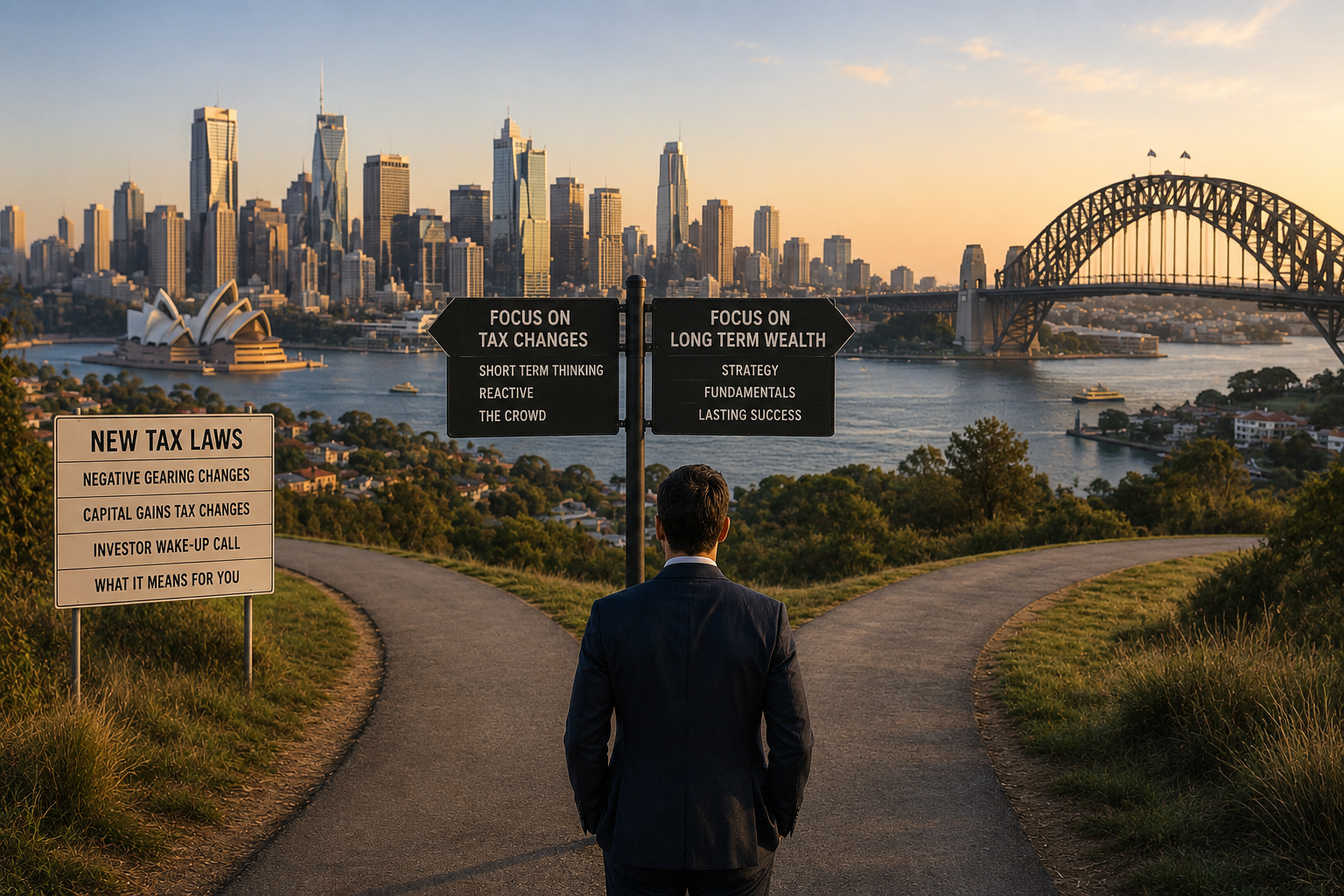
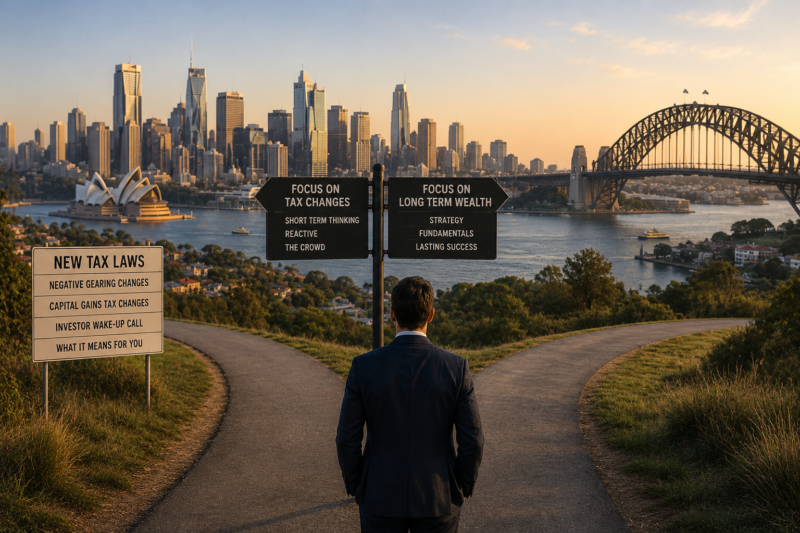
The bigger risk to most investors' wealth isn't the tax rate at all. It's the behavioural mistakes that compound quietly over decades.
Focusing on after-tax wealth, rather than minimising tax, is what separates investors who retire comfortably from those who don't.
A year from now, most investors won't remember the exact percentages in the new capital gains tax rules.
What they will remember is whether they kept building wealth while everyone else got distracted by the headlines.
Because right now, that's exactly what's happening.
Property investors up and down the country are fixated on one question. Will I end up paying more tax?
It's an understandable thing to worry about, especially after the changes that came out of this year's Federal Budget.
But it's not actually the question that determines how wealthy you'll be in twenty years.
A quick reality check before we go further
You already know the details of the new rules, so I won't repeat them all here.
What's worth remembering is that the Bill received Royal Assent on 26 June 2026, so this is now law rather than a proposal still up for debate.
And for most existing investors, the practical impact is smaller than the headlines suggested. If you already owned your properties before 12 May 2026, or you're buying a new build, you're largely untouched.
It's really only established properties bought after that date that fall under the new negative gearing and CGT treatment from 1 July 2027.
Why the tax rate isn't the real question
Fact is, investors don't build wealth depending on tax rates. They retire on what's left in their pocket after tax, after decades of compounding.
Those are two very different things, and confusing them leads people into some genuinely poor decisions.
I've watched investors hold onto underperforming properties for years, purely to avoid triggering a taxable gain, while a much better performing asset sat right in front of them unbought.
I've seen others knock back growth assets altogether because the eventual tax bill looked scary on paper, without ever running the numbers on what staying in cash or low growth assets actually costs them over twenty years.
A well-performing investment that generates a taxable gain will almost always leave you further ahead than a mediocre one that quietly avoids tax.
While that's not a controversial idea among experienced investors, it's remarkably easy to forget when a policy change dominates the news cycle.
What actually moves the needle over a lifetime
If you model out a typical investor's outcomes over twenty or thirty years, a consistent pattern shows up every time.
Your savings rate, how long you stay invested, the quality of the assets you hold and how you respond during downturns all have a far bigger impact on your eventual wealth than the tax settings do.
That's not because tax doesn't matter. It's because compounding is doing so much of the heavy lifting that even fairly significant tax changes get dwarfed by it over a long enough timeframe.
I've found that the investors who build substantial portfolios aren't the ones who found some clever tax angle. They're the ones who bought investment grade assets in the right locations, held on through multiple cycles, and let time and compounding capital growth do the work.
- Also read:Melbourne housing market update | October 2026

- Also read:Australian housing market update | October 2026

- Also read:Latest Property Price Forecasts. Australian Property Market Outlook 2026-2027: Navigating a Market Correction

- Also read:Brisbane Property Market Forecast [2026 & Beyond] – What The Olympics Decade Means for Investors.

- Also read:Melbourne property market forecast for 2026 & 2027 | Separating the fundamentals from the sentiment

Waiting an extra two or three years to get started, or pulling money out of growth assets because a change in the news made you nervous, will typically cost you more than any tax reform being debated in Canberra.
That's the part investors consistently underestimate, and it's worth sitting with for a moment.
The behavioural risk hiding in plain sight
This is where I think Millennial and Gen X investors in particular need to pay attention, because many of are entering their peak earning years right now while also juggling mortgages, kids and the daily noise of financial media.
The mistakes that quietly erode wealth rarely show up in tax legislation. They show up in behaviour.
Selling in a downturn because it feels safer. Chasing whatever asset class or suburb performed best last year. Getting defensive and sitting in cash after a rough patch, right when quality assets are on sale. Delaying a decision for months or years while waiting for some imagined moment of certainty that never actually arrives.
None of that gets debated in Parliament, yet all of it has a far bigger effect on your eventual wealth than whether your capital gain is taxed at the old rate or the new one.
Testing your own numbers instead of reacting to headlines
Rather than restructuring your property investment strategy around a tax change, it's far more useful to run the scenarios that are actually within your control.
What happens if you increase how much you're investing each year rather than waiting for the perfect entry point.
What happens if you stay fully invested in growth assets through this period of uncertainty rather than moving to the sidelines.
What happens if you bring forward a purchase you've been putting off for eighteen months.
In almost every case I've seen, those decisions move the needle on your eventual wealth far more than the difference between the old and new tax rules ever will.
Tax planning has its place, but it should sit underneath your investment strategy, supporting the decisions you're already making for good reasons, not driving them.
The opportunity hiding inside the uncertainty
Every time the rules change, some investors freeze. They wait for more clarity, more guidance, more certainty about exactly how the new law will play out in practice, and in the meantime they do nothing.
That's understandable, but it's also exactly the kind of behaviour that quietly costs people the most over a long career of investing.
The investors who do well over the next twenty years won't be the ones who found a way around the new CGT rules. They'll be the ones who kept buying investment grade properties in the right locations, kept their portfolios diversified across strategy, kept adding to their asset base consistently, and didn't let a Budget announcement derail decades of disciplined planning.
At Metropole, this is exactly the kind of thinking we build into our clients' strategic property plans.
We help investors look past the headline of the week and focus on the handful of decisions that actually compound into real wealth over time. If you'd like a second set of eyes on how these changes affect your specific situation and portfolio strategy, book a Wealth Discovery Session with our team at Metropole by clicking here.
Tax reform will keep making headlines, because that's what tax reform does.
But your retirement won't be determined by the rate printed in legislation. It will be determined by the decisions you make between now and then, and how consistently you make them.