

Key takeaways
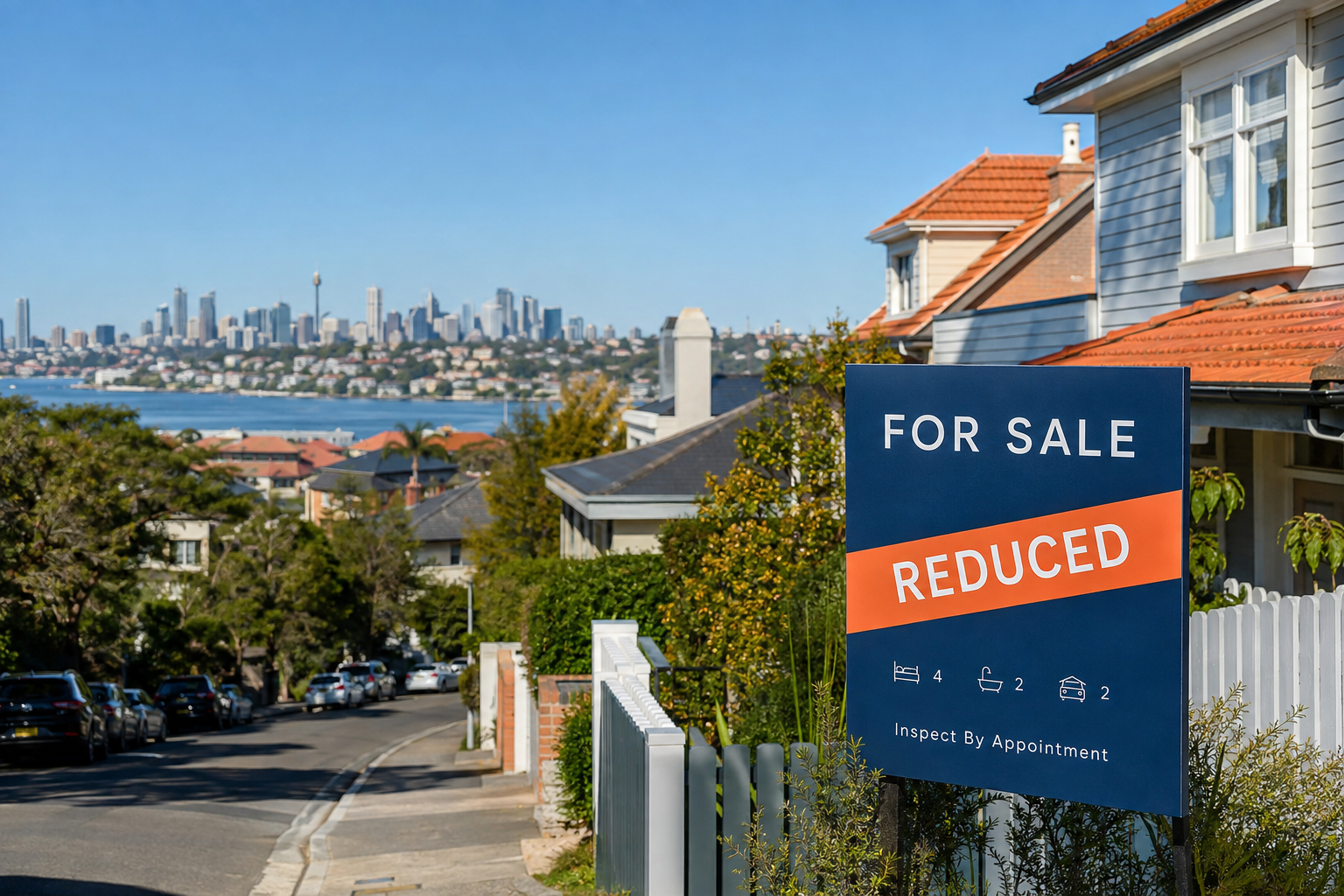
Several prestigious suburbs have slipped below key price benchmarks.
Higher interest rates and cautious buyers have softened prices in parts of Melbourne, Sydney and other capitals.
Median price falls don’t tell the whole story. Changes in the types of properties being sold can significantly affect suburb medians.
Buyers have regained negotiating power. FOMO has been replaced by greater caution and a fear of overpaying.
Property quality matters more in softer markets. Investment-grade properties with scarcity and strong owner-occupier appeal should remain more resilient.
Softer conditions can create opportunities for strategic investors. Patient buyers with strong finances can use today’s market to secure quality assets for the long term.
There’s something psychologically powerful about a suburb joining the “million-dollar club”.
Crossing that seven-figure threshold attracts headlines and creates the impression that property values have permanently moved to a higher level.
Yet property markets don’t move in straight lines, and the latest figures are just another reminder that median prices can move backwards.
According to Domain’s latest House Price Report, 15 suburbs across Australia slipped below the $1 million, $2 million or $3 million median price thresholds during the June quarter, with Victoria and New South Wales accounting for most of them.
Some will see this as further evidence of a weakening property market. I see it as another sign of just how fragmented our markets have become, and potentially an opportunity for strategic buyers.
Some significant suburbs have slipped backwards
There were some sizeable falls reported by Domain during the June quarter.
Brighton’s median house price fell 6.6%, dropping $205,000 to $2.915 million and taking the prestigious Melbourne suburb below the $3 million mark. South Yarra fell 8.2% to $1.855 million, while Malvern East slipped 3% to $1.94 million.
Suburbs that lost their $2 million-median status
At the lower thresholds, Chelsea Heights and Scoresby houses dropped below $1 million, while Hampton’s unit median fell 11.7% to $990,000.
Sydney’s Birchgrove and Gladesville slipped below the $3 million mark, while Wilston in Brisbane and South Perth also fell below $2 million.
Suburbs that lost their $1 million-median status
Higher interest rates, reduced borrowing capacity, cost-of-living pressures and weaker buyer confidence have all contributed.
Just to be clear...buyers remain active, but they are considerably more cautious and selective than they were during the boom.
Don’t read too much into median prices
Experienced investors understand that median prices are useful indicators, but they don’t tell the whole story.
A suburb’s median is simply the midpoint of properties sold during a particular period.

Note: If fewer premium homes sell and more lower-priced properties change hands, the median can fall significantly without every property in the suburb losing the same amount of value. That appears to be happening in some prestige markets where discretionary vendors are holding back.
Domain reported that fewer high-quality properties coming onto the market have affected median values, while renovated family homes in desirable locations continue to attract competition.
This reinforces something I’ve been saying for years: there isn’t one Australian property market. There are markets within markets, and even within the same suburb, investment-grade properties can perform very differently from secondary properties.
- Also read:Latest Property Price Forecasts. Australian Property Market Outlook 2026-2027: Navigating a Market Correction

- Also read:Brisbane Property Market Forecast [2026 & Beyond] – What The Olympics Decade Means for Investors.
- Also read:Melbourne property market forecast for 2026 & 2027 | Separating the fundamentals from the sentiment
- Also read:Sydney property market forecast for 2026 and 2027 | Why the short-term softness is a long-term opportunity

- Also read:Home Prices Down Again Over September – But Not as Much | Latest Property Market Stats

Buyers have regained some negotiating power
One of the biggest changes has been buyer psychology.
During booming markets, buyers fear missing out. They rush decisions, compromise on quality and sometimes pay too much simply because they believe prices will keep running away from them. Today buyers have more time.
Domain describes the shift as moving from FOMO, fear of missing out, towards FOOP, fear of overpaying.
Agents report that buyers are still looking and researching, but they are much more measured and currently have greater negotiating power.
For sophisticated buyers, that can create opportunities.
You make your money when you buy your property, although you don’t necessarily realise it until you sell many years later. Softer conditions provide more time for due diligence, better negotiating conditions and potentially greater choice.
But buying something simply because it has become cheaper is rarely a sound strategy. A secondary property purchased at a discount remains a secondary property.
Quality matters more than ever
Markets like this expose the difference between good and mediocre assets.
When virtually everything is rising in value, even secondary properties can look like successful investments. When conditions soften, quality becomes much more important.
That’s why strategic investors should continue concentrating on locations with strong long-term fundamentals, including affluent and aspirational populations, employment growth, limited supply and the amenities people are prepared to pay a premium to live near.
Within those locations, I would be looking for properties with scarcity, strong owner-occupier appeal and the potential to manufacture additional value over time.
The bottom line
Seeing suburbs such as Brighton, South Yarra, Birchgrove and Gladesville slip below headline price benchmarks may sound alarming, but it doesn’t mean Australians have suddenly fallen out of love with well-located property.
Higher borrowing costs and cautious sentiment have shifted some negotiating power toward buyers, creating opportunities for those with their finances in order and a long-term view.
Population growth will continue, our major cities will expand, and the supply of well-located, investment-grade property will remain constrained. Of course, that doesn’t mean every suburb or property will perform equally well.
The next stage of the property cycle is likely to reward investors who are more selective, maintain adequate financial buffers and concentrate on quality rather than chasing short-term price movements.
And when confidence eventually returns, many of the opportunities available to today’s patient buyers will have disappeared.