

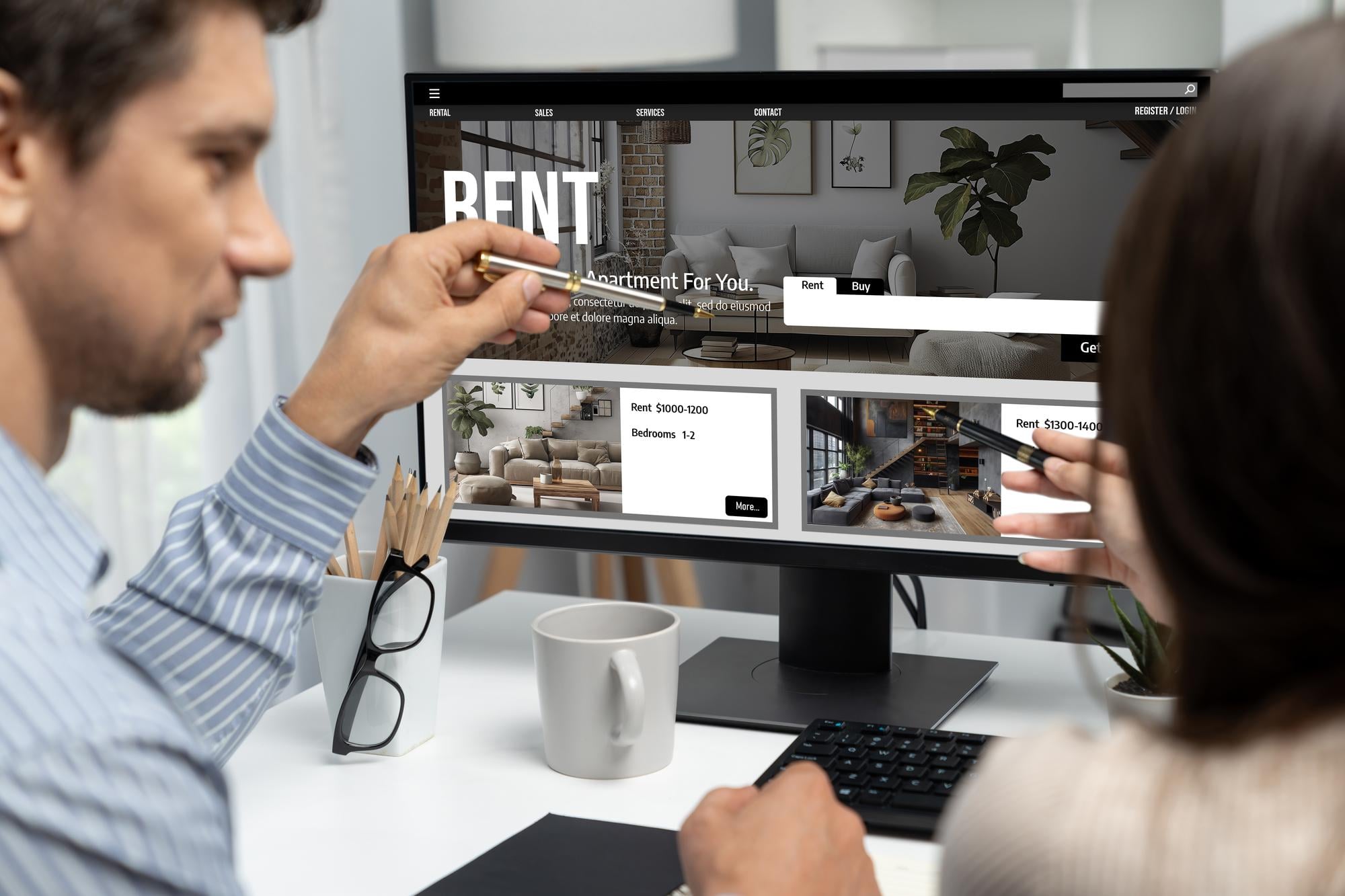
A buyer scrolling through listings on realestate.com.au or Domain has already made a series of decisions before the agent's phone rings. They have filtered by suburb, price range, and bedroom count. They have looked at the headline photo. They have decided, in a few seconds, whether this property is worth opening.
What happens in the next two minutes — how the images present the home, whether a floor plan is included, how clearly the space is explained — determines whether that buyer books an inspection or moves to the next result. The agent and the seller are not in the room when this happens.

Why Buyers Hesitate Online
The inspection request is the conversion event in real estate. Everything in the listing exists to motivate it. And buyers who cannot answer basic questions from the listing will often choose not to find out in person.
The questions they are trying to answer are fairly consistent: How does the layout actually work? Is the master bedroom a reasonable size, or is it technically a bedroom? Where does the living space connect to the outdoor area? What does the street frontage look like beyond the hero shot? Is the kitchen the size it appears to be, or was that shot taken with a lens that flatters generously?

Note: Listings that leave these questions unanswered generate fewer enquiries from serious buyers. They may generate inspection requests from buyers who are there to confirm a suspicion, rather than buyers who are already partly sold.
The same principle appears in other high-consideration online purchases: interactive formats such as 360 images for e-commerce help shoppers inspect products more confidently before taking the next step. In property marketing, richer visual coverage plays a similar role by helping buyers understand spaces before they book an inspection. The underlying dynamic is the same — the more accurately an online presentation can answer pre-purchase questions, the more confident the buyer is to take the next step.
Photography Is Still the Foundation
Strong listing photography is the non-negotiable starting point, and there is more to it than hiring a professional and hoping for good light.
The images need to show the property accurately — not just attractively. There is a meaningful difference. An image sequence that leads with three exterior shots, then works logically through the entry, living areas, kitchen, bedrooms, and outdoor space, helps buyers build a mental map of the home. A gallery that leads with the most photogenic corner of each room and then doubles back on itself spatially creates a viewing experience that is harder to interpret.
Lighting matters significantly. Photographs taken with harsh artificial light, or in overcast conditions that flatten exterior shots, reduce the appeal of a property that in person would feel warm and liveable. Natural light, where the property has it, is worth scheduling around.
Scale references are useful where they exist. An empty room looks different from a furnished one. If staging is not practical, including one image with the previous owner's furniture visible is often better than a sequence of empty rooms that are impossible to judge for size.

Floor Plans Do a Different Job
Photos show moments. A well-taken shot of the living room communicates atmosphere and condition. It does not communicate how the living room connects to the kitchen, or how far the second bedroom is from the master, or whether the property has the kind of north-facing orientation that matters to Australian buyers thinking about natural light through winter.
A floor plan answers these questions directly. For investors assessing a property's suitability for tenants, it communicates the kind of spatial logic that determines whether a layout will rent well. For families, it shows whether the separation between the adult and children's sleeping areas works. For downsizers, it shows whether the property is genuinely single-level or whether there are steps concealed in the listing photos.
Floor plans are one of the most consistently underused elements of residential listings, particularly for properties where the layout is one of the selling points. A home with an excellent floor plan that is not included in the listing is asking buyers to attend an inspection to discover information that could have motivated the inspection in the first place.
When Richer Visual Formats Add Real Value
Virtual tours and walkthrough videos are not appropriate for every property, but there are specific situations where their absence is a material disadvantage.
- Also read:How to Find Top New Apartment Developments in Melbourne

- Also read:The Impact of Visa Regulations on Property Market Trends in Australia

- Also read:5 Best Real Estate Photo Editing Services of 2024

- Also read:Steel Advantage: The 6 Benefits of Steel Buildings

- Also read:Renovating to Rent? Don’t Skimp on the Skip Bin

Interstate and international buyers — investors purchasing remotely, or relocating buyers who cannot easily travel — are relying almost entirely on digital materials to form an opinion about a property. A gallery and a floor plan are better than nothing. A walk-through that shows how the spaces flow together, how the natural light moves through the home, and what the street and immediate surroundings feel like is considerably more useful.
Premium properties with complex layouts are another clear case. A standard gallery cannot adequately represent a home with multiple levels, formal and informal entertaining areas, a pool, and a guest wing.

Tip: A video walkthrough or a virtual tour lets the buyer understand what they would be inspecting before committing to the time.
For new developments and off-the-plan projects, visual content is the product. Buyers are making significant financial commitments based on plans, renders, and display suite experiences. The quality and completeness of the digital assets — fly-throughs, lifestyle renders, interactive floor plan displays, investor pack materials — directly affect campaign performance. Developers who treat visual production as a cost to minimise rather than a marketing investment tend to see it in their enquiry rates.

Connecting Visuals to the Marketing Strategy
Photography, floor plans, and virtual tours should be developed in relation to the property's marketing strategy, not assembled independently and then attached to it.
The target buyer profile should influence which visual elements are prioritised. A property being marketed to interstate investors needs a different emphasis from one being marketed to local owner-occupiers with children. The images, video content, and floor plan should all reinforce the same story about the property — the lifestyle it enables, the location advantages, and the functionality for the intended buyer.
Note: Visuals that are inconsistent with the listing copy, or that create a tone misaligned with the property's price positioning, work against the campaign even when each element is individually competent. A premium property marketed with budget photography is as problematic as an average property marketed with visual materials that set undeliverable expectations.
The Trust Problem With Over-Produced Listings
There is a version of property marketing that has gone too far in the other direction — listings where every image has been heavily processed, where wide-angle distortion makes rooms look substantially larger than they are, where the outdoor entertaining area appears to be bathed in eternal golden light regardless of orientation.
Buyers have become more sophisticated about this. A listing that looks too produced often creates scepticism rather than confidence. An inspection that follows heavily manipulated photography, and where the property does not match its representation, damages trust in the agent and occasionally in the vendor. The withdrawal rates and renegotiations that follow these situations are more expensive than the money saved on presentation.
Visuals that present the property clearly, accurately, and at its genuine best are more valuable than visuals that misrepresent it attractively. The goal is to ensure that the right buyers — buyers who would respond well to what the property actually offers — see enough in the listing to take the next step.
What Stronger Visual Marketing Actually Does
It does not manufacture value that is not there. A property in the wrong location at the wrong price with structural issues will not be rescued by excellent photography.
What it does is prevent a genuinely good property from being passed over by buyers who could not understand it from the listing. In a market where attention is allocated in seconds, and where the first-impression materials are typically encountered without any conversation with a knowledgeable agent, the clarity of the online presentation determines which buyers engage and which move on.
For sellers, agents, and developers operating in competitive conditions, that clarity is not a decorative element of the campaign. It is part of the work.