
The 2025 Australian Cooperative Election Survey (ACES) reveals a nation united in anxiety but divided in diagnosis.
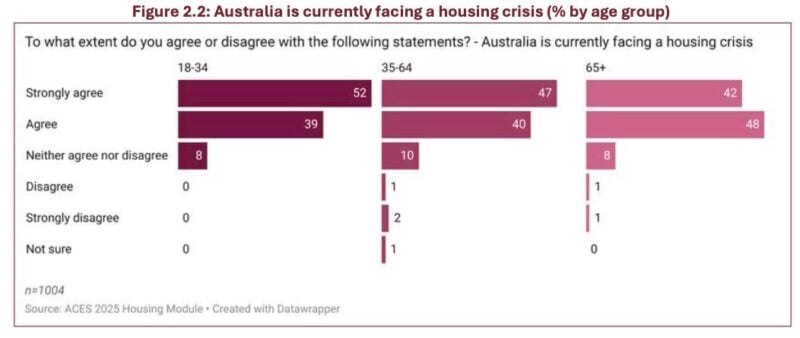
Nearly nine in ten Australians agree the country faces a housing crisis, yet opinions on the causes and solutions split sharply along ideological lines.
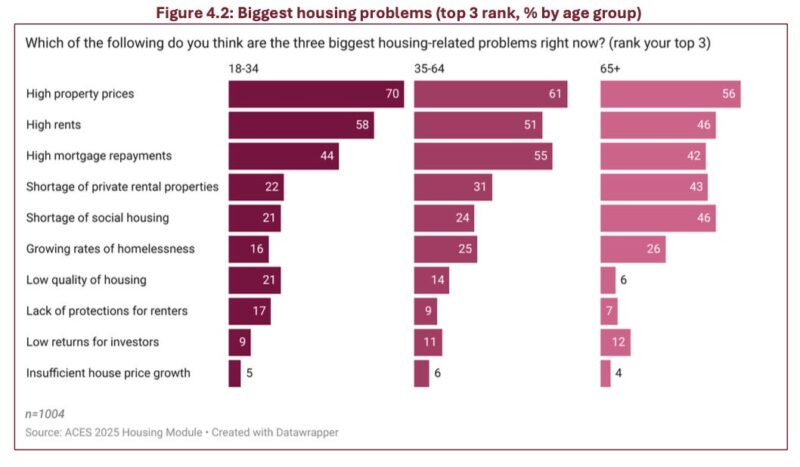
Renters and younger voters see affordability and wages as the core problem; older and more conservative homeowners blame immigration and planning barriers.
Despite near-universal discontent, Labor secured a landslide election victory - largely because, as the authors argue, it offered a modest, non-threatening response that alienated no major constituency but inspired few.

Key findings
- Widespread agreement on crisis: 89% of respondents agreed that Australia is in a housing crisis, with particularly strong agreement among renters and those under 35.
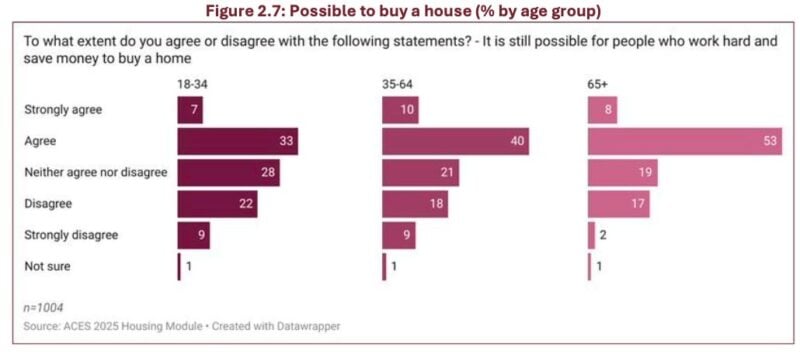
- Generational divide: Younger voters overwhelmingly doubt that hard work and saving can still deliver home ownership, while most older voters retain faith in that ideal.
- Ambivalence on rising prices: Only 22% believe rising house prices are “a good thing,” showing deep unease even among homeowners.
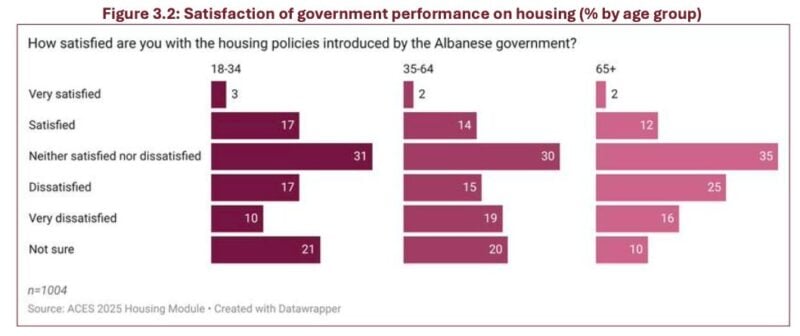
- Universal dissatisfaction with government: Just 16% were satisfied with Labor’s housing policies; most were indifferent or unsure. Renters and right-leaning voters were most critical.
- Divergent causes:
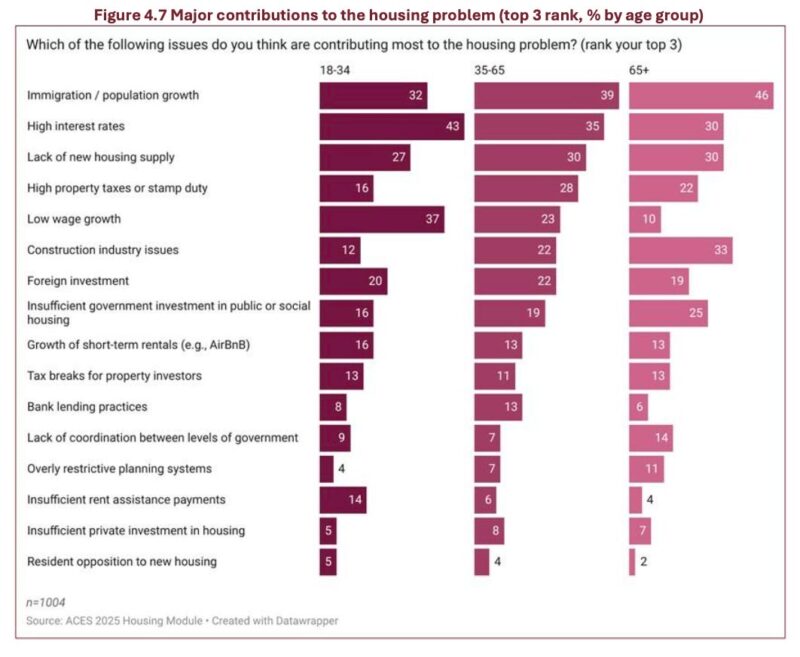
- Conservatives and populist right voters overwhelmingly blamed immigration.
- Progressives and younger Australians cited high interest rates, low wage growth, and a lack of social housing.
- Only a small minority identified planning restrictions as the main culprit — an important insight, as governments continue to prioritise planning reform despite little public appetite for it.
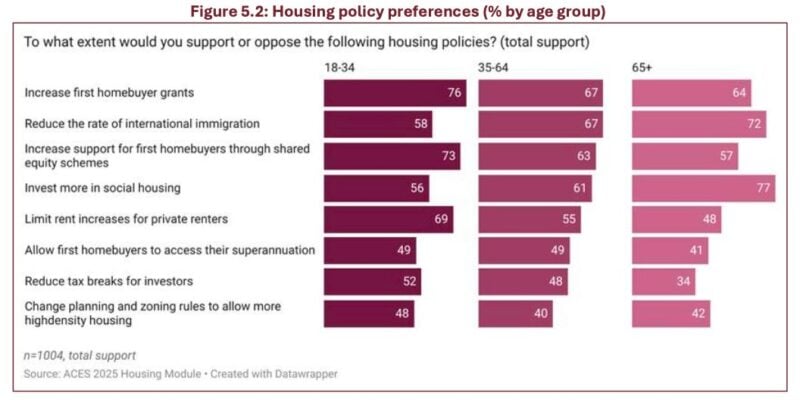
- Preferred policies: Across the spectrum, there was strong support for first homebuyer grants, shared equity schemes, and building more public housing. Renters strongly backed rent caps, while property investors opposed them. Immigration cuts and superannuation access drew support mainly from the political right.
Report’s conclusions
The report concludes that Australia’s “home-owning democracy” is under real strain.
While the idea of a housing crisis unites the electorate, views on its causes and solutions have fragmented along political and generational lines.
The authors describe this as a new “insider–outsider” divide - between those already in the housing market and those locked out.
Labor’s broad electoral win masks a weak foundation: low enthusiasm, deep policy scepticism, and a collapsing belief among younger Australians that the system works for them.
The report warns that unless the housing problem is addressed through meaningful supply and affordability reform - including a larger role for public housing - Australia risks entrenching long-term inequality and political volatility.
My two bobs worth
This study should alarm policymakers and presents the Liberal party with an enormous opportunity: the public overwhelmingly agrees housing is in crisis, yet few believe government is handling it well. That disconnect spans party lines.
What’s striking - and concerning but not that surprising really - is that voters’ explanations for the crisis align with ideology, not evidence.
- Also read:Melbourne property market forecast for 2026 | Is it a good time to invest in Melbourne?

- Also read:Latest Property Price Forecasts Revealed. Australian Property Market Outlook 2026: Where To Now After The Rate Rise.

- Also read:Brisbane Property Market Forecast [2026] – What’s Ahead & Where to Invest
- Also read:Sydney property market forecast for 2026. Is it a good time to invest in Sydney?

- Also read:Perth housing market update | March 2026

- Populist right voters blame immigration, even though evidence shows migration pauses (such as during COVID) didn’t make housing more affordable.
- Greens voters fault high interest rates, even when the crisis deepened during record-low rates.
- Many still cling to first-home grants, despite clear evidence they inflate prices rather than improve access.
- And for the planning profession, the message is sobering: “overly restrictive planning” barely registers with the public, even as governments push zoning reform as the main fix.
Amid all this noise, one finding cuts through: across every political tribe, age group, and tenure, most Australians agree that we need more public housing.
In sum, the Macquarie report paints a picture of broad consensus on crisis but ideological confusion on cause — a dangerous mix.
Without decisive, evidence-based leadership and focused communication, housing will become the defining fault line of Australian politics.
More charts
I have added a range of charts from the Macquarie report - all are divided by broad age group - but the report reports the 1,000+ survey responses in a vary of different ways. It is worth checking it out.