

Key takeaways
Investing is part science and part art, and the art is only learned by living through market cycles
Since early 2020, Australian investors have faced a pandemic, a record boom, 13 rate rises, a cutting cycle, four more hikes and major tax changes
Despite all this, national dwelling values rose 47.3% between March 2020 and October 2025, adding around $280,000 to the median value
The market is now in a downturn, with values 5.2% below their March 2026 peak and the cash rate at 4.60%
The investors who came through each episode held quality assets with sensible buffers and were never forced to sell
Perspective, temperament and survivability matter far more than predicting the next move
If someone had sat you down in January 2020 and described what the next six and a half years would bring, I doubt you would have bought another property.
A global pandemic, closed borders, the fastest rate hiking cycle in a generation, a war in Europe, bank collapses overseas, a conflict that closed the Strait of Hormuz and a Federal Budget that rewrote the tax rules for property investors would have been enough to scare most people out of the market altogether.
Yet the investors who bought well-located, investment-grade properties back then and simply held on are sitting on substantially more wealth today, even after the falls in property values we've seen this year.
That gap between how things felt at the time and how they look with hindsight is what I want to talk about, because in my experience it's what separates successful investors from the rest.

Investing is both a science and an art
The science of investing can be learned from books, courses, podcasts and a bit of curiosity.
You can study interest rates, inflation, rental yields, lending policy, depreciation, tax legislation, demographics and supply pipelines, and that knowledge gives you the foundation every serious investor needs.
But after more than 50 years of investing, I'm convinced the art of investing is what ultimately determines your results, and you won't find that in a textbook or a spreadsheet.
The art is taught by the events you live through, the ones you saw coming and the ones that blindsided you, but only if you take the time to learn from them.
To me, the art is perspective, which means staying calm when the headlines are loud, understanding where we are in the cycle without pretending you can time it perfectly, and continuing to make sensible decisions when your emotions urge you to do something else.
From time to time it pays to look back at what we've lived through, so we're better prepared for whatever comes next.
Six and a half years of property market drama
We tend to think of major market shocks as rare events separated by long quiet stretches, but the 2020s have been a much busier period than most.
In March 2020, COVID shut down our economy and international borders. The RBA cut the cash rate to a record low of 0.10%, and one of our big banks published modelling showing property values could fall by more than 30% in its worst-case scenario.
Instead, the market delivered its strongest annual capital gain since the 1980s, with national values rising around 24.5% as record low rates, government stimulus and a rush for more space all collided.
Then, in May 2022, with inflation at multi-decade highs and Russia's invasion of Ukraine pushing up energy prices, the RBA began a series of 13 rate rises that took the cash rate from 0.10% to 4.35% by November 2023.
Borrowing capacity was slashed, values fell, and the media was full of warnings about a "mortgage cliff" as hundreds of thousands of borrowers rolled off ultra-low fixed rates.
Yet Cotality's data shows home values fell only briefly before recovering to new record highs by November 2023, well before the RBA had finished raising rates.
Meanwhile overseas, Silicon Valley Bank and Credit Suisse collapsed in March 2023; war broke out in the Middle East that October; the yen carry trade unwound in August 2024; and the "Liberation Day" tariffs rattled global markets in April 2025.
2025 brought some relief, with rate cuts in February, May and August taking the cash rate to 3.60%, and national dwelling values rose 8.6% over the calendar year.
Then 2026 turned the tables again, as inflation rebounded and the RBA lifted rates in February, March, May and once more at the end of September, taking the cash rate to 4.60%, its highest level since November 2011.
In March, the US-Iran conflict closed the Strait of Hormuz, and the Federal Budget announced restrictions on negative gearing for established properties from July 2027, along with replacing the 50% capital gains tax discount with cost-base indexation.
National property values peaked in March and have now fallen for six consecutive months, sitting 5.2% below their peak, while Sydney values are 8.6% below their February high.
With many economists suggesting further falls in property values, plenty of investors are feeling nervous right now.
Six and a half years in numbers
When you step back from the individual headlines, the picture looks very different.
Cotality's Housing Affordability Report showed that Australian home values climbed 47.3% between March 2020 and October 2025, adding around $280,000 to the median dwelling value.
Even after this year's falls, the national median value sits at $899,236, roughly where it was 12 months ago and still well above where it was when the pandemic began.
Rents have kept rising too, and the national gross rental yield has now climbed to 3.85%, its highest level since August 2019. The income side of the equation has continued to do its job through the turbulence.
In other words, the underlying assets kept doing what good assets do, despite everything that happened around them.
Of course, the growth wasn't spread evenly, with Queensland and Western Australian home values more than doubled since 2020 as population growth outpaced new housing completions, while South Australian values rose around 90% and Melbourne lagged well behind.
This divergence reminds us that the market you buy in, and the specific property you choose, matter as much as the decision to invest in the first place.
How much sleep did you lose?
Think back to how you felt in March 2020, or when the RBA raised rates every month in 2022, or when the budget changes were announced earlier this year.
Those worries weren't wrong, because these were serious events and being concerned about the world is a perfectly normal response.
However, hindsight gives us a perspective we couldn't possibly have had at the time. It shows that our short-term feelings and the long-term meaning of events often operate on completely different time scales.
- Also read:This week’s Australian Property Market Update – Latest Data, State by State October 20th 2026

- Also read:Latest Property Price Forecasts. Australian Property Market Outlook 2026-2027: Navigating a Market Correction

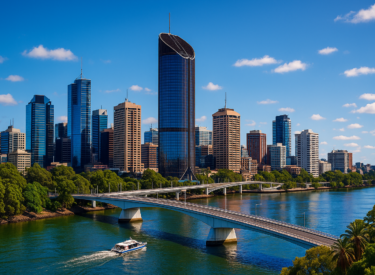
- Also read:Brisbane Property Market Forecast [2026 & Beyond] – What The Olympics Decade Means for Investors.
- Also read:Melbourne property market forecast for 2026 & 2027 | Separating the fundamentals from the sentiment

- Also read:Sydney property market forecast for 2026 and 2027 | Why the short-term softness is a long-term opportunity

The fear you feel during a downturn is immediate and intense, while the compounding that builds wealth happens slowly and quietly in the background over decades.
For long-term investors, the cost of missing a recovery by sitting on the sidelines can be every bit as significant as the discomfort of riding out a decline.
What 50 years has taught me
I've been investing long enough to have lived through home loan rates of 17% in the late 1980s, the "recession we had to have" in the early 1990s, the GFC, Covid and now this latest rate cycle.
Each one felt unique at the time, and each one came with commentators explaining why “this time was different” and property would never recover.
Here are some of the lessons those experiences have taught me, and they've been reinforced again over the last six years.
1. Forecasts are useful, but they're not a plan
The experts got 2020 badly wrong, and I'd suggest they'll get plenty of things wrong in the years ahead, because no one can predict pandemics, wars or what a central bank board will do three meetings from now.
That's why I've always leaned on process over prediction, and why I'd much rather own the right assets with a sound strategy than try to guess the next move in the market.
2. Survivability matters more than timing
In every downturn I've lived through, the investors who lost money were almost always those forced to sell at the wrong time, whereas those who could ride out paper losses emerged on the other side in good shape.
Cash flow keeps you in the game, while capital growth eventually gets you out of the rat race, and you can only enjoy the growth if you hold your properties long enough for it to arrive.
That means sensible levels of debt, a cash buffer or an offset account you can fall back on, and loans that have been stress-tested against rates higher than today's.
3. Quality is what carries you through
The properties that recover first and grow strongest over the long term tend to be investment-grade dwellings in inner and middle-ring suburbs with strong owner-occupier appeal, solid local economies, and scarcity that can't be easily replicated.
When conditions get tough, buyers become more discerning, and the gap between A-grade properties and average stock tends to widen rather than narrow.
You don't need many properties to become financially independent, but you do need the right ones.
4. The rules change, but the fundamentals don't
This year's budget changes have understandably unsettled many investors and will certainly influence how we structure future purchases.
But in my experience, tax concessions have always been a bonus that supports a sound investment decision, and they've never been able to rescue a poor one.
Population growth, a chronic shortage of well-located housing, rising incomes over time, and Australians' desire to live in established, amenity-rich neighbourhoods will continue to drive values long after today's policy debates are forgotten.
The balance we're trying to hold
Staying informed about what's happening in the world matters, and I read the news as closely as anyone else.
The challenge for a long-term investor is to ensure that information informs your plan without derailing it, because the two can pull in opposite directions, particularly when the headlines are this loud.
Right now, that means accepting that this downturn could run into 2027, with some economists expecting at least one more rate rise before the cash rate eventually starts heading down again.
If you're already invested, this is the time to review your buffers, stress test your cash flow against a cash rate and make sure you're never in a position where you're forced to sell.
If you're in a strong financial position, it's worth remembering that periods like this, with fewer buyers, rising stock levels and longer selling times, have historically been when patient investors have secured the best properties on the best terms.
Of course, you shouldn’t rush in, although I suspect the next couple of years will eventually be remembered as a period of opportunity, much as 2020 and 2022 turned out to be.
Learning the art
If you've stayed invested over the past six and a half years, in line with a long-term plan, you've already learned lessons that will strengthen your resolve for whatever the rest of this decade brings.
And if you're new to the game, I'd encourage you to treat this downturn as part of your education rather than a reason to step away.
The smart investor's challenge is to absorb these lessons and be ready for the next test, because there will always be another test.
That's how the art of investing is learned, slowly and sometimes uncomfortably, one cycle at a time.
Now, perspective is something you can't buy, but it's something you can “hire” from the team at Metropole.
If you'd like an objective second opinion on how your portfolio is positioned for the current market, and a strategic plan to help you grow, protect and pass on your wealth over the long term, the team at Metropole can help – click here now and organise a chat with one of our Wealth Strategists.