


Key takeaways
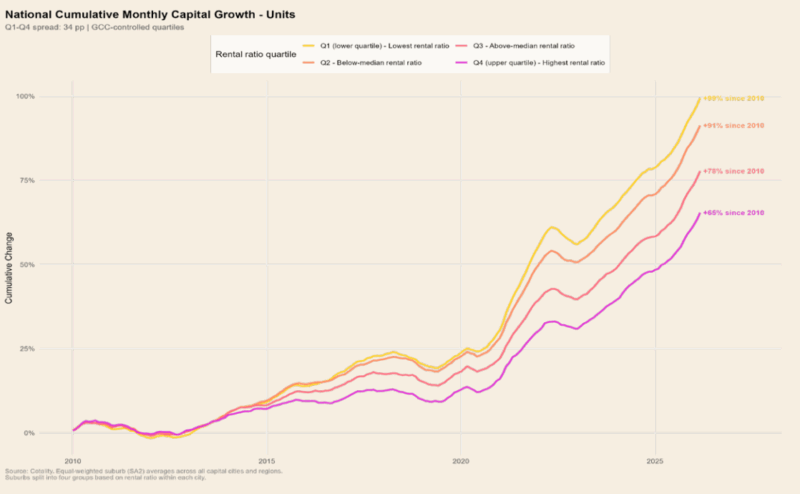
Suburbs with a higher share of owner-occupied homes recorded significantly stronger long-term capital growth between 2010 and 2026, driven by a 34 percentage point performance gap in the unit market.
Units in owner-occupied areas grew 99% in value compared to 65% in investor-heavy suburbs, generating an estimated $148,000 more in gross capital gains.
Tightening credit conditions and Federal Budget tax reforms could heighten financial risks for rental-heavy suburbs, making ownership mix a critical metric for future returns.
Suburbs with a higher share of owner-occupied homes recorded significantly stronger long-term capital growth between 2010 and 2026, driven by a 34-percentage point performance gap across the unit market, according to new analysis from Cotality of 3,000 suburbs over 16 years.
The performance divide is steepest in the unit market, where owner-occupied areas deliver more resilient, stable value growth over time.
The $148,000 unit market divide
Between January 2010 and March 2026, units in owner-occupier-dominated suburbs grew 99% in value, while units in investor-heavy suburbs within the same cities gained just 65%.
When applied to the January 2010 national median unit value of $436,000, this gap translates to an additional $148,000 in gross capital gains.
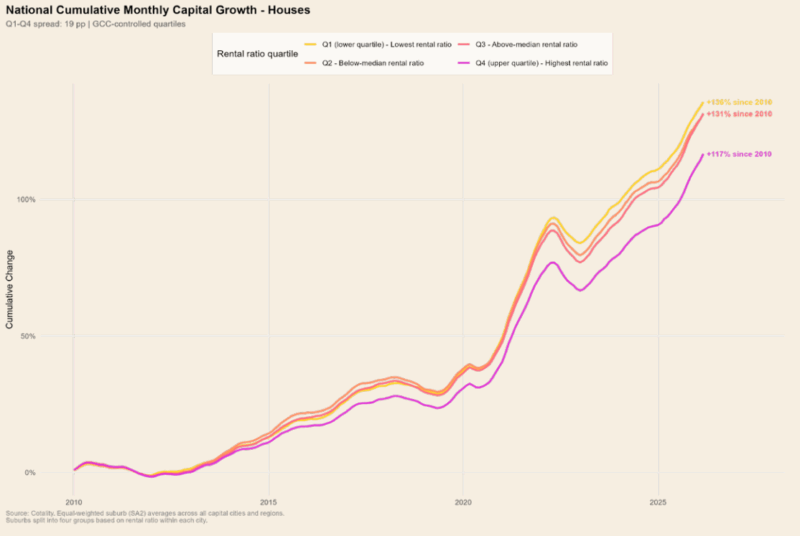
For houses, the influence of ownership type was less significant.
Low-investor suburbs saw values rise by 136%, compared with 117% in investor-heavy areas, creating an estimated $83,000 gap relative to the 2010 median house price of $435,000.
"The results are consistent with the idea that owner-occupier heavy suburbs have tended to see stronger capital growth, particularly across the unit segment," said Cotality Economist Annabelle Mezieres.
"Units in investor-heavy suburbs have historically underperformed because they can be more exposed to sudden supply spikes, changes in market sentiment, and shifts in credit conditions.”
- Also read:Latest Property Price Forecasts. Australian Property Market Outlook 2026-2027: Navigating a Market Correction

- Also read:Home Prices Slide Further Downwards Over August | Latest Property Market Stats

- Also read:National Weekly Auction Report – August 29th 2026 | Auction Clearance Rates Rise as Winter Ends

- Also read:Job losses and softer wages take pressure off the RBA and interest rates | Property Insiders

- Also read:This week’s Australian Property Market Update – Latest Data, State by State August 25th 2026

“Owner-occupiers typically buy with a focus on liveability and lifestyle, often inject capital via renovations, and hold assets longer, which supports value over time."
Policy shifts amplify risks
This ownership insight arrives at a critical juncture.
Investors made up 40% of housing lending by value in the March quarter of 2026, yet borrowing conditions are tightening as the Reserve Bank fully reversed its 2025 interest rate cuts.
With investor mortgage rates in the mid-6 % range, and capital city rental yields averaging 3.5%, leveraged properties face immediate cash-flow pressures.
Tax reforms announced in the Federal Budget will alter these economics by grandfathering negative gearing for existing properties from 1 July 2027, while shifting incentives for new investors towards new builds.
"Future buyers of established stock may not have access to the same tax benefits or borrowing capacity, which could narrow the buyer pool in locations previously attractive to investors," added Thomas Clarkson, Cotality’s Senior Manager of Analytics & Data Science.
"While new builds will benefit from tax incentives, a high rental ratio could have implications for long-term capital gains.”
“Additionally, investors are likely to weigh higher entry costs, the potential for a shallower resale market, and reduced scarcity against the appeal of tax benefits derived from new housing options."