

Key takeaways
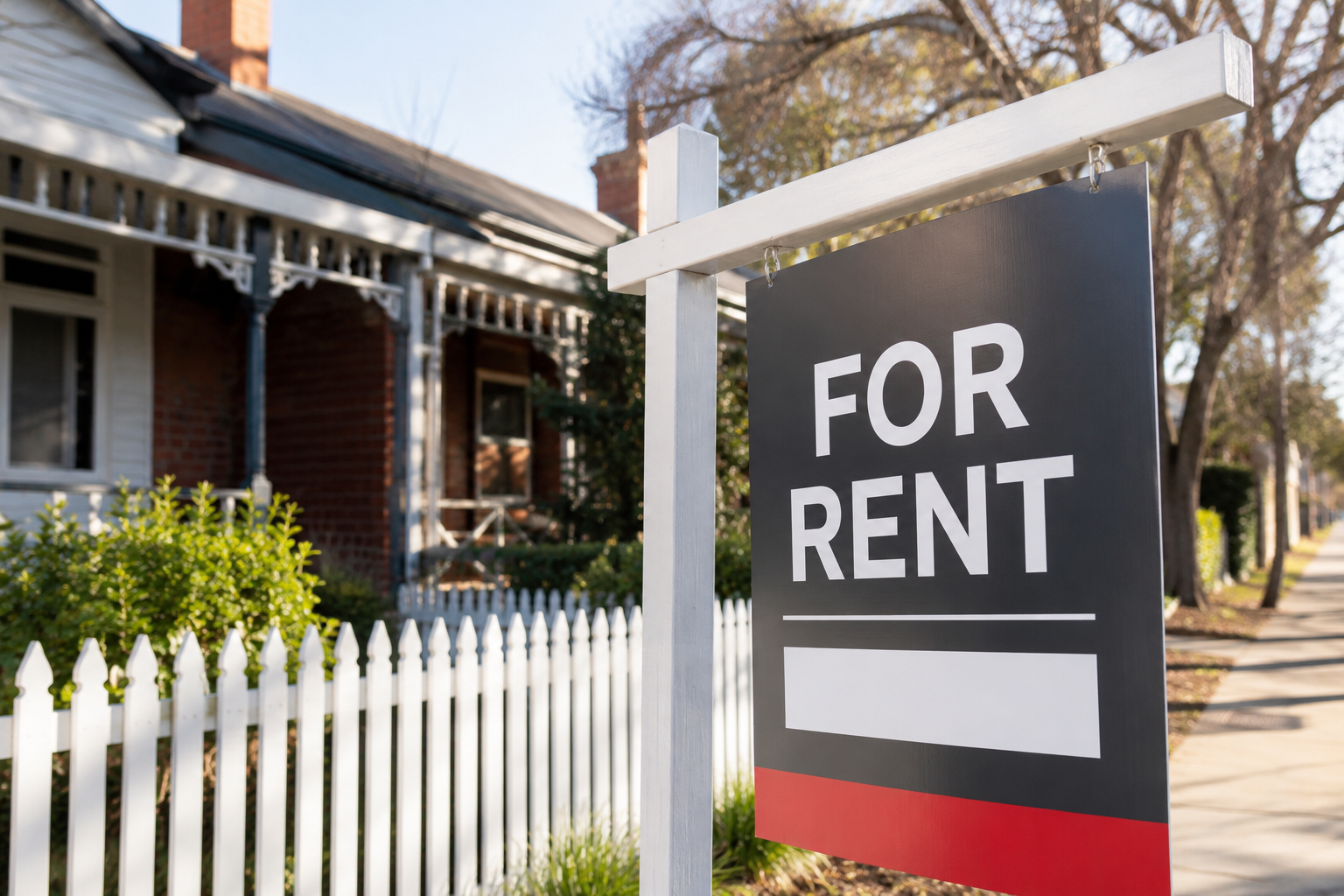
Labor’s tax changes are likely to put upward pressure on rents. Reduced tax benefits make established investment properties less attractive, potentially reducing rental supply.
Australia already has a severe rental shortage. The national vacancy rate is just 1.3%, while rents are already rising strongly.
Rents could rise by 10-15% or more in some markets. A 15% increase on $700 weekly rent would cost tenants an extra $5,460 a year.
Higher rents could keep inflation and interest rates higher for longer. This could further increase construction costs and landlord cash-flow pressures.
Australia’s fundamental problem remains insufficient housing supply. We need better development feasibility, faster approvals, earlier infrastructure and more investment rather than policies that discourage rental property investors.
Australia’s rental market was already stretched before the federal government decided to rewrite the tax rules for property investors.
Vacancy rates remain painfully low, advertised rents continue to rise faster than wages, and the country is failing to build enough homes for its growing population.
Now, Labor’s changes to negative gearing and capital gains tax have added another layer of uncertainty to a market that can hardly afford to lose any more private investors.
Treasury argues the rental impact will be modest, estimating an increase of less than $2 per week for a household paying the current median rent. However, most economists and property analysts believe the eventual increase will be much larger, particularly in markets where rental vacancies are already close to historic lows.
NAB projects that rents could to soar by as much as 30 per cent over the next two years to compensate many landlords for the loss of property tax concessions that Jim Chalmers and Anthony Albanese abolished, blowing out budget predictions and stoking fears of further inflation.
And Ray White, which manages over 250,000 rental properties, affirmed that Jim Chalmers' budget could lead to a spike of up to 30% for tenants.
Other commentators are also suggesting rents will increase between 15 and 30%. While I think the upper end of that estimate should be treated cautiously, the direction of the pressure is clear. The government has made investing in established residential property less attractive, and renters may ultimately pay part of the price.
What has Labor changed?
The federal budget changes to negative gearing, capital gains tax and borrowing for residential properties in an SMSF are well documented.
Their intention is clear - Labor wants to shift investor capital away from existing homes and towards new construction.
The problem is that property markets rarely respond as neatly as government modelling assumes.
Why will rents rise?
The most obvious consequence of the changes is that many established properties will deliver a lower after-tax return to their next investor owner.
Consider an investor purchasing an established property that makes a rental loss of $14,810 a year.
Treasury’s own example shows that the current deduction could be worth $4,761 to someone earning $80,000 and $6,961 to someone earning $210,000.
Under the new rules, that investor will have to carry the loss forward rather than use it to reduce tax on their salary today which creates a very real cash-flow difference.
A prospective investor assessing the property will therefore have several options. They can accept a lower after-tax return, pay less for the property, borrow less, seek a higher rent, or walk away and invest elsewhere.
Many will probably choose a combination of these responses.
NAB’s head of Australian economics, Gareth Spence, reportedly estimates that gross rental yields may need to rise by about one percentage point to compensate investors for the loss of the tax benefits.
For Sydney and Melbourne investment properties producing yields of about 3.5 per cent, a rise to 4.5 per cent would require rents to increase by roughly 25 to 30 per cent if property prices remained unchanged.
SQM Research managing director Louis Christopher has suggested a yield increase of between one and 1.5 percentage points may be required in some circumstances.
He believes the adjustment could be shared between lower property prices and higher rents, which would still leave open the possibility of rental increases of around 15 per cent.
Of course, landlords don’t set rents simply by adding their costs and desired return. Rents are ultimately determined by what tenants can and will pay, influenced heavily by the balance between available rental properties and the number of people competing for them.
However, when vacancies are extremely low, landlords have considerably more pricing power.
The rental market is already undersupplied
SQM Research reported that Australia’s residential vacancy rate was only 1.3 per cent in July 2026, with just 40,771 vacant rental properties across the country.
A balanced rental market is generally considered to have a vacancy rate somewhere around 2.5 to 3 per cent.
National advertised rents were already 7.2 per cent higher than a year earlier, with the combined average rent approaching $700 a week.
In other words, Labor’s tax reforms are being introduced into a rental market with almost no spare capacity.
The National Housing Supply and Affordability Council has also warned that housing demand is expected to continue outpacing supply.
Its early 2026 outlook estimated that Australia would produce about 980,000 gross new dwellings over the five-year Housing Accord period, well short of the government’s 1.2 million target.
After allowing for demolitions, the Council projected net new supply of around 862,000 homes compared with underlying demand from approximately 900,000 new households.
That leaves a projected shortfall of 37,000 homes, and even that estimate does not adequately capture the unmet housing need already accumulated through overcrowding, marginal housing and homelessness.
Construction costs, planning delays, builder insolvencies, infrastructure bottlenecks and high interest rates continue to restrict the number of financially viable developments.
- Also read:Latest Property Price Forecasts. Australian Property Market Outlook 2026-2027: Navigating a Market Correction

- Also read:Brisbane Property Market Forecast [2026 & Beyond] – What The Olympics Decade Means for Investors.
- Also read:Melbourne property market forecast for 2026 & 2027 | Separating the fundamentals from the sentiment
- Also read:Sydney property market forecast for 2026 and 2027 | Why the short-term softness is a long-term opportunity

- Also read:Home Prices Down Again Over September – But Not as Much | Latest Property Market Stats

Redirecting investors towards new housing may sound sensible, but tax concessions can’t turn an unviable development into a viable one on their own.
Many investors also prefer established properties in proven locations because they offer land value, scarcity and a demonstrated rental market. New apartments and house-and-land packages on the urban fringe just don’t offer comparable investment fundamentals.
If those investors decide against new housing and withdraw from the market altogether, the hoped-for increase in construction funding may never eventuate.
Won’t an investor selling simply create another homeowner?
This is the argument commonly used to dismiss concerns about rental supply.
If an investor sells an established property to a first-home buyer, the country has not lost a dwelling. A tenant becomes an owner-occupier, potentially reducing rental demand while also reducing rental supply.
There is some truth to this, and it is one reason claims of an automatic 30 per cent rent increase deserve scrutiny. However, people and dwellings don’t transfer between tenures in perfectly matched numbers.
A rental property may house several unrelated adults, while the buyer could be a couple occupying the property alone. In that case, more than one former tenant must find another rental home.
The investor may also sell to an existing owner-occupier upgrading their home, while the purchaser of their previous home may not be a tenant.
Location and property type matter as well. The rental home sold in inner Melbourne does little to help a tenant searching in Brisbane or Perth.
Aspiring homebuyers may also remain unable to secure finance, even if property prices soften slightly and will remain tenants and continue competing for a smaller pool of rental accommodation.
Treasury estimates the reforms will produce around 75,000 additional owner-occupiers over a decade and cause property prices to grow about 2 per cent less over a couple of years than they otherwise would.
That is a modest change spread across a very large housing market and is unlikely to solve the affordability problem facing younger Australians, particularly while prices remain high relative to incomes and borrowing capacity is constrained.
The inflation problem
Higher rents would also create a headache for the Reserve Bank.
ABS figures show that headline inflation was 3.8 per cent in the year to June 2026, while trimmed mean inflation remained at 3.6 per cent.
Housing costs were already the largest contributor, increasing by 6.8 per cent over the year and contributing almost 1.5 percentage points to annual inflation.
Rental increases flow into the Consumer Price Index gradually because leases are renewed at different times and state laws restrict how frequently rents can be increased.
This means the effect of the budget changes may take months, and possibly years, to become fully visible in official inflation figures.
If higher rents keep inflation elevated, interest rates may also remain higher for longer. That would raise the cost of producing new housing and increase the cash-flow pressure on landlords, reinforcing the same rental pressures the policy was supposed to avoid.
Will rents really rise by 30 per cent?
I would be reluctant to suggest that rents across Australia will automatically increase by 30 per cent because of these tax changes.
The NAB calculation, which suggests this, assumes property prices remain unchanged and that the entire yield adjustment is reflected in higher rents. In practice, some of the adjustment is likely to occur through softer property prices, changes in investor borrowing, lower purchase prices and reduced investor demand.
Affordability also places a ceiling on how much many tenants can pay. Some will move to cheaper areas, share accommodation, delay leaving the family home or reduce spending elsewhere.
Yet none of this makes the outlook comfortable.
Even a 10 to 15 per cent increase would be severe for a household already paying $700 a week. A 15 per cent rise would add $105 a week, or $5,460 a year, to the tenant’s housing costs.
The bottom line
Labor’s reforms may help some first-home buyers compete for established properties, particularly if investor demand weakens and prices grow more slowly.
However, homebuyers and tenants are not separate groups with separate housing systems. Policy changes that reduce investment demand can have very different consequences for renters who can’t buy.
The most likely outcome is a gradual repricing of risk and return across the rental market.
Some adjustment will occur through property values, some through lower investor participation, and some through higher rents. The tightest rental markets and lower-yielding investment locations are likely to feel the greatest pressure.
Australia needs a broader housing strategy that improves development feasibility, shortens approval times, delivers infrastructure earlier and encourages institutional as well as private investment in rental housing.
Penalising investors is politically attractive because it gives frustrated homebuyers someone to blame, but it does little to overcome the underlying shortage of well-located homes.
If the reforms discourage more investors than they attract into new construction, tenants will face fewer choices and stronger competition.
That is why I believe rents are likely to keep rising, and why Treasury’s forecast of only a couple of dollars a week may prove to be one of the more optimistic assumptions in the federal budget.