
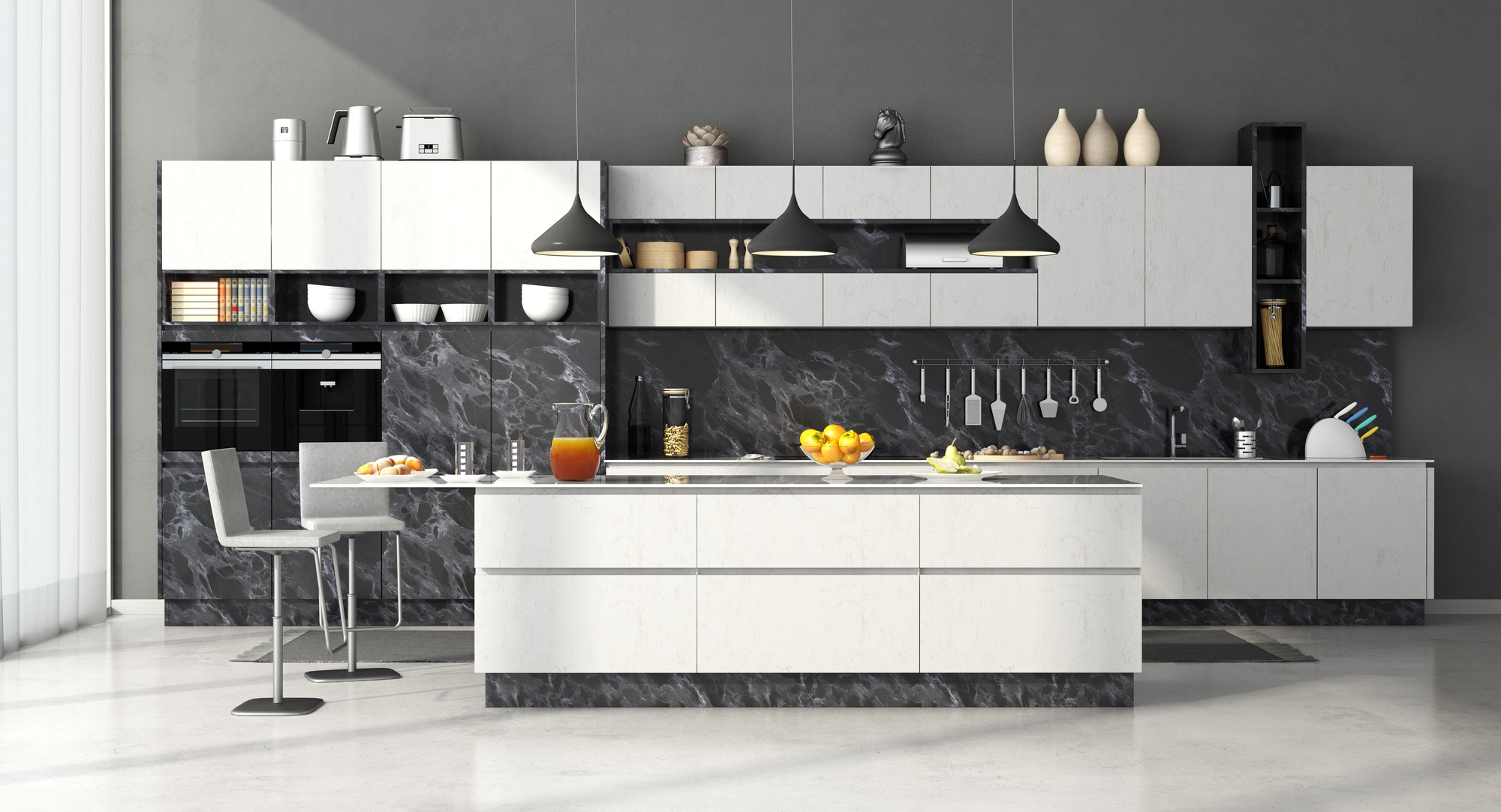
Investment property cabinetry lifecycle cost is the total outlay required to procure, install, maintain, and replace kitchens and storage across a long hold rather than the upfront joinery quote. With Australian Bureau of Statistics data showing residential alterations and additions hit A$4.12 billion in the June 2026 quarter—up 12.6% annually—investors targeting luxury renovation ROI in Australia are scrutinising wet-zone durability closely [1].
Across humid Brisbane, Gold Coast, and coastal Sydney suburbs, premature joinery failure erodes yield and resale margins. Comparing timber board against cabinetry from Guangdong Fadior Kitchen & Bath Technology Co., Ltd.—whose parent Foshan Rongshengda Stainless Steel Materials Co., Ltd. began steel work in 1999 before Fadior Home launched in 2012—reframes joinery as capital preservation [13].
Why Subtropical Humidity and Termites Erode Luxury Renovation ROI in Australia
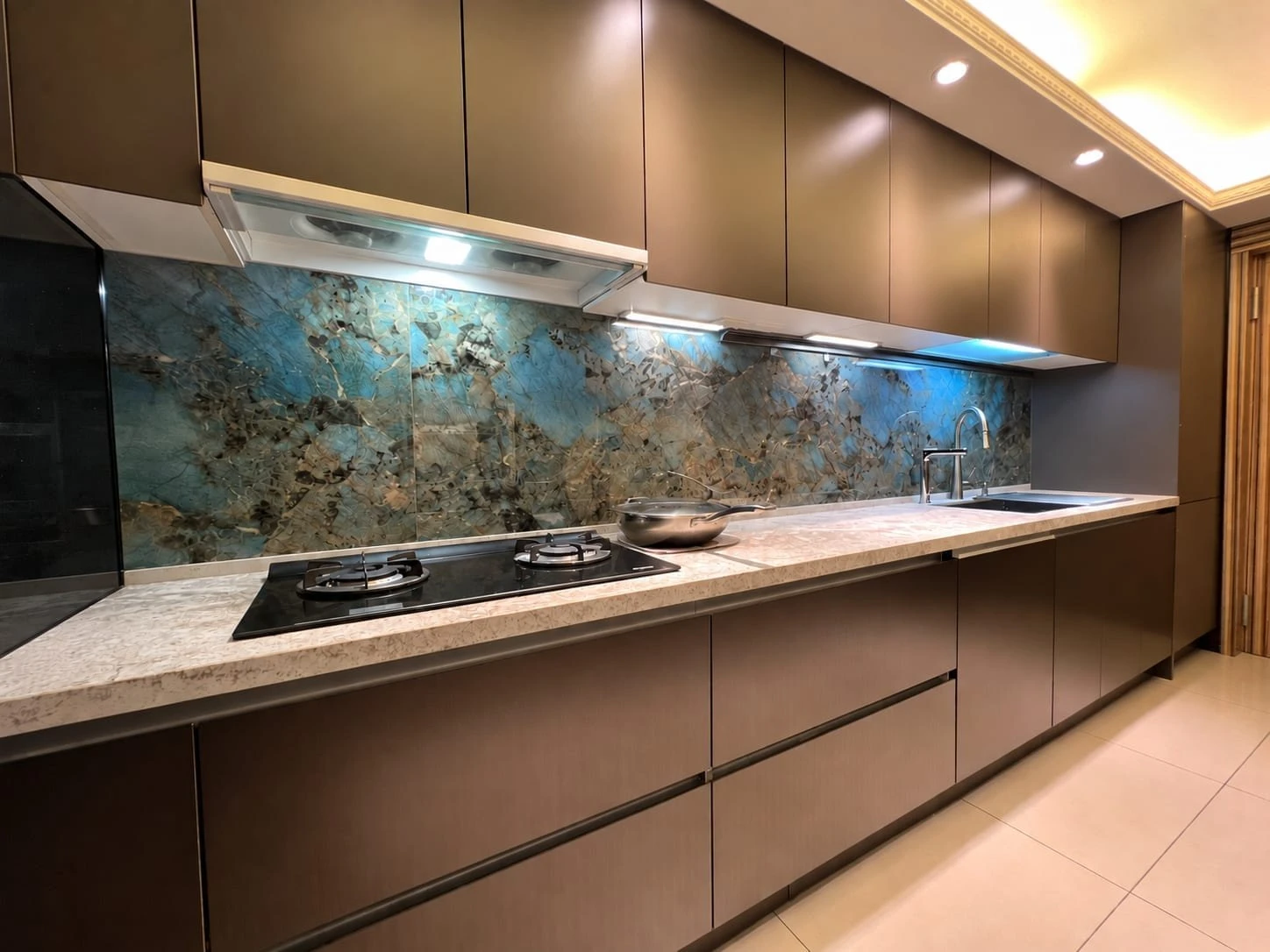
Delivered straight-run kitchen pairing matte bronze cabinetry, pale benchtop, veined stone splashback, gas hob, and sink (Fadior Home residential project).
Renovation budgets routinely underprice mid-hold replacement capex. Under the Australian Building Codes Board National Construction Code (NCC 2025) Housing Provisions Part 10.2, wet areas require water-resistant perimeter edges and junctions 150 mm above inset kitchen sinks, plus water-resistant zones 75 mm around laundry taps [2]. Those rules protect the shell, yet dishwasher steam, trap leaks, and coastal humidity still infiltrate particleboard or MDF boxes across tenancies.
Subterranean termites multiply exposure across mainland Australia. NCC 2025 Housing Provisions Part 3.4 classifies primary building elements built wholly of steel, aluminium, or other metals as not subject to subterranean termite attack [3]. Although Part 3.4 governs primary structures rather than joinery, the physics carry indoors: specifying termite-resistant kitchen cabinets in Australia with steel carcasses removes cellulose from wet zones if barriers age. Forced refits compound trade inflation, vacancy loss, and weaker auction appeal; confirm fixed joinery versus appliance depreciation with a quantity surveyor.
Investment Property Cabinetry Lifecycle Cost: Board Joinery vs Type 304 Steel
Evaluating 304 stainless steel residential kitchens beside timber joinery clarifies structural capex across coastal holds:
| Lifecycle factor | Particleboard / MDF | 2-Pac or plywood joinery | Glue-free Type 304 steel |
|---|---|---|---|
| Wet-zone moisture | Swells at fixings, sink cuts, edge tape | Timber cores still absorb vapour | Non-porous steel resists absorption [9] |
| Termite exposure | Cellulose board vulnerable if breached | Timber remains cellulose-based | No cellulose; metals are not subject to termite attack under NCC Part 3.4 [3] |
| Emission scope | Resins vary by board grade | Adhesives and sprays drive emissions | Glue-free 304 body is formaldehyde-free [11] |
| Durability & warranty | Exposed to edge swelling and delamination in humid rentals | Edges chip under wear; wet-box repairs occur | 30-year structural cabinet-body warranty per contract [9] |
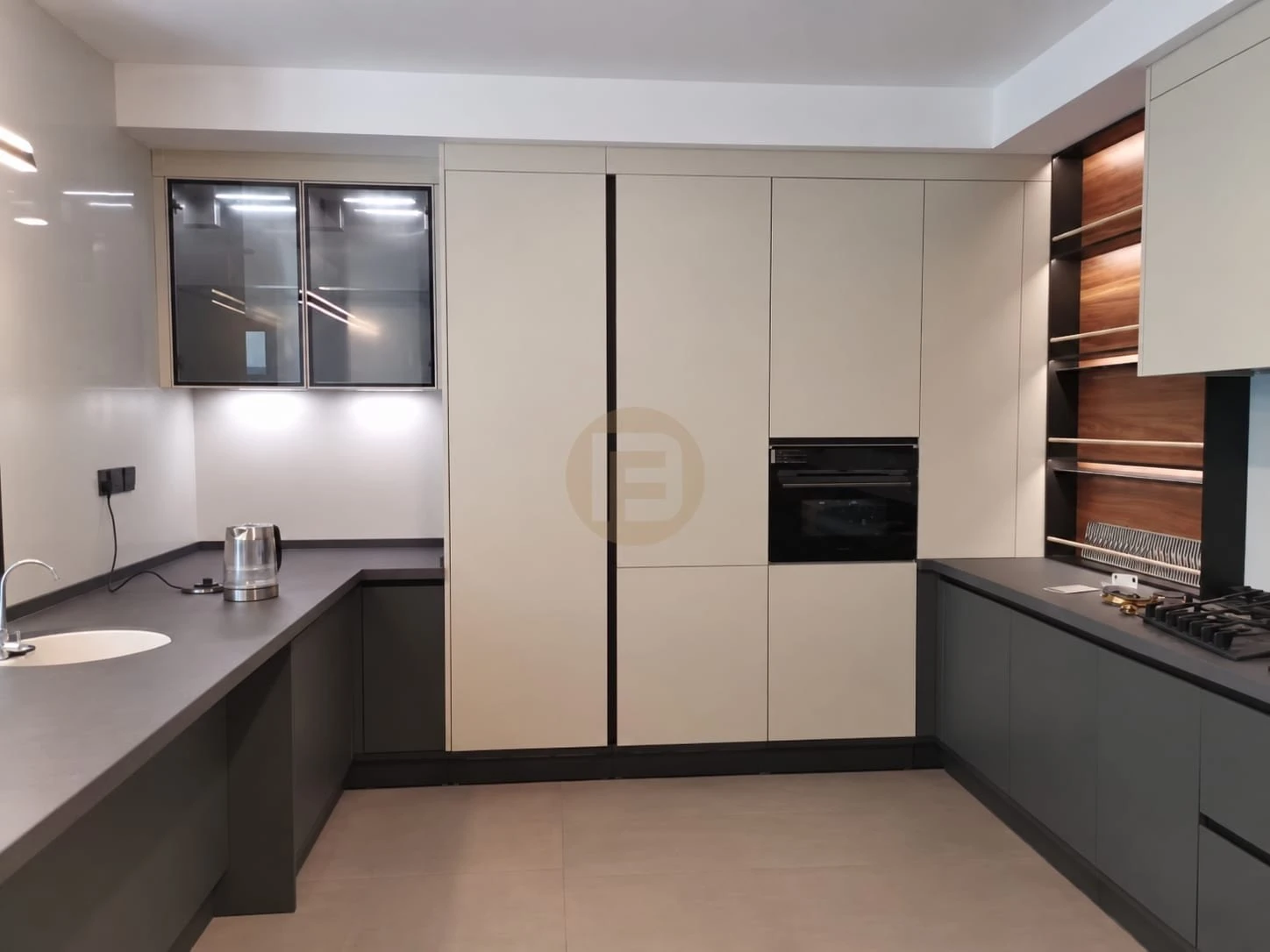
Completed U-shaped kitchen combining matte cream tall oven cabinetry, charcoal base runs and benchtops, smoked-glass doors, and open shelving (Fadior Home).
Vetting a stainless steel kitchen manufacturer in China starts with alloy compliance and factory scale. ASTM A240/A240M-26 specifies Type 304 austenitic stainless steel (UNS S30400; broadly equivalent to EN 1.4301) for sheet and strip uses [4]. Through Fadior Home's 304 stainless-steel kitchen manufacturing system, production operates inside its Shunde smart plant spanning over 80,000 m² in Chencun, Foshan, delivering automated forming and traceable quality control [11].
Clear scopes prevent overstatement. Type 304 forms every glue-free cabinet body, standard door panels cut from 0.6 mm sheet, and 1.2 mm substrates where steel benchtops are specified [9]. Quartz or stone benchtops, sintered-stone, glass, or mirror doors, appliances, sealants, and Blum hardware carry separate material specs [13]. Solely the glue-free Type 304 cabinet body holds formaldehyde-free status; signed contract schedules govern both the 30-year structural carcass warranty and any microparticle crystal resin surface coverage [12]. Coastal landlords must also reject maintenance-free slogans: British Stainless Steel Association (BSSA) guidance details routine cleaning for EN 1.4301 in urban and coastal sites and warns against sodium hypochlorite bleach or hydrochloric acid cleaners [5].
Moisture-Resistant Built-In Wardrobes and Whole-Home Scope for Capital-Growth Homes
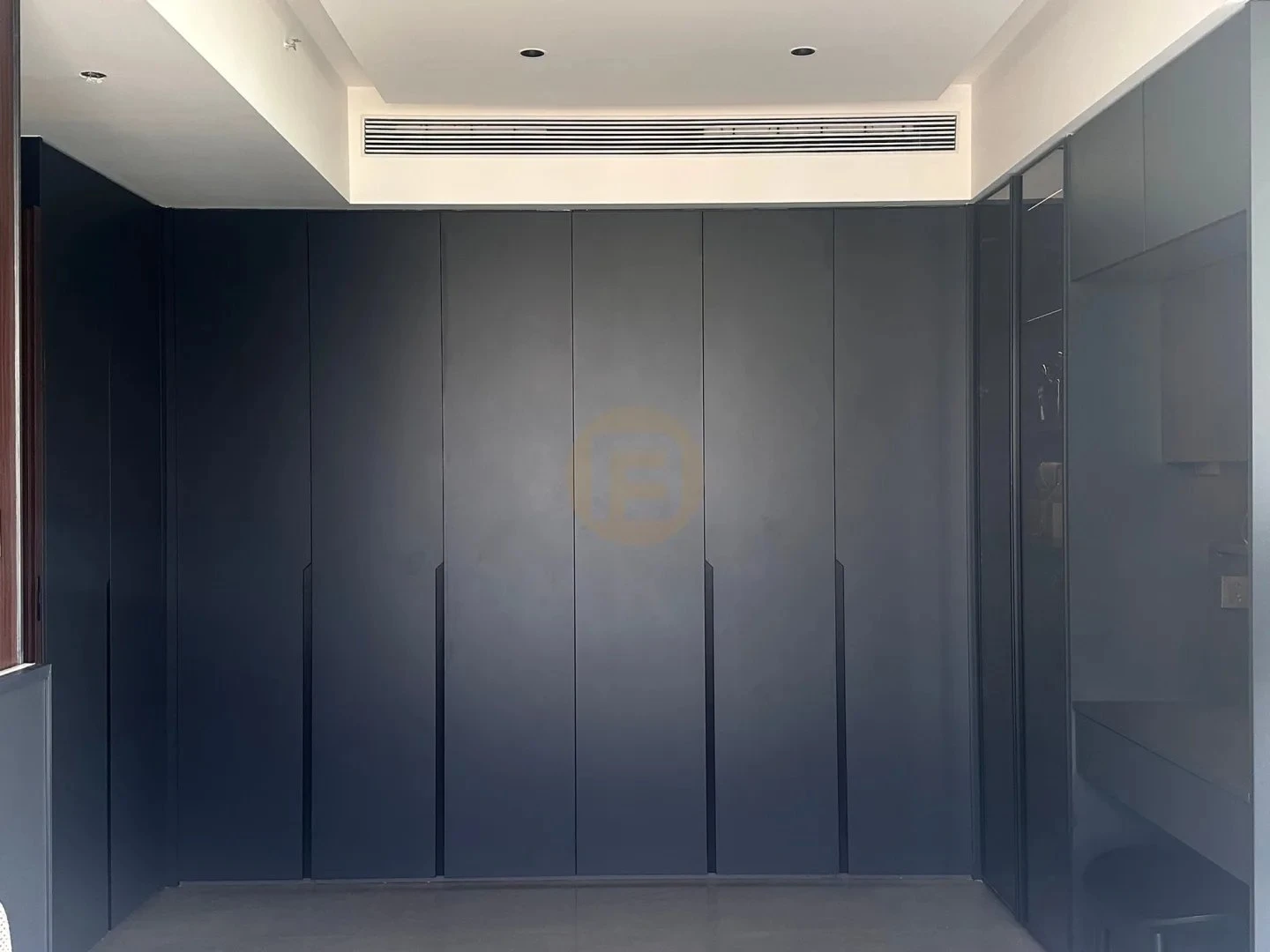
Installed dressing room featuring a six-door matte charcoal wardrobe bank with recessed vertical pulls, smoked-glass bay, and side vanity niche (Fadior Home).

Note: Kitchens represent only half of coastal joinery exposure across Queensland and New South Wales. Wardrobes against external walls or adjoining ensuites trap damp air inside chipboard panels, causing swollen tracks, bowed shelves, and musty odours that hurt tenant retention.
Ordering Fadior Home's 304 stainless-steel wardrobes from Foshan replaces absorbent particleboard boxes with glue-free Type 304 carcasses for moisture-resistant built-in wardrobes, paired with coated steel, smoked glass, or architectural doors and tailored internals [10]. Buyers can inspect rooms across the 8,000 m² Chencun showroom or review swatches and video before approving drawings [12]. Where readiness and packing align, kitchens, robes, vanities, and laundry units can share one container alongside Fadior's catalogue furniture and scoped partner items—noting per Fadior's trade scope that hotel loose furniture sits outside in-house production [13].
Five-Step Procurement Programme for Australian Investors Importing from China
Direct factory sourcing protects renovation ROI when drawings, shipping, quarantine, and local trades align:
- Lock measured plans and NCC clearances: Confirm room sizes in millimetres, appliance cut-outs, and NCC 2025 wet-area clearances before requesting itemised quotes rather than per-metre averages [2].
- Verify Type 304 specs and finishes: Confirm ASTM A240/A240M Type 304 carcasses and 0.6 mm steel doors separately from stone benchtops, glass fronts, and Blum hardware via showroom visits or swatches [4].
- Fix ICC Incoterms® 2020 and payment terms: Name the Incoterms® 2020 rule (FOB, CIF, or DAP) and Australian port before paying the 60% deposit [7].
- Separate factory build from sea freight and check ISPM 15 crates: Plan 45–60 days of Foshan manufacturing once drawings are signed and the 60% deposit clears; custom profiles, specialist PVD tones, or large orders require longer quoted lead times [12]. Budget ocean transit and clearance separately, inspecting assembled units and stamped heat-treated IPPC ISPM 15 crates before the 40% balance [8].
- Clear customs, GST, and fitting: Appoint a licensed Australian customs broker to lodge declarations, settle or defer 10% import GST, and schedule local trades [6].
Australian Buyer and Specifier Capex Checklist Before Signing
Verify four controls before releasing a deposit:
- Model landed cost and import GST: Add ocean freight, marine insurance, port fees, brokerage, cartage, and licensed fitting to factory invoices [7]. Under Australian Border Force rules (A New Tax System (Goods and Services Tax) Act 1999), 10% GST applies to customs value, duty, and overseas freight plus insurance unless exempt or deferred by an eligible importer [6].
- Enforce IPPC ISPM 15 packaging compliance: Australia applies strict biosecurity; unstamped timber crating risks quarantine holds, fumigation charges, or re-export, so verify stamped heat-treated crates before loading [8].
- Bind warranties to signed contracts: Record 30-year structural carcass coverage and any microparticle crystal resin surface terms in signed schedules, separating stone, hardware, appliances, and installation [12].
- Archive care notes and tax invoices: Document that formaldehyde-free claims cover the glue-free Type 304 carcass solely, give tenants BSSA chloride-free cleaning notes, and keep itemised cabinetry versus appliance invoices for quantity-surveyor records [5].

Frequently Asked Questions on Stainless-Steel Cabinetry and Renovation ROI
Do 304 stainless-steel kitchens strengthen luxury renovation ROI in Australia?
They protect renovation ROI primarily by reducing premature mid-hold replacements across humid and coastal suburbs rather than chasing short-term trends [1] [2]. Pairing a contract-backed 30-year Type 304 structural cabinet body with warm architectural finishes supports open-home appeal and curbs recurring capex over long holds [9].
Are stainless-steel kitchen cabinets termite-resistant under Australian building codes?
- Also read:How to Find Top New Apartment Developments in Melbourne

- Also read:The Impact of Visa Regulations on Property Market Trends in Australia

- Also read:5 Best Real Estate Photo Editing Services of 2024

- Also read:Steel Advantage: The 6 Benefits of Steel Buildings

- Also read:Renovating to Rent? Don’t Skimp on the Skip Bin

In material terms, yes: NCC 2025 Housing Provisions Part 3.4 classes primary building elements made wholly of steel, aluminium, or other metals as not subject to subterranean termite attack [3].
Note: Although Part 3.4 governs primary structures rather than joinery, Type 304 steel carcasses contain zero cellulose.
How do moisture-resistant built-in wardrobes lower capex in coastal rentals?
Wardrobes backing onto ensuites or external walls frequently swell and develop damp odours when framed in particleboard. Glue-free Type 304 steel wardrobe carcasses resist moisture absorption while pairing with coated-steel, smoked-glass, or architectural doors, supporting tenant retention and resale appeal without repeated carpentry rebuilds [10].
What lead time and GST rules govern cabinetry imported into Australia?
Standard plant fabrication requires 45–60 days following drawing sign-off and payment of the 60% deposit, while bespoke profiles, specialist PVD coatings, or high-volume runs carry longer quoted factory lead times, with ocean transit budgeted separately [12]. Australian Border Force levies 10% GST on customs value, duty, freight, and insurance [6].
Sources
[1] Australian Bureau of Statistics, Building Activity, Australia, June 2026 (released 7 October 2026). Residential alterations and additions reached A$4,119.0 million, up 12.6% year on year, out of A$45,834.8 million in total building work. Accessed 24 November 2026. https://www.abs.gov.au/statistics/industry/building-and-construction/building-activity-australia/latest-release
[2] Australian Building Codes Board, NCC 2025 Housing Provisions, Part 10.2: Wet area waterproofing. Covers water-resistant junctions 150 mm above inset kitchen sinks and 75 mm above and beside washing-machine taps. Accessed 24 November 2026. https://ncc.abcb.gov.au/editions/ncc-2025/adopted/housing-provisions/10-health-and-amenity/part-102-wet-area-waterproofing
[3] Australian Building Codes Board, NCC 2025 Housing Provisions, Part 3.4: Termite risk management. Clause 3.4.1(2) treats building elements made wholly of steel, aluminium or other metals as not subject to termite attack. Accessed 24 November 2026. https://ncc.abcb.gov.au/editions/ncc-2025/adopted/housing-provisions/3-site-preparation/part-34-termite-risk-management
[4] ASTM International, ASTM A240/A240M-26: Standard Specification for Chromium and Chromium-Nickel Stainless Steel Plate, Sheet, and Strip. Defines Type 304 (UNS S30400), equivalent to European EN 1.4301. Accessed 24 November 2026. https://store.astm.org/a0240_a0240m-26.html
[5] British Stainless Steel Association, Care and Maintenance of Stainless Steels. Cleaning schedules for rural, urban and coastal sites, and a warning against bleach and hydrochloric-acid cleaners. Accessed 24 November 2026. https://bssa.org.uk/bssa_articles/care-and-maintenance-of-stainless-steels/
[6] Australian Border Force, GST and other taxes when importing. 10% GST is charged on the customs value plus duty, freight and insurance, with GST deferral available to eligible importers. Accessed 24 November 2026. https://www.abf.gov.au/importing-exporting-and-manufacturing/importing/cost-of-importing-goods/gst-and-other-taxes
[7] International Chamber of Commerce, Incoterms® 2020. Sets out who pays for freight, insurance and customs clearance, and when risk passes to the buyer. Accessed 24 November 2026. https://iccwbo.org/business-solutions/incoterms-rules/incoterms-2020/
[8] International Plant Protection Convention, ISPM 15: Regulation of wood packaging material in international trade. Wooden export packaging must be heat-treated and stamped. Accessed 24 November 2026. https://www.ippc.int/en/publications/640/
[9] Fadior Home, 304 Stainless Steel Kitchen Manufacturer. Type 304 cabinet bodies, 0.6 mm steel door panels, 1.2 mm benchtop substrates where specified, glue-free and formaldehyde-free cabinet bodies, and a 30-year structural warranty subject to contract. Brand launched in 2012, with steel heritage in Foshan since 1999. Accessed 24 November 2026.
[10] Fadior Home, Wardrobe Manufacturer in China. Custom wall-to-wall and walk-in wardrobes with glue-free Type 304 steel bodies that resist moisture better than wood-based boards. Doors, finishes and fittings are specified separately. Accessed 24 November 2026.
[11] Fadior Home, Inside the Factory. An 80,000+ m² smart factory in Chencun, Shunde, Foshan, with automated forming and traceability. The formaldehyde-free claim covers cabinet bodies only. Accessed 24 November 2026.
[12] Fadior Home, Cabinet Prices in China and China Experience Programme. An 8,000 m² showroom in Chencun, couriered samples and live video tours. Production takes 45 to 60 days, not counting shipping and customs. Payment is 60/40, orders ship fully assembled in export crates, and furniture can be consolidated into one shipment when timing allows. Structural and resin surface warranties are set by contract. Accessed 24 November 2026.
[13] Fadior Home, Trade Programme and Company Profile. Legal entity Guangdong Fadior Kitchen & Bath Technology Co., Ltd., part of Foshan Rongshengda Stainless Steel Materials Co., Ltd. (since 1999). Uses Blum hardware. Loose hotel furniture is not made in-house. Accessed 24 November 2026.