
For landlords in Melbourne, security is rarely just a “nice-to-have”. It's a practical way to protect rental income, minimise disruption and maintain a property's appeal to long-term tenants. When a break-in occurs, the visible damage is often only part of the cost. There's the damaged door frame, the cost of an emergency locksmith call-out, the time spent coordinating repairs, and the uncomfortable period when tenants feel unsafe and start browsing other listings. Even a minor incident can create vacancy risk and transform routine property management into a series of urgent tasks.

The good news is that rental properties don’t require a “perfect” security setup to reap the benefits. Most of the time, the aim is to deter intruders, detect them quickly, and have a system that tenants will actually use consistently. As a landlord, your priorities are different to those of an owner-occupier: you want flexibility, minimal property alteration, low friction at tenant changeover, and fewer false alarms that annoy everyone involved.
What follows is an approach focused on landlords that leans more towards real-world decision-making than shopping for features. It is designed to help you choose a system that is suitable for typical Melbourne rental properties, such as houses, townhouses and apartments, without causing problems for you, your tenants or the strata management company.
Security is about protecting your yield, not collecting gadgets
When it comes to renting, it helps to rethink what an alarm system is 'for'. You’re not trying to turn the property into a fortress. You’re trying to reduce avoidable risk and ensure the property runs smoothly.

Note: In practice, this involves securing the entry points that criminals actually use, making the property less appealing than neighbouring properties, and ensuring that, should something happen, you find out quickly and can respond in a way that limits damage.
In Melbourne, the ideal system integrates seamlessly into the leasing process. Tenants can quickly learn to use it without any confusion, and you can easily reset access when they move out. However, if the system requires constant training, complicated routines or frequent calls asking why it is going off, tenants will stop using it. At that point, you will be paying for hardware that mostly exists as décor.
Wireless vs. wired: Landlords should prioritise reversibility
The choice between wireless and wired connections is often where landlords either simplify or complicate their lives for years.

Tip: A wired system can be ideal if you plan to stay in the property long-term and are already renovating. Cabling is easiest when the walls are open, and a properly planned wired layout can be highly robust, particularly in larger homes where multiple detection zones and clean integration are desired.
However, rentals do not always reward permanence. In many situations, especially in apartments, townhouses with strata or properties with frequent tenant turnover, wireless systems are simply more landlord-friendly. They are faster to install, usually require less drilling and are easier to expand or reconfigure if your risk profile changes. The only drawback is battery management, but this is predictable and manageable if you treat it as part of routine inspections rather than an emergency.
If you own a portfolio, the consistent nature of wireless systems is also appealing: you can standardise the way you deliver instructions, check health status and update user access. This operational simplicity can be more valuable than the theoretical durability of a wired setup.

Monitoring: deciding who responds and when it matters
Once you have decided on a general system type, the next question is what will happen when it is triggered. This is where landlords should be honest about how they would respond in the real world.
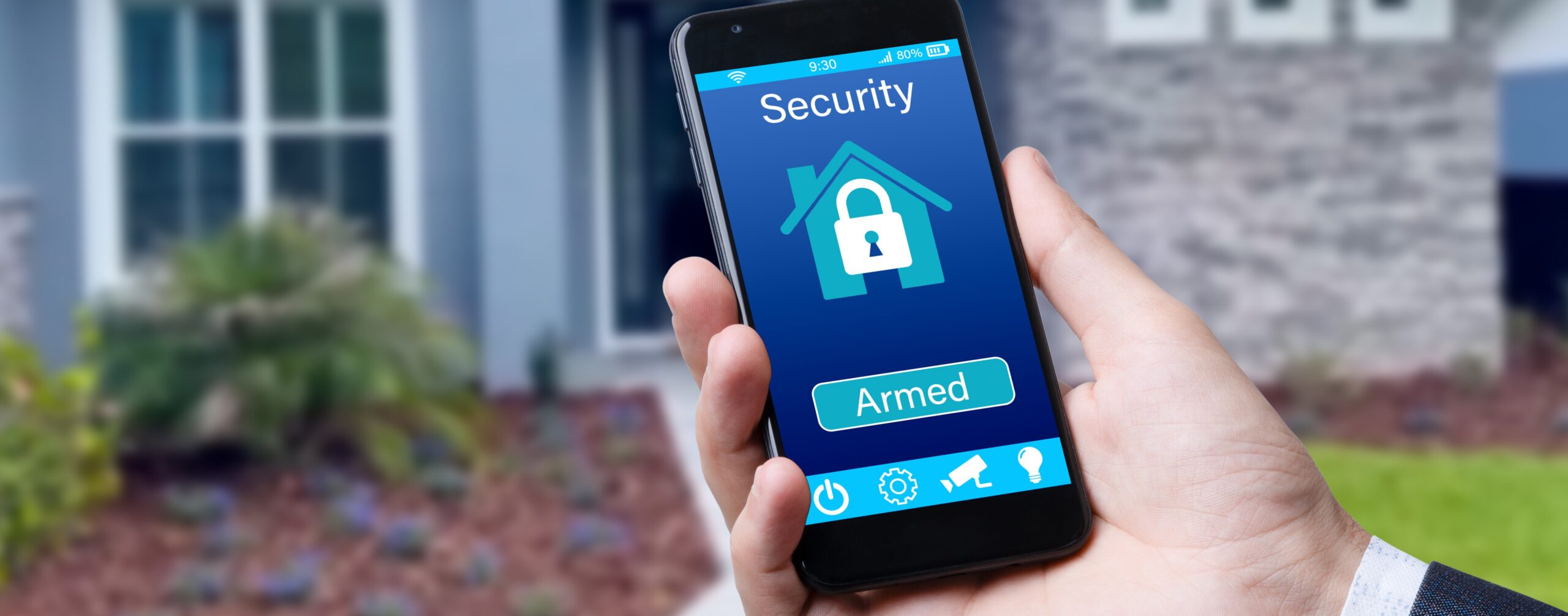
Note: Self-monitored systems are becoming more and more popular thanks to their affordability and intuitive design. Tenants receive app alerts and can quickly check what has happened and take immediate action. For many rental properties, this level of monitoring is “good enough”, especially if the primary goals are deterrence and early notification.
Professional monitoring provides a structured response process, which can be particularly valuable for higher-risk properties or higher-value homes. If tenants are away, asleep or simply fail to notice notifications, a monitored setup can minimise the risk of an incident escalating unnoticed. However, there is an ongoing fee, and extra admin is required when tenants change, as contact lists, codes, and permissions must be updated properly every time.
A practical approach for landlords is to choose a platform that doesn’t restrict your options. If cost sensitivity is high, start with self-monitoring and then upgrade to professional alarm monitoring for specific properties where the risk and property value justify it.
False alarms: the most expensive 'invisible' problem
Landlords often underestimate the importance of false alarms because they don’t appear as a separate item on a quote. However, false alarms are one of the main reasons why systems are ignored, disabled or treated as a nuisance. In rental properties, this can quickly lead to tenants not arming the system at all, which defeats the whole purpose.
False alarms are not usually caused by “bad equipment”. They are caused by a mismatch between the setup and the environment, such as motion sensors facing sunlight through a window, loose curtains moving in airflow, heaters and vents creating temperature shifts, or pets triggering sensors that are not configured for them. Tenant routines also matter.
Tip: If entry/exit delays are set too short, alarms will trigger during normal daily activities and tenants will quickly lose trust in the system.
The solution lies in design and education. You need a configuration that reflects how people actually live in the space, rather than how it is imagined in the specifications. It's better to use a few well-placed sensors than to cover the entire property and spend the next year troubleshooting.
- Also read:How to Find Top New Apartment Developments in Melbourne

- Also read:The Impact of Visa Regulations on Property Market Trends in Australia

- Also read:5 Best Real Estate Photo Editing Services of 2024

- Also read:Steel Advantage: The 6 Benefits of Steel Buildings

- Also read:Renovating to Rent? Don’t Skimp on the Skip Bin


A landlord-friendly approach to coverage: protect the likely areas
When it comes to rental alarm coverage, it is better to think in terms of “likely intrusion routes” rather than “every possible corner”. Most properties benefit from securing the main entry points and covering the route an intruder would take once inside. This provides strong protection without unnecessary complexity.
Here's a short, practical baseline to help you keep things lean and reliable:
- Install door sensors on the main entry point and the most vulnerable secondary door, which is often a back door or a sliding door.
- One well-placed motion sensor should suffice for the main circulation area.
- A loud enough siren to deter intruders and alert occupants.
- A simple arming method that tenants won't mess up, such as a keypad, fob or clean app flow.
From there, upgrades should be based on actual risk. Large glass areas, ground-floor windows and hidden rear access points are common reasons for adding extra detection measures. Garages can present a particular challenge, too: the internal door between the garage and the living space is often the most important to secure because garages are frequently targeted as a 'quiet' entry route.
Strata and apartments: Simplify security approval
In apartments and many townhouse complexes, the best system is one that avoids conflict with the strata committee. Depending on the rules and the building’s culture, external changes, drilling into shared structures and visible outdoor sirens can be problematic. This is why many landlords prefer systems that are mostly internal, wireless and reversible.
A smart tactic is to present security improvements as a low-impact safety measure involving minimal alterations, a clean installation and no effect on common property. If approval is needed, 'reversible and internal' is your strongest argument. You can achieve meaningful protection without altering the façade or shared areas, which simplifies the conversation.
Tenants: reduce friction and risk
The behaviour of tenants is what makes the difference between a system that works and one that only exists on paper. You can’t assume that tenants will 'figure it out'. If something is confusing, they will avoid it. If it's annoying, they'll disable it. If they’re concerned about privacy issues, they’ll resent it.
The landlord's aim is to make the system straightforward, well-documented and respectful of boundaries.
Tip: Providing a one-page handover guide at the start of the tenancy can prevent months of misuse. It should explain in simple terms how to arm and disarm the system, how long the entry delay is, what to do when the alarm is triggered and who to contact. This may sound simple, but it can dramatically reduce false alarms and support calls.
Also, be careful with access. Tenants should be in control of day-to-day operations. If you require administrative access for maintenance or monitoring purposes, make sure you set clear expectations and avoid anything that could be perceived as surveillance. Alarm systems are about intrusion detection. Once you start using cameras and constant remote viewing, however, you create a different category of risk and conflict. For most rentals, it is better to keep it 'alarm-first'.

Maintenance: treat it like smoke alarms — routine, not reactive
A landlord-friendly system is one that can be maintained on a schedule. During routine inspections or lease renewals, you should check batteries, sensor health and user access, rather than waiting until something breaks at 10 pm. If you incorporate these checks into your property management routine, security will remain reliable without becoming an additional ongoing task.
If you manage multiple properties, standardisation is important. Having similar setups across your portfolio means you can troubleshoot more quickly, provide consistent tenant instructions and reduce the number of "unique exceptions" that cause mistakes.
A quick maintenance routine (short and realistic):
- Test the main sensors and siren during inspections.
- Replace batteries proactively on a schedule.
- Confirm that the tenants still know how to use it.
- Cleanly reset access at tenant changeover.
A simple decision guide for landlords in Melbourne
When choosing or reviewing a rental security setup in Melbourne, landlords often prioritize practicality over advanced features. Typically, the suitable option is one that installs with minimal disruption, is straightforward for tenants to use daily, and enables easy resets or transfers at lease end. Rental-specific approaches, such as portable systems, low-impact installations, and handover processes, are outlined in resources on landlord-friendly security systems.
Aim for 'quiet reliability' when closing
The most effective landlord security upgrades are not usually the most eye-catching. They are the ones that quietly do their job month after month without causing friction with tenants or creating an ongoing administrative burden. If your system is simple, well-placed and straightforward to handover, the likelihood of incidents is reduced, as are the “soft costs” that follow even minor security events.
Tip: Consider an alarm system to be a yield protection tool. It promotes tenancy stability, minimises disruption and enhances the property’s appeal in a competitive market. When it’s designed to be landlord-friendly, it becomes a repeatable, low-drama improvement that can be applied across your Melbourne properties.