

Renovating an investment property can improve its presentation, functionality and rental appeal, but the work itself can be hard on the parts of the property you aren't renovating.
Dust, dirt, tools, building materials and constant foot traffic can quickly turn a relatively contained project into a whole-property clean-up.
Whether you're renovating before leasing a property, completing improvements between tenants or upgrading one section of a larger building, protecting finished areas should form part of the renovation plan from the beginning.
Separate Work Zones From Finished Areas
One of the simplest ways to keep a renovation under control is to clearly separate the active work area from parts of the property that are already finished.
Temporary barriers, protective coverings and designated access routes can help prevent workers and equipment from travelling unnecessarily through clean areas.
This becomes particularly important during staged renovations. If one room has new flooring and fresh paint while work continues elsewhere, protecting the completed area can prevent additional cleaning or repairs before the property is ready for tenants.
Planning how tradespeople enter, exit and move materials through the property can be just as important as protecting the work area itself.
Control Dust at Transition Points
Dust is one of the most persistent problems during renovation and maintenance work.

Note: Sanding, drilling, cutting and demolition can generate fine particles that are easily transferred beyond the immediate work zone. Even when an area has been isolated, dust can still be carried into cleaner sections on work boots, shoes and trolley wheels.
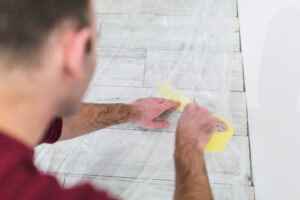
Strategically placed sticky floor mats for dust control can provide an additional control at entrances and transition points. Their adhesive surface captures loose dust, dirt and fine debris from footwear and trolley wheels as people or equipment move from a work zone into a cleaner area.
Richmond's mats use 30 numbered peel-away adhesive layers. Once the exposed layer has collected enough debris, it can be removed to reveal a fresh adhesive surface underneath. They are available in 600 x 900mm, 660 x 1150mm and 900 x 900mm sizes, allowing the mat to be matched to different doorways and access points.
They aren't a replacement for dust extraction, barriers or regular cleaning, but they can form one part of a broader approach to controlling where renovation debris travels.
Protect Floors Before Work Starts
Existing flooring is particularly vulnerable during renovations.
Timber, tiles, carpet and other finished surfaces can be damaged by dropped tools, dragged equipment, paint, plaster and abrasive debris carried under footwear.
Floor protection should therefore be installed before demolition or construction begins rather than after the first signs of damage appear.
The appropriate protection will depend on the floor and the work being completed. High-traffic routes may need more durable protection than rooms receiving minimal foot traffic.
Particular attention should be paid to the route between the work zone and the property's entrance because this is where tools, waste and building materials are likely to move most frequently.
- Also read:How to Find Top New Apartment Developments in Melbourne

- Also read:The Impact of Visa Regulations on Property Market Trends in Australia

- Also read:5 Best Real Estate Photo Editing Services of 2024

- Also read:Steel Advantage: The 6 Benefits of Steel Buildings

- Also read:Renovating to Rent? Don’t Skimp on the Skip Bin

Plan How Materials and Waste Will Move
A renovation can involve a surprising amount of movement.
New fixtures and building materials need to come in, while demolition waste, packaging and old fittings need to go out.
Before work begins, identify the most practical route for this traffic. Keeping material movement to a defined pathway can make it easier to protect surrounding walls, doors and floors.
This is especially useful in apartment buildings and other shared properties, where renovation work may need to pass through corridors, lifts or common areas.
For investment properties, avoiding unnecessary damage outside the renovation area can also help keep the project budget focused on improvements that actually add value.
Don't Let the Final Clean Become an Afterthought
A renovation isn't finished when the last trade leaves.
Fine dust can settle on window frames, cabinetry, light fittings, skirting boards and other surfaces well beyond the immediate work area. Allowing debris to spread throughout the property can turn the final clean into a much larger job.

Tip: Regular cleaning during the project can help prevent this build-up. It also makes sense to remove waste progressively rather than allowing materials, packaging and debris to accumulate until the end of the renovation.
Keeping the site organised throughout the project can make the transition from construction site to finished property considerably smoother.

Protect the Improvements You've Already Paid For
Property renovation is ultimately an investment decision. The objective isn't simply to complete the work, but to improve the property without creating unnecessary additional costs elsewhere.
Property Update itself regularly discusses the importance of disciplined renovation budgets and avoiding overcapitalisation when improving investment properties.
Protecting completed rooms, controlling dust, covering vulnerable flooring and planning how workers and materials move through the property are relatively straightforward steps, but they can help prevent avoidable cleaning and rectification work.
The best renovation plans consider more than what is being demolished, replaced or upgraded. They also consider what needs to remain protected while the work is underway.
For property investors managing renovation costs carefully, preventing avoidable damage can be just as important as choosing where to spend money on improvements.