

Key takeaways
Off-plan properties that use high-quality 3D renders consistently outperform those relying on floor plans alone — both in enquiry volume and time on market.
Australian developers in Sydney, Melbourne, and Brisbane are increasingly using photorealistic renders as a core sales tool, not a finishing touch.
Property rendering is not a single service — different formats (stills, walkthroughs,and aerials) serve different stages of the sales funnel.
Common rendering mistakes — wrong lighting, poor scale, and unrealistic finishes — can actively damage buyer confidence rather than build it.
The gap between a render that converts and one that doesn't comes down to execution, not technology.
Walk through any display suite in Sydney's inner west, a Brisbane riverfront development, or a Melbourne CBD tower project, and you'll find the same thing: large-format renders on every wall, digital screens cycling through flythrough sequences, and a sales team pointing buyers towards images of apartments that won't exist for another 18 months.
That's the off-plan reality. Almost everything being sold in Australia's new-build market is sold before it's built — which means almost everything is being sold through visualisation.
The quality of that visualisation has become a meaningful competitive variable. Not in the abstract sense, but in the practical one: buyers who can clearly see what they're buying move faster and with more confidence than buyers who are trying to mentally reconstruct a space from a floor plan and a brochure.
So what separates property rendering that actually converts from renders that look impressive but don't shift stock? And what should Australian developers and agents be asking their visualisation teams to produce?
Why Renders Have Moved from Marketing Accessory to Sales Infrastructure
There's a misconception, particularly among developers who built their businesses before CGI became standard, that renders are essentially decoration. Something to make the brochure look good. A box to tick before launch.
The evidence from the market doesn't support that framing.
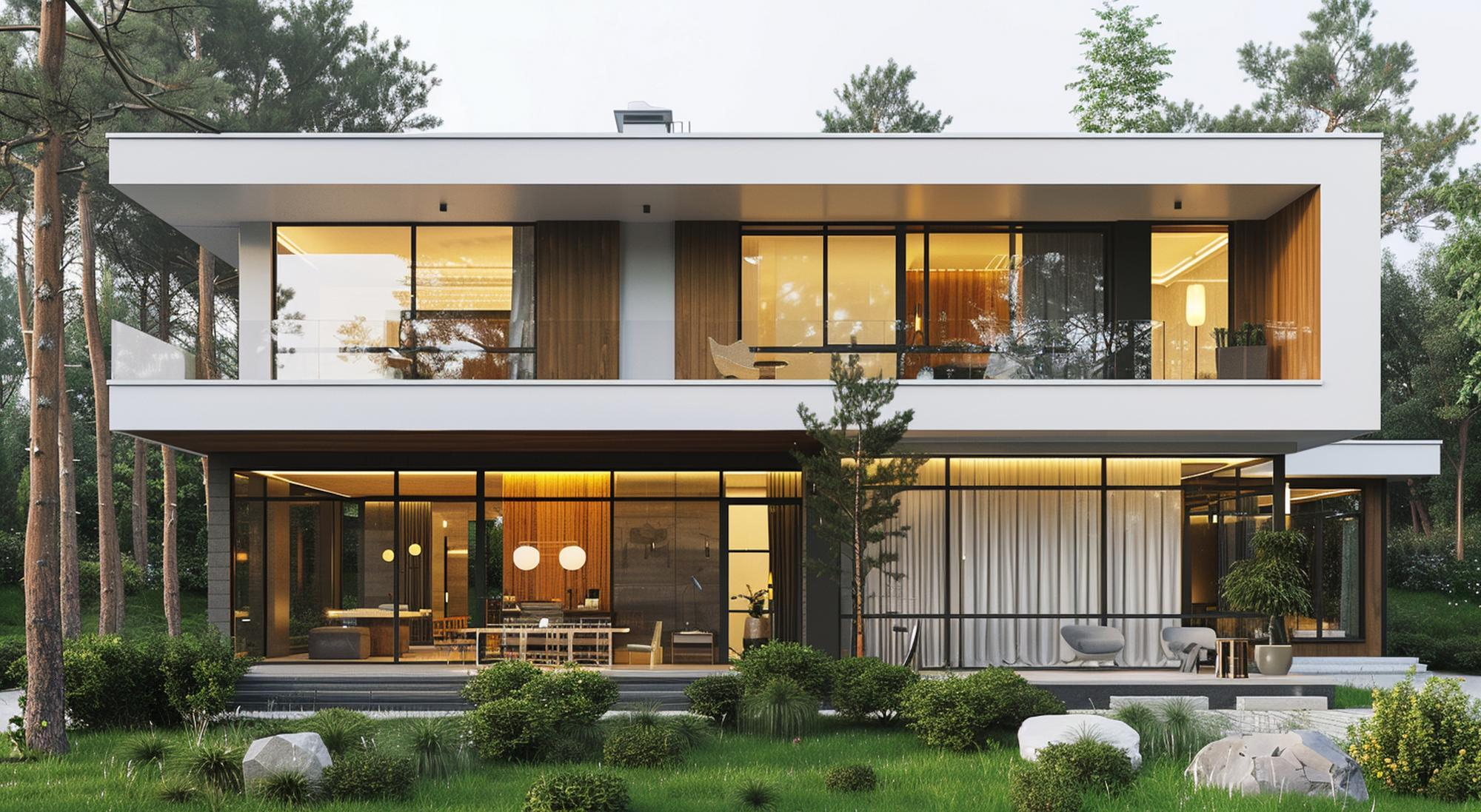
Research from property marketing agencies consistently shows that off-plan listings with photorealistic renders generate significantly higher enquiry rates than those relying on architectural drawings alone. The gap is most pronounced at the early launch phase, when buyers are making decisions based entirely on presentation rather than inspections.

Note: In practice, what this means is that the render is often doing the job that a display apartment would do — but earlier, more cheaply, and with the ability to show variations (different finishes, different furniture configurations, different times of day) that no physical display can replicate.
Australian developers using professional real estate rendering services as a core part of their sales process — rather than an afterthought — are finding that well-executed visualisation compresses the sales cycle. Buyers who would otherwise sit on an enquiry for weeks because they can't fully visualise the product are making decisions faster when the visual case is strong.
The Australian Off-Plan Context
Australia's off-plan market has specific characteristics that make visualisation particularly important.
Settlement risk is real. The period between exchange and completion on an off-plan purchase is long — often 18 to 36 months for apartment towers. During that time, market conditions can shift, lending criteria can change, and buyers can get cold feet. Developers who have built strong visual evidence of what they're delivering have a better basis for defending the product against those pressures than those who relied on minimal presentation at launch.
Overseas buyers remain active in key markets. For buyers purchasing in Sydney or Melbourne from Singapore, Hong Kong, or elsewhere in the region, a site visit isn't always practical before the exchange. High-quality renders, aerial visualisations showing the building's position relative to amenities, and interior sequences that accurately represent scale and finish are often the entire basis for a purchase decision.
Competition for buyers is intensifying. With multiple projects in any given Sydney or Melbourne precinct often launching simultaneously, the quality of visual presentation has become a genuine differentiator.

Tip: A project that presents beautifully will capture enquiries that a competing project loses simply because its presentation is less compelling.
What Good Property Rendering Actually Looks Like
Not all renders are equal, and the differences matter commercially.
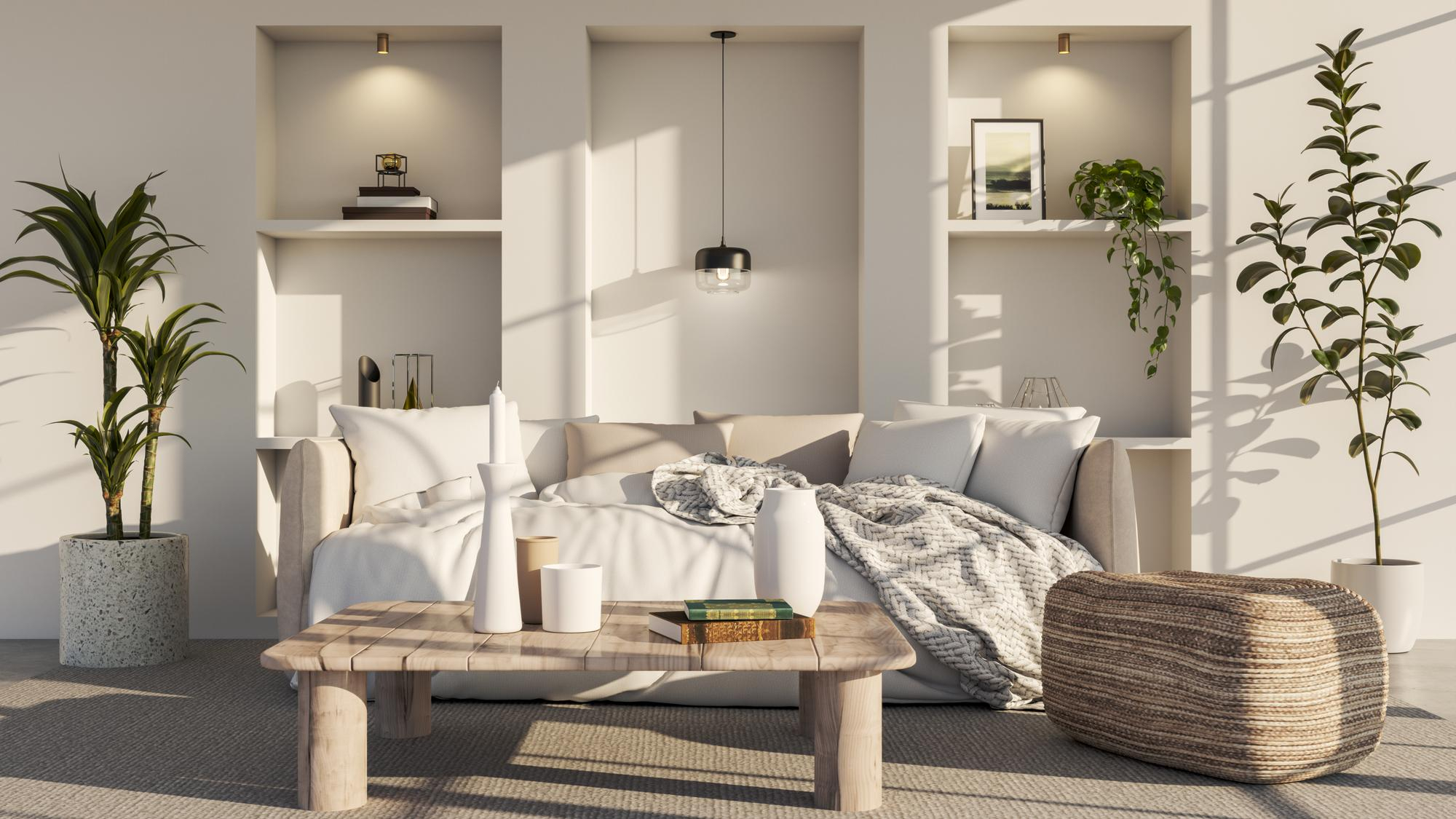
Lighting and time-of-day accuracy
One of the most common rendering mistakes — and one that buyers register subconsciously even if they can't articulate it — is lighting that doesn't match the property's actual orientation.
A north-facing living room in Brisbane, flooded with morning light that shouldn't exist, or a south-facing bedroom in Melbourne, presented with warm afternoon sun, creates a dissonance that undermines trust in the overall presentation. Buyers who've inspected enough properties develop an intuition for how spaces should look at different times of day. When the render contradicts that intuition, confidence drops.
Tip: Accurate solar simulation — matched to the property's actual address, floor level, and orientation — is standard in quality visualisation work and should be non-negotiable in any project above a certain price point.
Scale and proportion
Interior renders that make rooms look larger than they are have become a source of genuine mistrust among experienced off-plan buyers. The industry has largely trained buyers to look for the giveaways: furniture that's slightly too small, ceiling heights that look generous relative to door frames, and windows that occupy more of a wall than the floor plan would support.
The property rendering tips that actually build buyer confidence are the ones grounded in accuracy — using furniture at correct dimensions, representing the actual ceiling heights on the specific floor, and showing the real relationship between windows and wall area. A render that accurately depicts a 42-square-metre apartment and still looks appealing is far more valuable commercially than one that makes it look like 55 square metres and triggers scepticism at the display suite.
Finish representation
Material libraries in CGI software have improved enormously, but the gap between a standard render and one produced by a specialist visualisation team is still visible in finish quality. Timber grain that looks plastic, stone surfaces that lack depth, fabric textures that read as flat — these are the details that buyers notice in display suites when they're comparing the render on the wall to the physical samples in front of them.
- Also read:How to Find Top New Apartment Developments in Melbourne

- Also read:The Impact of Visa Regulations on Property Market Trends in Australia

- Also read:5 Best Real Estate Photo Editing Services of 2024

- Also read:Steel Advantage: The 6 Benefits of Steel Buildings

- Also read:Renovating to Rent? Don’t Skimp on the Skip Bin

For projects where finishes are a primary value driver - boutique developments, luxury owner-occupier product -finish accuracy in renders is not a secondary consideration. That's the point.

Different Formats for Different Stages of the Sales Process
A common mistake is treating property rendering as a single deliverable. In practice, effective visualisation for an off-plan project needs to serve several different purposes across the sales lifecycle, and different formats serve those purposes differently.
Hero stills for launch and advertising
The primary exterior render and two or three key interior shots are the workhorses of the marketing campaign. They go on hoardings, in digital advertising, on the project website, and in the initial media coverage. These renders need to hold up at large formats and at thumbnail scale. A render that looks impressive as a full-page spread but loses definition as a social media image isn't doing its full job.
Walkthrough sequences for the display suite and digital channels
A 90-second to two-minute flythrough that moves through the building from approach to key interior spaces gives buyers a sense of how the project flows and how the space is organised. For buyers who aren't experienced at reading architectural plans, this is often the moment a project clicks into focus.
Walkthrough sequences have become standard in the higher end of the Australian apartment market and are moving down into mid-market projects as production costs have fallen.
Aerial and context renders
Particularly relevant for waterfront positions, elevated sites with views, or projects with strong public transport connectivity — aerial visualisations showing the building in its actual neighbourhood context help buyers who don't know the area understand what they're buying into. These renders are also useful for council submissions and planning applications.

What Agents Should Be Asking Developers
Project marketing agents who are brought in before the visualisation brief is finalised have more influence on the outcome than those who receive a completed asset package.
The questions worth asking at the briefing stage:
• Are the renders going to be produced at the actual orientation and floor level of each apartment type, or is one generic render being used for all orientations?
• What furniture specification are you using, and at what scale?
• Can we see the render with the standard inclusions package, not the premium upgrade?
• What's the update process if design details change between render production and launch?
• Are there renders of the actual view from each key floor level, or a generic sky?
Note: These aren't unreasonable requests. They're the standard that buyers in Sydney and Melbourne markets have come to expect.
The Investment Case
Visualisation budgets for Australian apartment projects vary significantly. At the entry level, a basic package for a boutique project might run to $8,000–$15,000. A comprehensive package for a mid-rise tower — multiple exterior views, a full suite of apartment types, aerial context, and a walkthrough sequence — can run to $60,000–$100,000 or more.
The relevant question is not whether the renders are expensive. It's whether better renders would have moved the first tranche of sales faster; whether that unlocked the construction finance trigger; and whether hitting that trigger 30 days sooner was worth the difference between a basic package and a premium one.
In most cases where a project has stalled at launch, the analysis points to presentation quality as a contributing factor.
The renders that get dismissed as too expensive to upgrade are often the ones that, if upgraded, would have paid for themselves in the first week of sales.
Final Thoughts
Australia's property market is not short of off-plan products. In most capital city growth corridors, buyers have genuine choices. The projects that capture their attention and convert enquiry into exchange are the ones that make the strongest case for what they're selling — and in a pre-construction environment, that case is made almost entirely through visualisation.
Tip: Getting that visualisation right is not just a creative brief. It's a commercial one. And in a market where the difference between a successful launch and a slow one can determine whether a project gets built at all, it deserves the same rigour as every other part of the development process.