

Key takeaways
Villa units appeal to a broad range of buyers and tenants. They suit young families, professionals, and downsizers, creating consistent demand across different stages of life.
They offer more privacy and lifestyle benefits than apartments. With no neighbours above and often fewer shared walls, tenants tend to stay longer and enjoy a better living experience.
Ownership costs are generally lower than apartments. Smaller complexes with limited shared facilities usually mean lower body corporate fees and better net rental returns.
They are ideal for value-adding renovations. Simple cosmetic upgrades such as kitchens, bathrooms, paint, and flooring can significantly improve rental appeal and equity.
Scarcity and strong demand support long-term growth. Few new villa units are being built, while demand remains strong, helping them deliver reliable performance over time.
Most investors walk straight past villa units on their way to something that feels more impressive.
I think that's a mistake, and after years of watching what actually builds wealth through property, I've come to appreciate these quietly reliable assets far more than most people give them credit for.
A villa unit sits in an interesting middle ground in the market – a little bigger than a typical apartment, smaller than a freestanding house or townhouse, and priced in between.
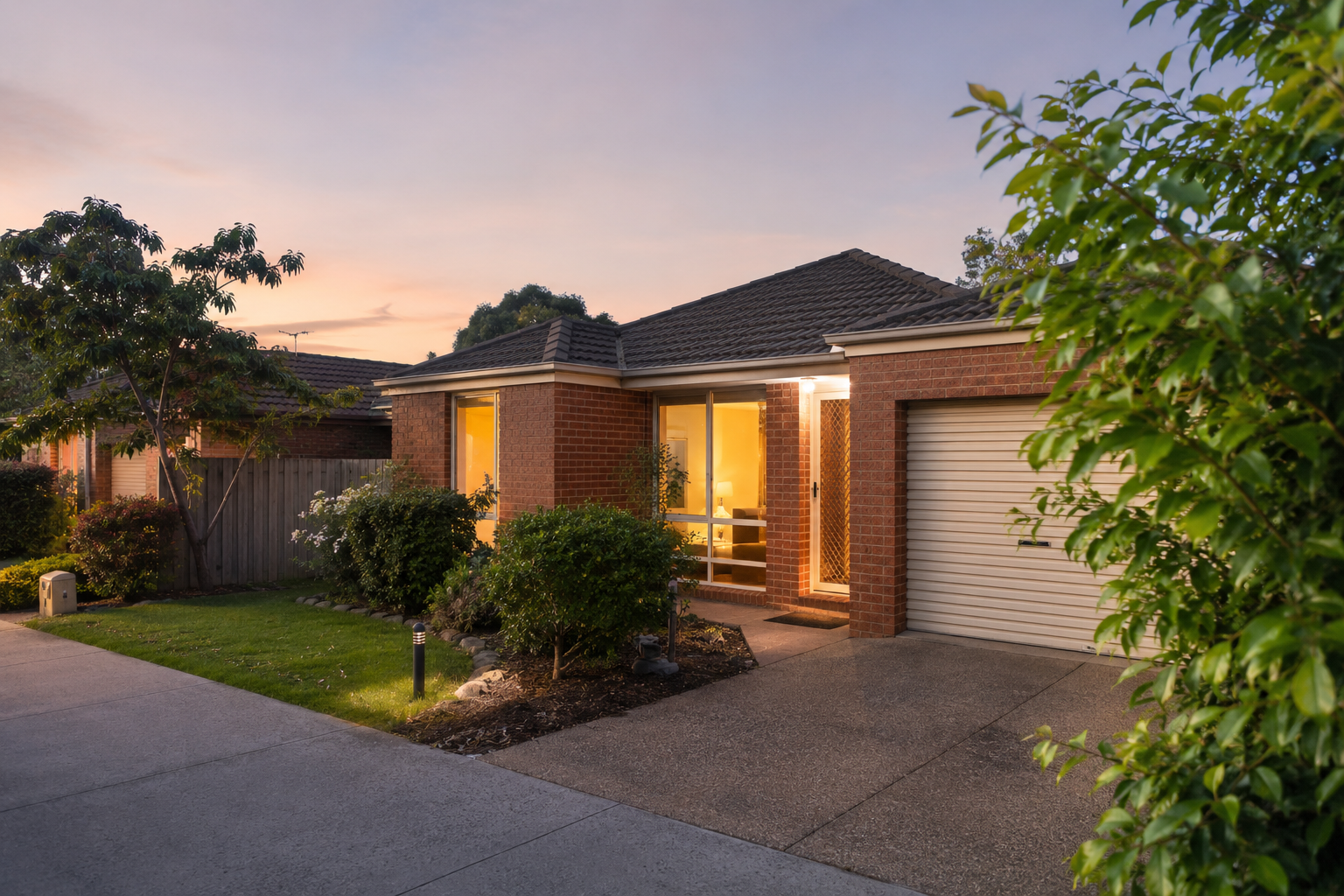
They're single-level brick properties, built during the second half of the 20th century, particularly in Melbourne and usually aimed at retirees, with two bedrooms and a small private courtyard, tucked into small complexes of perhaps four to eight dwellings.
What makes them interesting from an investment perspective is the combination of things they offer that most other property types don't.
They appeal to a genuinely wide pool of tenants and buyers
I've always said that one of the key tests of a good investment property is how broad the demand for it really is. Villa units pass that test comfortably.
Young families love them because everything is on one level - no stairs to navigate with a pram or pusher, no worrying about small children near stairwells, and enough outdoor space for a toddler to play without it becoming a maintenance burden.
At the other end of the age spectrum, downsizers are drawn to exactly the same features.
Older Australians increasingly want to shed the big family home without retreating into a high-rise apartment building, and a villa unit gives them that option. Single-level living, a manageable garden, a lock-up garage, and a sense of community without the noise and density of a multi-storey block.
In between those two groups, you have young couples and professionals who want the feel of a house - their own outdoor space, no neighbours directly above them, and a front door they can call their own - but at a price point that actually works in an expensive suburb.
That's a remarkably broad tenant and buyer base, and broad demand is one of the things that holds value through property cycles.
The "no neighbours above or beside you" factor matters more than people think
One of the most common complaints of apartment dwellers is noise from above, noise through shared walls and the sense of being stacked in on top of other people's lives.
Villa units largely solve that problem.
In a well-configured complex, you share very little with your neighbours - perhaps a boundary fence, a common driveway, a shared garden path.
The walls are your own. The ceiling is your own. There's no one living above you, and often no shared internal walls at all.
That translates directly into tenant satisfaction and retention, which in turn means fewer vacancy periods and more consistent rental income for the investor.
Body corporate costs are comparatively light
If you've ever owned an apartment in a larger building, you'll know the pain of owners’ corporation fees that seem to grow every year. Lifts, pools, gyms, concierge, fire safety systems, building management - the bills mount quickly, and they eat into your yield.
Villa unit complexes tend to be straightforward by comparison.
The shared infrastructure is simple - perhaps a driveway, some common garden space, a shared roof line.
Building insurance is still required, as is public liability cover, but the overall cost to insure and maintain a small villa unit complex is substantially lower than an apartment building.
Of course, for investors focused on net yield, that difference adds up.
- Also read:Latest Property Price Forecasts. Australian Property Market Outlook 2026-2027: Navigating a Market Correction

- Also read:Brisbane Property Market Forecast [2026 & Beyond] – What The Olympics Decade Means for Investors.

- Also read:Melbourne property market forecast for 2026 & 2027 | Separating the fundamentals from the sentiment

- Also read:Sydney property market forecast for 2026 and 2027 | Why the short-term softness is a long-term opportunity

- Also read:What laws do real estate agents have to abide by?

They renovate well, and you can do it gradually
One of the real strengths of villa units as investments is how accessible renovation is.
You're typically dealing with a compact, well-proportioned floor plan in a solid brick building, which means cosmetic improvements go a long way without requiring structural work.
A new kitchen, an updated bathroom, fresh paint, and floor coverings can transform the rental appeal and value of a villa unit without the budget blowout that often comes with renovating a full house.
That's a genuine advantage for investors who want to actively build equity rather than simply waiting for the market to do the work.
The data supports them as outperformers
Domain's House Price Report for March 2026 showed unit prices outpacing house price growth across the combined capitals - up 5.5 per cent annually for units compared to 4.4 per cent for houses.
And while villa units aren't always separated out in the data, our research at Metropole shows that good villa units hold their own at auction and attract competitive buyer pools.
Part of the reason is simple scarcity.
Villa units were built in a particular era, predominantly the 1960s through to the 1980s, and now not being added to the supply.
Zoning changes in many suburbs have pushed new development toward townhouses or medium-density apartments rather than the small-scale villa format.
That supply constraint, combined with sustained demand from demographic groups, creates conditions that tend to support values over time.
Where they fit in a portfolio
A villa unit isn't always going to be a substitute for a well-positioned house in a premium suburb.
If you have the budget for a genuinely investment-grade house in the inner or middle ring of Melbourne, that's often still the strongest long-term capital growth option.
But villa units can be a smart entry point for investors building their portfolios incrementally, or for experienced investors looking to add a property with strong yields and broad tenant appeal without paying house prices.
In many well regarded suburbs, a villa unit will get you into a quality location at a price point that would otherwise be out of reach.
When you combine a desirable suburb with a dwelling type that suits a wide range of occupants, you tend to get consistent performance over time, and that's exactly what long-term wealth building requires..
A final thought
One of the things I've noticed over the decades is that the most reliable investments are often the ones that don't attract a lot of attention or excitement.
Villa units don't generate the same buzz as a development site or a glamorous inner-city apartment. They tend to sit quietly, attract steady tenants, generate decent yields, and compound in value over time in the right locations.
For investors who are serious about building wealth rather than chasing excitement, that's actually quite a good profile.
If you'd like to talk through whether a villa unit fits into your investment strategy, or where the best opportunities currently sit in your target markets, I'd encourage you to reach out to the team at Metropole.
We help investors build portfolios that are right for their individual circumstances and long-term goals - not just whatever happens to be attracting attention right now.
Click here now and have a Wealth Discovery chat with one of our Wealth Strategists.