Australia isn’t seeing a US-style “boomer upsizing” surge, but the impact is similar.
Older households are holding onto family homes longer, limiting resale supply.
Combined with school catchment demand and “right-sizing” buyers, this creates a persistent squeeze in prime suburbs, keeping prices firm despite emerging broader market softness.

In the USA
In America, the story is increasingly framed as retirees outbidding families for big homes in prime suburban school districts.
Not downsizing - upsizing. More bedrooms. Bigger kitchens. Enough space to host the tribe.
The kind of purchase that makes the young family at the auction look like they’ve brought a butter knife to a gun fight.
Australia is a bit different.
But - and here’s the bit worth underlining - the effect is absolutely in play down under.
The Australian version
The Australian version isn’t “Boomers buying all the family homes”.
It’s “family homes not coming up for sale”. Most of the pressure sits in the holding pattern.
Older households already occupy a large share of detached, family-sized housing -particularly in the established “A-grade” suburbs where people raised their kids, built their routines, and know every crack in the footpath.
And many stay put. They age in place. They hold the spare bedrooms. They keep the backyard that hasn’t seen a cricket match since John Howard was PM.
That’s not a moral failing. It’s rational behaviour.
Moving is disruptive. Finding the “right” replacement home is hard.
And in most states the transaction costs are brutal - stamp duty alone is enough to make plenty of people think: “Actually… the third and forth bedrooms can stay empty.” And “We could have a couple of nice overseas trips rather than blow the dough on transaction costs.”
So listings thin out. Turnover slows. Scarcity rises.
Which means when a good family home does hit the market, it is met by a hungry crowd.
Prime suburbs are already “priced by education”
Now add the second ingredient: the school catchment premium.
In the strongest school catchments, the property isn’t the prize - the boundary line is. Buyers are purchasing access. The street, the zone, the reputation, the peer group.
In some suburbs the difference between one side of the catchment line and the other can run into the hundreds of thousands of dollars. It’s not subtle. It’s effectively an education levy baked directly into the sale price.
Now combine that with thin resale stock.
That’s where the squeeze appears - not necessarily because retirees are flooding into these areas, but because families are chasing a shrinking pool of suitable homes across the same handful of high-performing school catchment postcodes.
Where the US “upsize” theme does overlap here
Even though we don’t have neat Australian numbers that say “retirees are systematically outbidding families in school zones”, we do have plenty of signals that older movers don’t always downshift into smaller dwellings.
Many “downsizers” are actually “right-sizers”.
They want:
- Also read:Latest Property Price Forecasts. Australian Property Market Outlook 2026-2027: Navigating a Market Correction

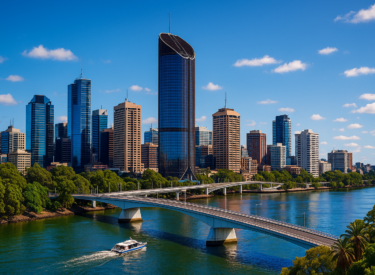
- Also read:Brisbane Property Market Forecast [2026 & Beyond] – What The Olympics Decade Means for Investors.
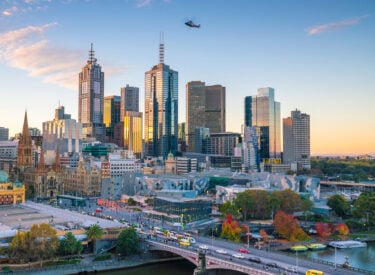
- Also read:Melbourne property market forecast for 2026 & 2027 | Separating the fundamentals from the sentiment
- Also read:Sydney property market forecast for 2026 and 2027 | Why the short-term softness is a long-term opportunity

- Also read:Home Prices Down Again Over September – But Not as Much | Latest Property Market Stats

- one level living
- a better kitchen
- a study
- a guest room
- space for visiting grandkids
- a garage that doesn’t require yoga to exit the car
- proximity to health services and amenity
- and often, proximity to adult children
That last one matters more than people admit.
The traditional story used to be: kids grow up, move away, parents stay.
Increasingly, it’s: kids build careers and families in opportunity-rich cities and regions - and the parents move to them.
Not into a granny flat. Into a separate home. Sometimes a bigger one than they had in the first place.
So while we may not have the same headline phenomenon as the US, we can absolutely observe the same market consequence: older buyers with strong equity positions competing in the same locations families want to access.
And because they can transact with clean terms - low or no debt, fewer conditions, faster settlement - they can be formidable competition even if they aren’t the majority.
The real issue: we’re building the wrong “second step”
Here’s the quiet failure in most Australian housing markets.
We do not offer enough appealing, well-located, age-friendly alternatives inside the same community.
So the older owner has two choices:
- stay in the family home, or
- leave the suburb/location entirely
Most choose option 1. And I don’t blame them.
That’s why the “boomer squeeze” here is often indirect. It’s not a stampede of retirees buying family homes - it’s a long, slow tightening of resale supply as people stay put longer.
The multi-household extended family is gaining traction too
Urbanists - me included - love the concept of multigenerational living - one household, one roof, everyone together.
Necessity is seeing this trend increase and the trend is bigger than most realise and larger than the official statistics suggest.
And also what is gaining traction is the multi-household extended family.
Parents live near adult children, but not with them.
Two houses, sometimes on the same side of town, sometimes the same suburb. That is lovely in social terms - but it is expensive in housing terms. It means one family’s “housing need” can translate into two dwellings.
And if those two dwellings are both chasing established, amenity-rich suburbs - the pressure lands exactly where you would expect: on detached housing stock, in premium school zones, with limited turnover.
So… is Australia too becoming “Boomer Upsize land”?
Not exactly.
But if you live in a tight, established suburb - good schools, good parks, good cafés, good train line - it can feel like it.
Because the physics are the same:
- fewer suitable homes for families come up for sale
- demand concentrates in the same prime pockets
- prime school catchments amplify premiums
- older movers sometimes “right-size” into larger homes
- and prices stay stubbornly strong even when broader conditions soften
This isn’t going away. It will intensify as the population ages, as young and older cohorts household size shrink, and as the market continues to reward scarce “prime suburbia” product.
What would help
Not a lecture. Not guilt. Not a culture war. But housing supply that matches life stages.
And here I go again - like a organ grinder - we need more of the “middle” in established areas - terraces, townhomes, mansion apartment conversions, small blocks with lifts, well-designed two and three bedroom options close to services - so older households have a genuine alternative without leaving their community.
And we need to make moving less punitive - because when transaction costs are high, the rational decision is to stay put and keep the spare rooms or use the cash saved for other things.
Same country. Same ageing curve. Different headline. Same squeeze.