

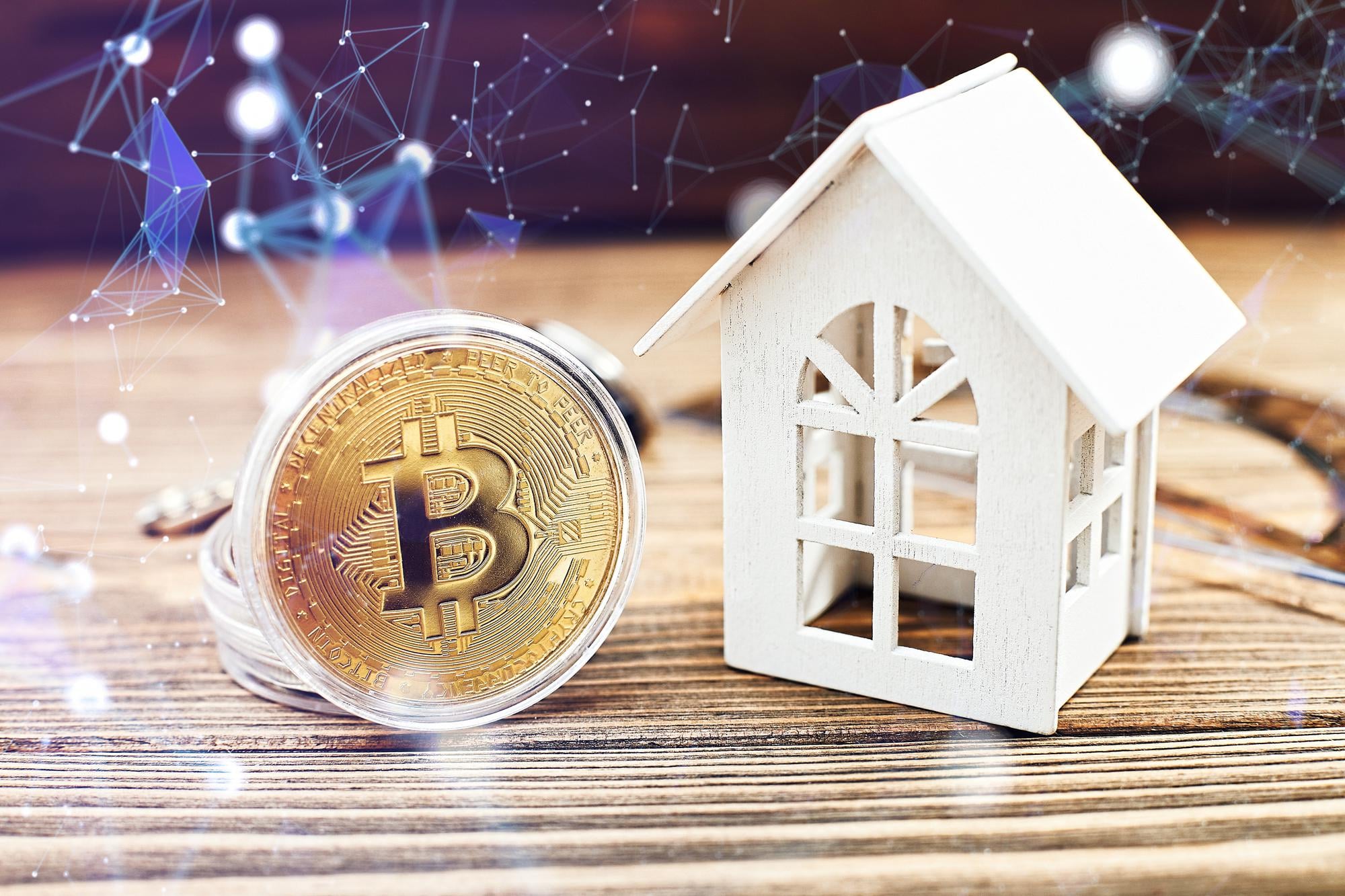
If you invest in property, you’ve probably noticed how often Bitcoin now comes up in conversations that used to be all about interest rates and auction clearance numbers. When the BTC AUD price moves sharply, it tends to grab attention in a way few other assets do. That alone raises an uncomfortable question. Is Bitcoin starting to compete with property for investor capital?
At face value, it can feel that way. Bitcoin trades nonstop, reacts instantly to global news, and can rise or fall in a matter of days. Property is the opposite. It moves slowly, demands commitment and rewards patience. But once you step back and look at how investors actually behave, the relationship between the two looks less confrontational.
For most investors, Bitcoin is not replacing property. It is sitting alongside it, influencing timing, liquidity, and risk appetite rather than threatening the property’s role altogether.

Why Bitcoin sometimes looks like a rival
Bitcoin’s appeal is obvious. It is liquid, globally accessible, and unconstrained by geography. When the BTC AUD price rallies, it can create the impression that capital is being pulled away from slower-moving assets like housing.
Volatility adds to that perception. Sharp price swings attract attention and headlines, which can make property feel dull by comparison. You may even hear claims that digital assets make traditional investing obsolete.
The problem is that volatility does not equal usefulness.

Note: For property investors, price movement alone is not enough. Stability, borrowing capacity, and income still matter, especially once real money is involved.
Why property still holds the upper hand
Property keeps its place because it does things Bitcoin cannot. You can leverage it. You can rent it out. You can plan around it. Banks understand it, regulators support it, and investors can hold it through multiple market cycles without checking prices every hour.
That foundation has not changed just because crypto exists. Even as financial products evolve, housing remains anchored to population growth, employment, and supply constraints. Those forces do not disappear when a new asset class gains popularity.
This is why property has not been displaced. Instead, it has become the destination for capital that originates elsewhere.

Bitcoin’s maturity changes how investors use it
What has shifted is Bitcoin’s legitimacy. Scale now plays a role in how seriously it is treated. In January 2026, Richard Teng, Co-CEO of Binance, pointed out that crossing 300 million registered users demonstrated that “scale and trust need not be in tension.”
That kind of adoption matters. Bitcoin is no longer just a speculative experiment. It is large enough to influence portfolio decisions. But influence is not the same as replacement.
As assets mature, investors tend to stop treating them as all-or-nothing bets. Bitcoin is increasingly viewed as a growth engine rather than a final store of wealth.
- Also read:How to Find Top New Apartment Developments in Melbourne

- Also read:The Impact of Visa Regulations on Property Market Trends in Australia

- Also read:5 Best Real Estate Photo Editing Services of 2024

- Also read:Steel Advantage: The 6 Benefits of Steel Buildings

- Also read:Renovating to Rent? Don’t Skimp on the Skip Bin

Institutions are not choosing sides
Institutional behaviour reinforces this point. Binance Research highlighted that Morgan Stanley filed for a spot Ethereum ETF with staking shortly after submitting filings for Bitcoin and Solana products. That sequence signals expansion, not concentration.
Traditional finance is not pivoting away from real assets. It is layering crypto exposure on top of existing strategies that already include property, equities and fixed income.
Retail investors often follow a similar pattern, even if they do not frame it that way. Crypto gains are realised, risk is reduced, and money flows into assets that feel tangible and dependable.

What real behaviour tells you
In practice, Bitcoin often acts as a stepping stone.
Note: Investors who build wealth through crypto frequently move capital into property to lock in value. That behaviour mirrors what happens after strong share market runs or business exits.
Market conditions support this view. Binance Research noted that early 2026 saw liquidity return, but positioning remained cautious. Capital rotated away from crowded technology trades and toward assets with clearer structural demand. During that period, Bitcoin struggled at resistance while property retained its appeal as a stabilising asset.
That contrast matters. Bitcoin responds quickly to sentiment. Property absorbs capital when investors want certainty.
Innovation does not cancel fundamentals
Blockchain innovation continues, but it does not erase economic basics. Wyoming’s launch of FRNT, a state-issued dollar-pegged stablecoin, shows governments exploring blockchain-based payments. It does not signal a shift away from housing or land as stores of value.
Even within crypto itself, the emphasis is increasingly on integration. Yi He, Co-CEO of Binance, described how Binance Alpha 2.0 lets users access on-chain opportunities while still relying on the speed and reliability of a centralised platform. The focus is balance, not disruption for its own sake.
What this means for you
If you are a property investor watching Bitcoin from a distance, the key point is this.
Note: Bitcoin is not undermining property. It is changing how some investors arrive there.
The BTC AUD price can reflect shifts in liquidity and risk appetite, but it does not replace the fundamentals that support property investment in Australia. Housing remains slower, steadier and structurally advantaged.
Bitcoin may feel exciting. Property may feel boring. But for most investors, boring is exactly what preserves wealth. Seen that way, Bitcoin is not a threat to property investing. It is a complementary asset that often leads investors back to bricks and mortar once the excitement fades.