


Key takeaways
First-home buyers face record affordability pressures today as property prices have risen much faster than household incomes.
Australia has a housing supply problem. We simply aren’t building enough homes where people want to live.
Government incentives to help home buyers actually push prices higher. Helping buyers borrow more doesn’t solve the underlying shortage of housing.
Home ownership is difficult, but still achievable. Buyers may need to compromise on location, property type or their first-home expectations.
Focus on what you can control. Buy within your means, maintain financial buffers and choose quality property with strong long-term fundamentals.
If you’re a young Australian hoping to buy your first home, you could be forgiven for wondering whether the property ladder has been pulled up just as you were ready to climb aboard.
New research reported on realestate.com.au suggests 2026 is the most difficult year to be a first-home buyer since its records began in 1970.
Now, that’s quite a statement considering previous generations endured mortgage rates of around 17 per cent.
But today’s buyers face a very different affordability challenge, and it comes down to the widening gap between property prices and household incomes.

Homes have become much more expensive relative to incomes
An average income earner buying a median-priced capital city home now needs the equivalent of 10.2 years of wages, the highest level recorded since 1970.
Even saving a 10 per cent deposit requires more than a full year of the average wage.
Compare that with 1989, when interest rates were extraordinarily high, but homes cost around 4.5 times annual earnings, and you can see why comparing mortgage rates between generations only tells part of the story.
Today’s buyers may face lower interest rates than their parents did at the peak of the late 1980s, but they are borrowing substantially larger amounts relative to their incomes.
We have a supply problem
Of course, this affordability crisis didn’t happen overnight.
Australia has spent decades failing to build enough homes where people want to live, while our population has continued to grow.
Planning restrictions, infrastructure bottlenecks, rising construction costs and lengthy approval processes have also made it increasingly difficult and expensive to add new housing.
Meanwhile, governments continue to introduce grants, guarantees, and deposit assistance schemes designed to help first-home buyers.
These policies can help individual buyers, but they don’t address the fundamental problem.
- Also read:How to Save for a House Deposit in Australia
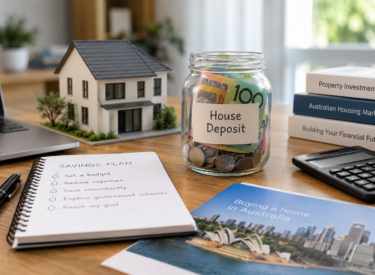
- Also read:How much do buyer’s agents charge in Australia

- Also read:What laws do real estate agents have to abide by?

- Also read:The offer and acceptance process when buying a property

- Also read:Caveats: The hidden red flags smart property investors never ignore

In fact, when governments increase buyers’ purchasing power without increasing the number of homes available, some of that additional capacity inevitably flows into higher property prices.
Be careful what you wish for
The government’s 5 per cent deposit scheme may help some Australians enter the market sooner, but a smaller deposit also means a larger mortgage and potentially greater financial vulnerability.
Interestingly, affordable properties have also remained relatively resilient in some markets because this is precisely where first-home buyer incentives concentrate additional demand.
This means aspiring buyers waiting for a major property correction may discover that prices don’t fall significantly in the locations and price brackets they are targeting.
Difficult doesn’t mean impossible
There is a danger in allowing statistics like these to convince younger Australians that home ownership has become impossible.
Clearly buying a first home is more difficult today, but there has never been one Australian property market. Affordability varies enormously depending on location, property type and the compromises buyers are prepared to make.
Your first property doesn’t need to be your forever home. For some buyers, the sensible first step could be purchasing an apartment, looking in a different suburb or even rentvesting rather than overstretching financially to buy their dream home.
Focus on what you can control
You can’t control interest rates, government policy or the property cycle, but you can control the quality of your decisions.
That means buying within your means, maintaining appropriate financial buffers and focusing on investment-grade properties in locations with strong long-term demand rather than simply buying whatever happens to be affordable.
Australia undoubtedly has a housing affordability problem, and there won’t be a quick fix. We need significantly more housing supply, better planning outcomes and infrastructure that supports appropriate development.
I’ve been helping home buyers through a number of Australian property cycles, and one lesson has remained remarkably consistent: there is rarely a perfect time to buy property.
Sure, today’s first-home buyers face significant hurdles, but those who are patient, financially disciplined and prepared to make sensible compromises can still get onto the property ladder.
And history suggests that buying the right property and holding it for the long term can eventually make today’s seemingly expensive purchase look remarkably inexpensive.