
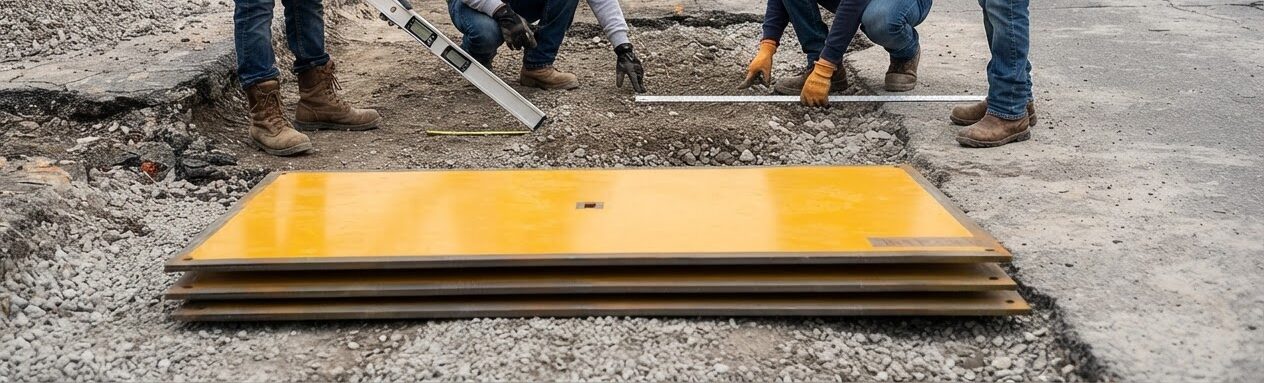
When you are preparing a site for heavy equipment access, the safety and stability of your temporary paths are the most important considerations. Steel road plates are the industry standard for covering trenches or soft ground, but they are only as effective as the surface underneath them. This article explains why a thorough subsurface assessment is the first step to ensure your site remains secure.
Understanding the Dangers of Sub-Surface Instability
A steel plate might look incredibly strong on the surface, but it cannot bridge a gap if the soil beneath it is loose or inconsistent. If the earth is soft or contains hidden voids, the plate will bend or deflect under the weight of passing vehicles, which can cause significant stress. This movement is not only damaging to the plate itself but also creates a major hazard for any vehicle attempting to cross the trench.
The Role of Soil Compaction in Load Support
Before you consider placing a plate, you must ensure that the soil has been compacted to a level that can support your target equipment. Loose soil will shift immediately when heavy trucks pass over it, causing the road plate to wobble and lose its contact points. Proper compaction creates a stiff base that prevents the plate from flexing under pressure, which is essential for maintaining a level transit path.
One of the most dangerous aspects of construction is the possibility of hidden voids or unmarked utility lines just below the surface. These gaps can be crushed under the heavy weight of a road plate, leading to collapses that damage vital site infrastructure. A subsurface assessment uses scanning technology to map these areas, allowing you to position your steel road plates away from the highest-risk zones.
Preventing Deflection Through Proper Levelling
Even a small difference in ground height can cause a steel plate to rock or deflect, which creates a loud noise and potential instability. You must ensure that the area where the plate will rest is perfectly level, often by adding a thin layer of fine gravel or sand.
- Also read:How to Find Top New Apartment Developments in Melbourne

- Also read:The Impact of Visa Regulations on Property Market Trends in Australia

- Also read:5 Best Real Estate Photo Editing Services of 2024

- Also read:Steel Advantage: The 6 Benefits of Steel Buildings

- Also read:Renovating to Rent? Don’t Skimp on the Skip Bin


Note: Always remember that this levelling step creates a consistent contact surface that stops the plate from pivoting as heavy equipment drives over the edges.
Matching the Plate Thickness to Ground Conditions
Not all soil types require the same thickness of steel plate, and your assessment will help you choose the right equipment for your site. If the ground is soft, you need a thicker plate or even a wider overlap to ensure the pressure is spread out enough to prevent sinking. An expert assessment allows you to match your gear to the challenges of your ground, avoiding a one-size-fits-all approach that leads to failure.
Monitoring Changes During the Construction Cycle
Construction sites are constantly changing, and what was a solid surface yesterday might become unstable after heavy rain or vibration from drilling. Treat sub-surface assessment as a continuous task, checking the condition of your ground every few days while the plates are in place.

Tip: If you notice any signs of sinking or plate movement, it is an indicator that the ground beneath has lost its integrity.
Establishing a Culture of Site Safety
When you make pre-installation assessments a mandatory part of your site routine, you create a safer environment for every person working on the project. This simple policy forces team members to think critically about the ground they are walking and driving on. It shows that your business values safety above speed, which is a powerful message for everyone involved in your construction operations.
Make Your Construction Site Safe
A pre-installation sub-surface assessment is the most important step in preventing deflection and ensuring the safety of your steel road plates. By focusing on soil compaction, identifying hidden risks, and maintaining a level surface, you protect both your equipment and your team. Do not leave your site safety to chance; make sure your crew is trained to inspect the ground before every single plate is set.