

Key takeaways
A record 1,540 NSW construction companies entered external administration during the latest financial year.
NSW is now expected to deliver its Housing Accord target of 377,000 homes almost three years late.
Building approvals are increasing, but completions are falling because many projects remain financially unviable.
The loss of builders, developers and subcontractors will further constrain housing supply and put upward pressure on rents and established property prices.
Investors should remain cautious about off-the-plan property and carefully investigate the financial strength of developers and builders.
Rising replacement costs continue to support the long-term value of well-located established property.
The Australian government is attempting to overcome a serious housing shortage by constructing 1.2 million new homes over five years.
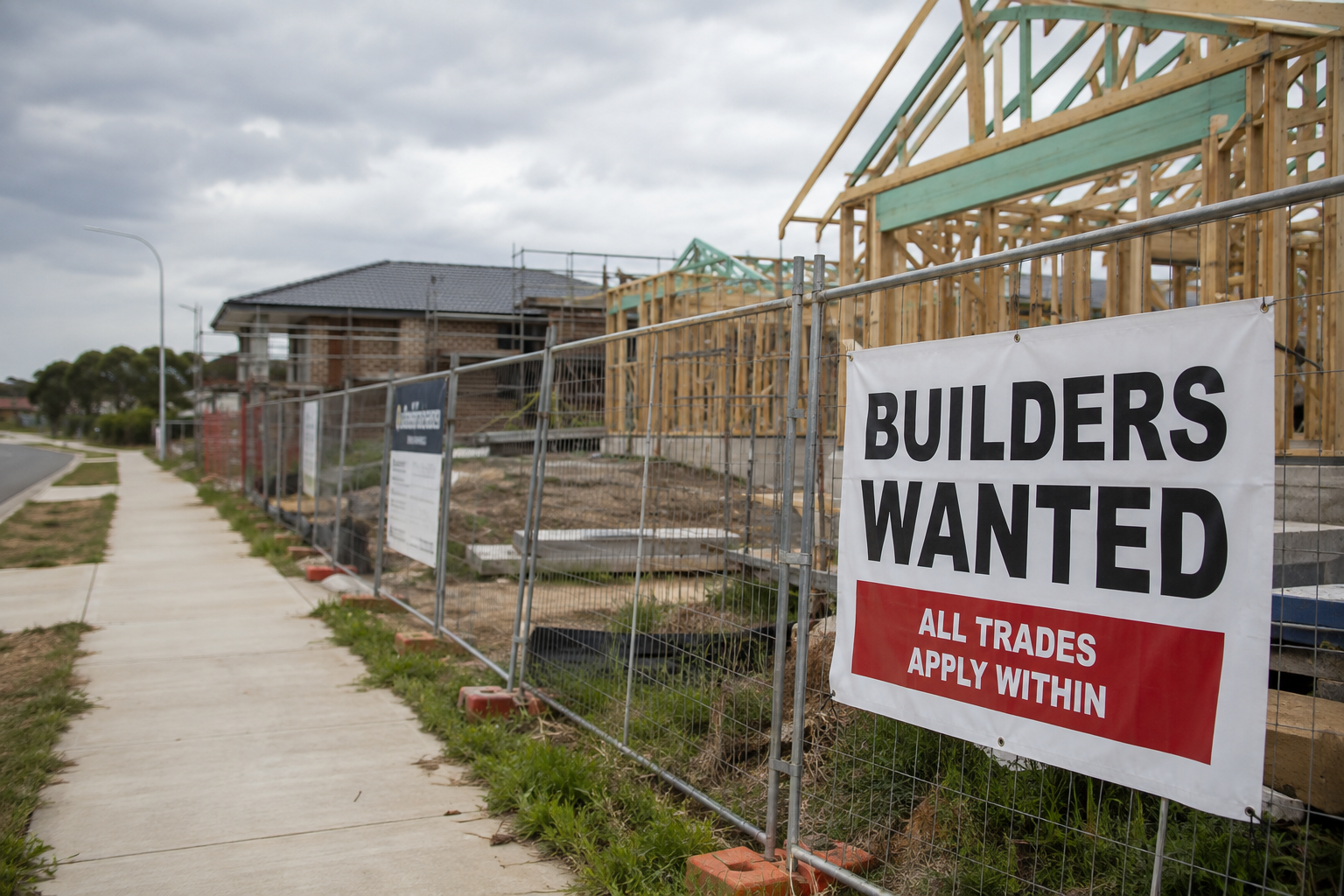
To be frank, the government won't be building any houses, yet the industry responsible for building them is losing companies at an alarming rate.
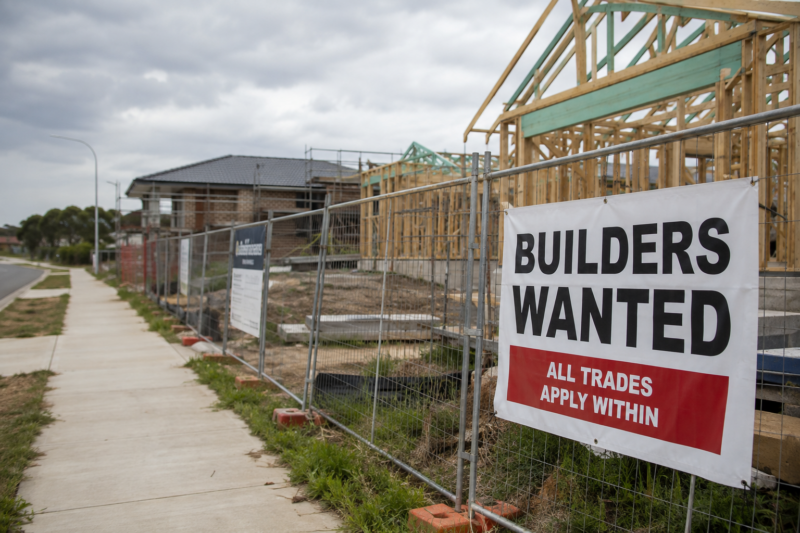
The problem is particularly severe in New South Wales, where a record 1,540 construction companies entered external administration in the last financial year.
Across Australia, 3,472 construction companies failed, with NSW accounting for close to half of the national total.
Since the National Housing Accord commenced in 2024, a reported 7,779 construction businesses have left the industry, including 3,244 in NSW.
These figures expose a major weakness in Australia’s housing policy.
Governments can announce targets, rezone land and approve thousands of dwellings, but those homes will only be delivered when a developer can secure finance and a builder can construct them profitably.
At present, too many projects fail that basic commercial test.
The housing target is slipping further away
Under the National Housing Accord, NSW is expected to deliver 377,000 homes by June 2029.
However, the National Housing Supply and Affordability Council reportedly expects the state to reach that target around March 2032, almost three years behind schedule.
Only about 35,000 new homes were completed in NSW over the last financial year. At that rate, the state is nowhere near building enough homes to keep pace with population growth and address the existing housing shortage.
Building approvals have increased by 6 per cent over the past year, while completions have declined by 1 per cent. This gap between approvals and completions is important because an approval does not provide anyone with a home.
A development application may be approved and a project may be marketed, but construction will not begin unless the numbers work and the necessary finance is secured.
Most proposed projects can’t be financed
HIA NSW executive director Brad Armitage told the Daily Telegraph that only 2 per cent of projects undergoing feasibility studies in NSW were receiving financial approval.
That means 98 per cent are failing to proceed through the feasibility and financing process.
Developers are dealing with expensive land, higher construction costs, infrastructure contributions, taxes, government charges, approval delays and more restrictive lending conditions.
Any one of these costs may be manageable, but when they are combined, the margin that makes a project worthwhile can disappear.
This is particularly evident across Western Sydney, where much of the state’s new housing is supposed to be delivered. Land prices remain high, development-ready land is insufficient, infrastructure costs are substantial, and buyers can only afford to pay so much for the finished property.
Developers simply can’t absorb the difference indefinitely.
If the price buyers are prepared or able to pay is below the cost of supplying a new dwelling, construction just won’t take place.
Governments are making new housing increasingly expensive
The HIA argued that government fees and charges now represent as much as 40 per cent of the cost of a new home.
Whatever the precise percentage on an individual project, there is little doubt that taxes, levies and charges have become a substantial share of development costs.
These expenses are often described as charges on developers, although the cost is ultimately reflected in higher property prices, lower land values, or projects that never proceed.
In many cases, the project is simply abandoned because buyers won’t pay the price required to make it commercially viable.
This highlights a contradiction in government housing policy. Governments say they want more affordable homes, yet impose costs that make those homes more expensive to build.
They also continue introducing measures that discourage the private investors who provide most of Australia’s rental accommodation.
Housing affordability cannot be improved by increasing the cost and risk of supplying housing.
Construction insolvencies have a domino effect
The collapse of a construction company affects far more people than just its directors and shareholders.
Subcontractors can be left with unpaid invoices, suppliers lose customers, employees lose jobs and buyers may find themselves with unfinished homes or delayed settlements.
Many subcontractors operate on tight margins and cannot absorb a large unpaid account. The failure of one major builder or developer can therefore cause cash flow problems across an extensive network of smaller businesses.
Urban Taskforce chief executive Tom Forrest pointed out that construction represents around 10 to 12 per cent of employment but as much as 35 per cent of bankruptcies and insolvencies.
That imbalance tells us how much pressure the industry is under.
Construction businesses have endured significant increases in material and labour costs, fixed-price contracts, higher interest expenses, lengthy approval periods and persistent shortages of skilled tradespeople.
At the same time, the Australian Taxation Office has become more active in recovering debts that accumulated during and after the pandemic.


Many builders who appeared busy had very little margin or financial buffer. Once cash flow tightened, the weakness of their business model became apparent.
Australia is losing more than individual companies
Every viable builder or developer that leaves the industry reduces our ability to increase housing supply. We also lose experienced project managers, supervisors, tradespeople and relationships with subcontractors and suppliers.
That capacity cannot be rebuilt overnight.
A newly established construction company does not immediately possess the experience, balance sheet, workforce or lender relationships required to deliver hundreds of apartments.
This means the current insolvency wave will affect housing completions for years, even if interest rates and construction costs eventually stabilise.
Housing policy tends to focus heavily on planning approvals, but Australia increasingly has a delivery problem.
We need more financially viable projects, more skilled workers, and a construction industry capable of staying in business long enough to finish what it starts.
What does this mean for property investors?
The continuing difficulties in the construction industry reinforce several trends that strategic property investors should already be watching.
First, Australia’s housing shortage will take considerably longer to resolve than many official forecasts suggest.
Population growth continues, household formation is increasing, and rental demand remains strong, yet new housing supply is struggling to respond.
That imbalance is likely to keep upward pressure on rents, particularly in established suburbs with strong employment, transport and lifestyle amenities.
It should also provide long-term support for the value of established property, as the cost of building an equivalent new dwelling has risen substantially.
If new apartments or townhouses cost considerably more to develop, the price gap between new and established property eventually becomes difficult to sustain.
This doesn’t mean investors should buy any existing property and expect strong growth. Asset selection, location, scarcity and the financial capacity of the local population remain critical.
However, rising replacement costs provide another layer of support for investment-grade properties in locations where people have the income to pay more for housing.
Be careful with off-the-plan property
The current construction environment also strengthens my long-held concerns about buying off the plan.
An investor may sign a contract years before completion without knowing precisely what will be delivered, whether valuations will support the agreed price, or whether the developer and builder will remain financially sound.
When margins are tight, there is also a greater risk of delays, compromises in quality and disputes over variations.
Anyone considering a new build should conduct detailed due diligence on the developer, builder, financier, contract and insurance arrangements.
A display suite and glossy brochure reveal very little about the financial strength of the organisations responsible for completing the project.
For most investors, I continue to believe that a well-located, established property with a proven track record, strong owner-occupier appeal and genuine scarcity offers a more reliable path.
The bottom line
Australia can’t build its way out of the housing shortage while construction companies continue disappearing at record rates.
Higher approvals may make the government’s numbers look encouraging, but approvals do not become homes until projects are financed, built and completed.
Governments need to reduce unnecessary delays, reconsider the growing burden of taxes and infrastructure charges, release more development-ready land and support the training and migration of skilled construction workers.
They must also recognise the essential role played by private property investors in supplying rental accommodation.
For strategic investors, the continuing shortage of new housing supports the long-term outlook for quality established property, but it also demands caution.
The current environment is creating opportunities, particularly for buyers with the financial capacity and patience to take a long-term view, but those opportunities remain concentrated in the right properties rather than spread evenly across the market.
An alternative way to benefit from the development process
Another option is for experienced investors who want to benefit from property development without taking on the risks and responsibilities of becoming a developer themselves.
Through Metropole’s Armchair Property Development service, investors can participate in carefully researched development opportunities and acquire property at wholesale prices, while Metropole’s experienced team manages the complex work involved in sourcing, assessing and coordinating the project.
This gives investors access to some of the financial benefits normally associated with property development without having to find the site, obtain permits, manage builders or deal with the many problems that can arise during construction.
Of course, these opportunities won’t suit everyone, and each project needs to be assessed carefully against the investor’s financial position, risk profile and long-term strategy.
However, for investors with the appropriate financial capacity, becoming an armchair property developer can provide another way to build equity and strengthen their portfolio, particularly at a time when rising construction and replacement costs are making well-selected development opportunities increasingly valuable.
If you would like to explore whether Metropole’s Armchair Property Development service is appropriate for you, click here now and speak with our team about developing a Strategic Property Plan and gaining access to suitable wholesale opportunities.